
The Real Reasons Why You Feel a Buzz From Decaf Coffee
Decaf coffee can give you a buzz because trace caffeine (typically 2-5mg per espresso) still affects sensitive individuals, and other compounds in coffee stimulate your nervous system. The decaffeination process also alters the bean’s structure, leading to faster extraction of bitter compounds that mimic caffeine’s harsh edge, while the powerful ritual of coffee drinking triggers a conditioned physiological response.
Most people assume the buzz is purely psychological or a fluke. They miss the mechanical and chemical changes happening inside the bag and the brewer.
This guide breaks down the four real reasons your decaf isn’t the inert beverage you think it is, from verified research to the quirks of your own morning routine.
Key Takeaways
- EU standards allow decaf to contain up to 0.3% caffeine by dry weight, a double espresso from decaf beans still delivers a 2-5mg dose, enough for the highly sensitive.
- A Swiss-led study found decaf espresso raised blood pressure in non-drinkers as much as regular espresso, implicating non-caffeine compounds.
- Decaf beans are more porous, causing them to extract faster and stale quicker; using your regular grind leads to over-extraction and a sharp, stimulating bitterness.
- The power of ritual, the smell, the warmth, the routine, can trigger a conditioned alertness response, independent of chemistry.
- If you feel a buzz, check your bean’s roast date first. Decaf goes noticeably flat and can develop off-notes within two weeks at room temperature, which some perceive as a “dirty” energy.
It’s Not (Just) the Caffeine
You switched to decaf to avoid the jitters. Finding them anyway is frustrating. The starting point is the label itself. “Decaffeinated” is not “caffeine-free.”
Under EU regulations, coffee can be labeled decaffeinated if it contains no more than 0.3% caffeine by dry weight. For a standard double espresso, that translates to roughly 2 to 5 milligrams of caffeine. A highly sensitive individual or someone on certain medications can absolutely feel that.
Compare that to the 80-120mg in a regular brewed cup. The dose is tiny but non-zero. Your personal sensitivity threshold matters more than the average. If you’ve been off caffeine for weeks, even that micro-dose can register.
But caffeine alone doesn’t explain the full picture. Research points elsewhere.
Common mistake: Assuming your buzz is “all in your head”, the physiological response to other coffee compounds is measurable and documented.
In a study led by cardiologist Roberto Corti at University Hospital Zurich, non-coffee drinkers were given decaffeinated espresso. Their sympathetic nervous system activity and blood pressure increased to the same degree as when they drank regular espresso. The conclusion was that components in coffee other than caffeine have a stimulating effect.
What are these components? The science is still mapping it, but chlorogenic acids, trigonelline, and various antioxidants present in both regular and decaf coffee influence nervous system function and blood flow. Your body is reacting to a complex chemical soup, not a single ingredient.
TL;DR: Trace caffeine (2-5mg per shot) can affect the sensitive, but proven research shows other compounds in decaf also stimulate your nervous system and raise blood pressure.
The Bean’s Altered Structure
Decaffeination is a brutal process. To remove caffeine, you must first make the bean give it up. This changes the bean on a cellular level, and that change alters everything about how you brew it.
The most common methods. Swiss Water, CO2, and Ethyl Acetate, all work by making the bean porous. They open up its cellular structure so solvents or water can wash the caffeine out. The bean never fully recovers. It becomes more fragile, like a sponge compared to a stone.
| Decaf Bean Characteristic | Consequence for You | The Fix |
|---|---|---|
| More porous structure | Oxygen penetrates faster, accelerating staling. Flavors degrade noticeably within two weeks at room temp. | Buy in small batches from roasters who can provide a roast date within the last week. Store in an airtight container, not the bag. |
| Uneven density | Heat transfers unevenly during roasting. The outside can darken while the inside remains under-developed, leading to baked, grassy, or sour notes. | Seek out roasters specializing in decaf. They adjust roast profiles to account for this. |
| Faster extraction | Water pulls flavors out more quickly. Using your regular grind setting leads to over-extraction—harsh, bitter compounds dominate the cup. | Grind slightly coarser than you would for a caffeinated coffee of the same roast. Start with a 10-15% adjustment. |
That faster extraction is a major buzz culprit. Over-extraction doesn’t just taste bitter; it feels stimulating in a unpleasant, edgy way. Your body interprets that aggressive flavor profile as a “kick.” It’s a sensory jolt, not a chemical one, but the result is the same: you feel wired.
The stale factor compounds it. As decaf beans oxidize, they lose their sweet, nuanced notes first. What’s left are sharper, more astringent flavors. That cup of two-month-old decaf from the back of your cabinet isn’t just bland, its flavor profile has shifted toward something your brain reads as “strong” or “potent.”
Your Brain’s Role
Never underestimate the power of ritual. For years, your brain has learned a sequence: smell of coffee → warmth in hand → sip → alertness. It’s a conditioned response, like Pavlov’s dog.
When you drink decaf, you execute the same ritual. The smell alone, rich, roasted, familiar, triggers a cascade of anticipatory signals. Your brain starts preparing for caffeine. It may release a touch of dopamine, the “reward” neurotransmitter. Your heart rate might tick up slightly in expectation. This is a real, physiological buzz generated by your own neurology, not the bean.
Then there’s the placebo effect, but that’s too weak a term. It’s expectation-driven perception. If you believe your afternoon cup will perk you up, your mind scans for evidence. A normal post-lunch energy dip followed by a slight return to baseline feels like “the coffee working.” You attribute a natural bodily rhythm to the drink.
This is why blind taste tests are so revealing. When people don’t know which cup is decaf, reports of “jitters” or “buzz” drop dramatically. The experience is untethered from expectation.
I served a friend what he thought was his usual single-origin pour-over. It was a decaf version of the same bean, same roast. He finished it, leaned back, and said, “Wow, that’s strong today.” He felt the buzz because his brain told him it was there. The reveal changed his entire perception of the next cup.
TL;DR: Your coffee ritual, the smell, the heat, the habit, conditions your brain to expect stimulation. That expectation can create a real feeling of alertness, independent of any chemicals in the cup.
How to Troubleshoot Your Decaf Buzz
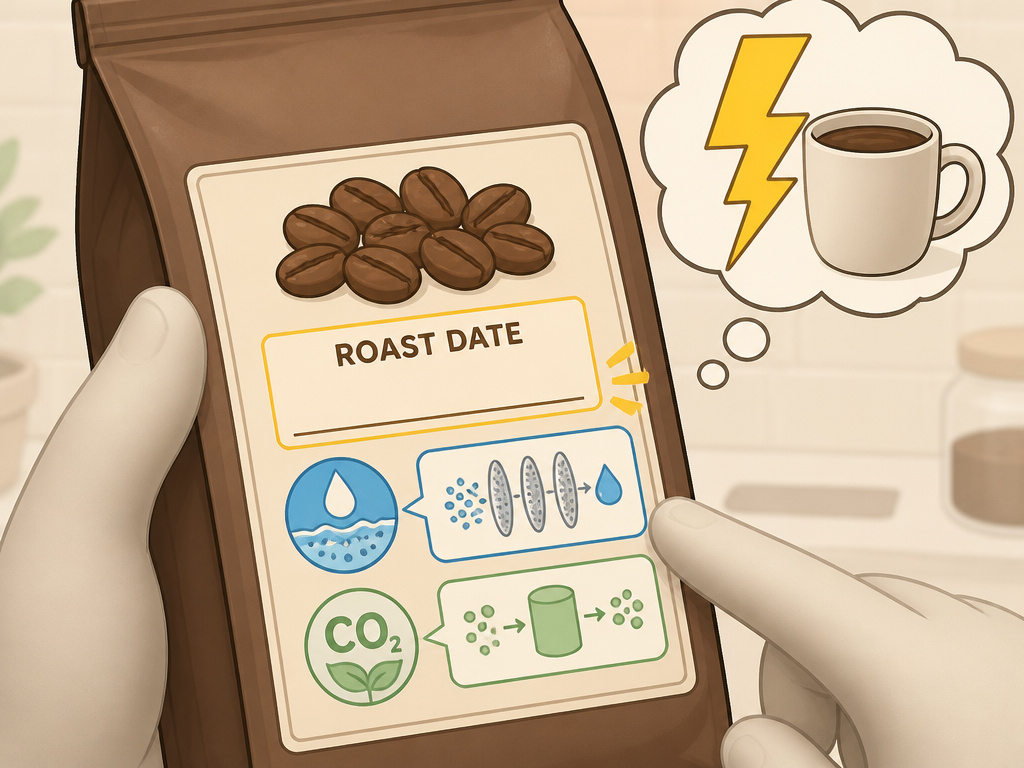
If the buzz is unwanted, you need a diagnostic approach. Is it the bean, the brew, or you? Follow this sequence to isolate the cause.
Before you start: If you have a known heart condition, hypertension, or are on stimulant-sensitive medications, consult your doctor before experimenting with consumption. What feels like a minor buzz could be a meaningful physiological change.
First, investigate your beans.
1. Find the roast date. If it’s older than three weeks, staling is your primary suspect. Toss them.
2. Identify the decaf method. Look for “Swiss Water Process,” “CO2 Process,” or “Sugar Cane/Ethyl Acetate.” If it says “naturally decaffeinated” or nothing, be skeptical, it often means methylene chloride, which has its own baggage.
3. Smell them. Fresh decaf should smell sweet and roasty, not musty, sharp, or like cardboard.
Second, adjust your brewing protocol.
– Grind coarser. This is the single most important fix. Use a dedicated setting for your decaf beans.
– Shorten contact time slightly. If you’re using a French press, cut 30 seconds. For pour-over, a slightly faster pour rate.
– Use slightly cooler water. Try 200°F (93°C) instead of 205°F (96°C). This slows extraction of bitter compounds.
| Symptom | Likely Cause | Immediate Action |
|---|---|---|
| Sharp, bitter taste with immediate edgy feeling | Over-extraction due to fine grind | Coarsen grind significantly. Your next cup. |
| Muddy, flat taste with a “dirty” energy | Stale, oxidized beans | Check roast date. Buy fresh beans. |
| Clean taste but palpable heart-rate increase | High personal sensitivity to trace caffeine | Try a different decaf method (switch from EA to Swiss Water). Space consumption. |
| Pleasant taste, general alertness only when drinking morning cup | Ritual/conditioned response | Acknowledge it. Enjoy the ritual without worry. |
Finally, conduct a self-test. For one week, replace your decaf coffee with a roasted grain beverage like Teeccino or a caffeine-free herbal tea. Perform your full morning ritual with this substitute. Note any differences in your perceived energy level. If the “buzz” disappears, you’ve confirmed the source was the coffee. If it persists, the ritual itself or other lifestyle factors are the driver.
Frequently Asked Questions
Does all decaf coffee have caffeine?
Yes. By legal definition in the US and EU, decaf coffee must have at least 97% of its caffeine removed. The remaining amount is typically 2-5mg per serving, but it is never zero.
Which decaf method leaves the most caffeine?
All major commercial methods (Swiss Water, CO2, Ethyl Acetate) reduce caffeine to compliant trace levels. The difference is minuscule. The variation in your buzz has more to do with bean quality, roast, and your extraction method than the 0.5mg variance between processes.
Can other ingredients in my drink cause a buzz?
Absolutely. If you’re drinking a decaf latte, the significant sugar spike from syrups can cause a rush of energy followed by a crash. Some alternative milks also contain added vitamins or thickeners that can affect sensitive individuals. Always consider the whole beverage.
I only feel it sometimes. Why?
Your sensitivity isn’t a constant. It fluctuates with sleep quality, hydration, stress, what you’ve eaten, and even your menstrual cycle. A 3mg caffeine hit on a well-rested, full-stomach day might be imperceptible. The same cup on an empty stomach after a poor night’s sleep can feel pronounced.
Is the buzz harmful?
For most people, no. The physiological changes (slight blood pressure rise, increased sympathetic activity) are transient and mild. However, if you experience pronounced anxiety, heart palpitations, or headaches, it’s a sign to stop and investigate. You may be uniquely sensitive or reacting to something else in the coffee, like mycotoxins from poor bean storage, which is a separate issue discussed by some health experts.
Before You Go
That decaf buzz is a signal, not a mystery. It tells you about your beans, your brew, and your body. Start with the roast date, old decaf is a different product. Then adjust your grind; coarser is almost always better. Finally, listen to what your reaction is actually saying. A clean alertness from ritual is a gift. A jittery edge from over-extraction is a fixable mistake.
The goal isn’t to eliminate sensation but to understand it. When you know why your decaf behaves the way it does, you can choose the experience you want. You might even find that a well-brewed cup, free from the crash of a caffeine rollercoaster, offers a cleaner, more sustainable kind of energy.
{
“@context”: “https://schema.org”,
“@type”: “HowTo”,
“name”: “How to Identify Why Your Decaf Coffee Gives a Buzz”,
“totalTime”: “PT10M”,
“tool”: [
{
“@type”: “HowToTool”,
“name”: “Freshly roasted decaf coffee beans”
},
{
“@type”: “HowToTool”,
“name”: “Brewing equipment (grinder, scale, brewer)”
},
{
“@type”: “HowToTool”,
“name”: “Notepad or tracking app”
}
],
“step”: [
{
“@type”: “HowToStep”,
“name”: “Check the roast date and decaf method”,
“text”: “Locate the roast date on your decaf bag. Beans older than two weeks stale faster due to porosity. Note the decaffeination process listed (Swiss Water, CO2, etc.).”
},
{
“@type”: “HowToStep”,
“name”: “Adjust your grind size coarser”,
“text”: “Grind your decaf beans slightly coarser than your usual setting. The more open bean structure extracts faster; a finer grind leads to over-extraction and a harsh, stimulating bitterness.”
},
{
“@type”: “HowToStep”,
“name”: “Brew and log your physical response”,
“text”: “Brew a cup using your adjusted grind. Drink it mindfully, then note any sensations (alertness, jitters, warmth) and the time they occur.”
},
{
“@type”: “HowToStep”,
“name”: “Compare with a caffeine-free alternative”,
“text”: “The next day, drink a fully caffeine-free herbal tea or roasted grain beverage at the same time and with the same ritual. Compare the physical and mental notes.”
},
{
“@type”: “HowToStep”,
“name”: “Evaluate your daily context”,
“text”: “Consider other factors from that day: sleep quality, meal timing, stress levels, and whether you expected the coffee to give you energy. Context often amplifies or creates the buzz.”
}
]
}
{
“@context”: “https://schema.org”,
“@type”: “FAQPage”,
“mainEntity”: [
{
“@type”: “Question”,
“name”: “Does all decaf coffee have caffeine?”,
“acceptedAnswer”: {
“@type”: “Answer”,
“text”: “Yes. By legal definition in the US and EU, decaf coffee must have at least 97% of its caffeine removed. The remaining amount is typically 2-5mg per serving, but it is never zero.”
}
},
{
“@type”: “Question”,
“name”: “Which decaf method leaves the most caffeine?”,
“acceptedAnswer”: {
“@type”: “Answer”,
“text”: “All major commercial methods (Swiss Water, CO2, Ethyl Acetate) reduce caffeine to compliant trace levels. The difference is minuscule. The variation in your buzz has more to do with bean quality, roast, and your extraction method than the 0.5mg variance between processes.”
}
},
{
“@type”: “Question”,
“name”: “Can other ingredients in my drink cause a buzz?”,
“acceptedAnswer”: {
“@type”: “Answer”,
“text”: “Absolutely. If you’re drinking a decaf latte, the significant sugar spike from syrups can cause a rush of energy followed by a crash. Some alternative milks also contain added vitamins or thickeners that can affect sensitive individuals. Always consider the whole beverage.”
}
},
{
“@type”: “Question”,
“name”: “I only feel it sometimes. Why?”,
“acceptedAnswer”: {
“@type”: “Answer”,
“text”: “Your sensitivity isn’t a constant. It fluctuates with sleep quality, hydration, stress, what you’ve eaten, and even your menstrual cycle. A 3mg caffeine hit on a well-rested, full-stomach day might be imperceptible. The same cup on an empty stomach after a poor night’s sleep can feel pronounced.”
}
},
{
“@type”: “Question”,
“name”: “Is the buzz harmful?”,
“acceptedAnswer”: {
“@type”: “Answer”,
“text”: “For most people, no. The physiological changes (slight blood pressure rise, increased sympathetic activity) are transient and mild. However, if you experience pronounced anxiety, heart palpitations, or headaches, it’s a sign to stop and investigate. You may be uniquely sensitive or reacting to something else in the coffee, like mycotoxins from poor bean storage, which is a separate issue discussed by some health experts.”
}
}
]
}
