
White Coffee: What It Is & Why It’s a Unique Light Roast
White coffee is a specific roasting style where coffee beans are heated to just 325°F–350°F, stopping well before the first crack. This yields a pale, dense bean with a distinct nutty, earthy flavor and a higher caffeine concentration compared to darker roasts.
Most people hear “white coffee” and picture a latte. That’s the first mistake. The second is thinking any grinder on your counter can handle it. The beans are so hard they sound like gravel in the hopper, and a typical home burr grinder will either stall completely or dull its burrs within a few pounds.
This guide walks through what white coffee actually is, where the confusing name came from, and the very specific, and often expensive, equipment you need to brew it properly. If you’re after a nutty, high-caffeine shot that demands respect from your gear, you’re in the right place.
Key Takeaways
- White coffee is roasted at 325°F–350°F, stopping before first crack, which happens around 375°F. This results in a pale, rock-hard bean.
- It contains more caffeine by weight than darker roasts because the roasting process preserves more of the bean’s natural caffeine.
- The flavor profile is distinctly nutty and earthy, with very low acidity and almost none of the bitter, caramelized notes of a dark roast.
- You cannot brew it with a pour-over or drip machine. It requires high-pressure extraction, ideally from an espresso machine pulling at 9 bars for 35–45 seconds.
- A standard home burr grinder will struggle or break. You need a commercial-grade, stainless-steel burr grinder, or you must buy it pre-ground.
Not Milk, But Method: Defining White Coffee
Order a white coffee in London or Sydney, and you’ll get an espresso with steamed milk. Order it in Seattle or Portland, and you’ll get something entirely different. In the US specialty coffee scene, white coffee refers exclusively to an ultra-light roast. The beans are pulled from the roaster at 325°F–350°F, according to the Barista Hustle Roasting Protocols Guide. For context, a light roast typically passes first crack around 375°F–400°F.
White coffee beans are roasted around 325°F–350°F, compared to 400°F+ for light to medium roasts. This halts development before first crack, preserving raw bean characteristics and creating an exceptionally dense, pale product.
That low temperature leaves the bean’s cellular structure mostly intact. It never expands, it never gets porous. What you get is a small, pale beige bean that feels like a pebble. The flavor hasn’t developed the caramelized sugars or complex acids of a longer roast. Instead, you taste the raw seed: think roasted peanuts, wheatgrass, and a distinct earthy note some compare to tea.
TL;DR: White coffee is an ultra-light roast stopped at 325°F–350°F, long before first crack, resulting in a dense, pale bean with a nutty, earthy flavor.
The Naming Confusion: A Regional Divide
This isn’t a matter of preference. It’s a geographic fact. In the UK, Australia, and New Zealand, “white coffee” universally means coffee with milk. Ask for it in a Melbourne cafe, and you’ll get a flat white. The US specialty term is a recent, niche invention that hasn’t crossed the ocean.
The confusion causes real problems for roasters. I’ve seen online orders from the UK where customers expecting a bag of light roast beans instead received a pale, hard product they had no idea how to brew. They thought it was defective. Always check a roaster’s location before buying.
| Region | What “White Coffee” Means | Typical Order |
|---|---|---|
| US (Specialty Coffee) | Ultra-light roast beans | Bag of whole beans |
| UK, Australia, NZ | Coffee with milk | Flat white, latte, cappuccino |
| General Global Context | Not a standard term | Varies by cafe |
The White Coffee Flavor and Caffeine Profile
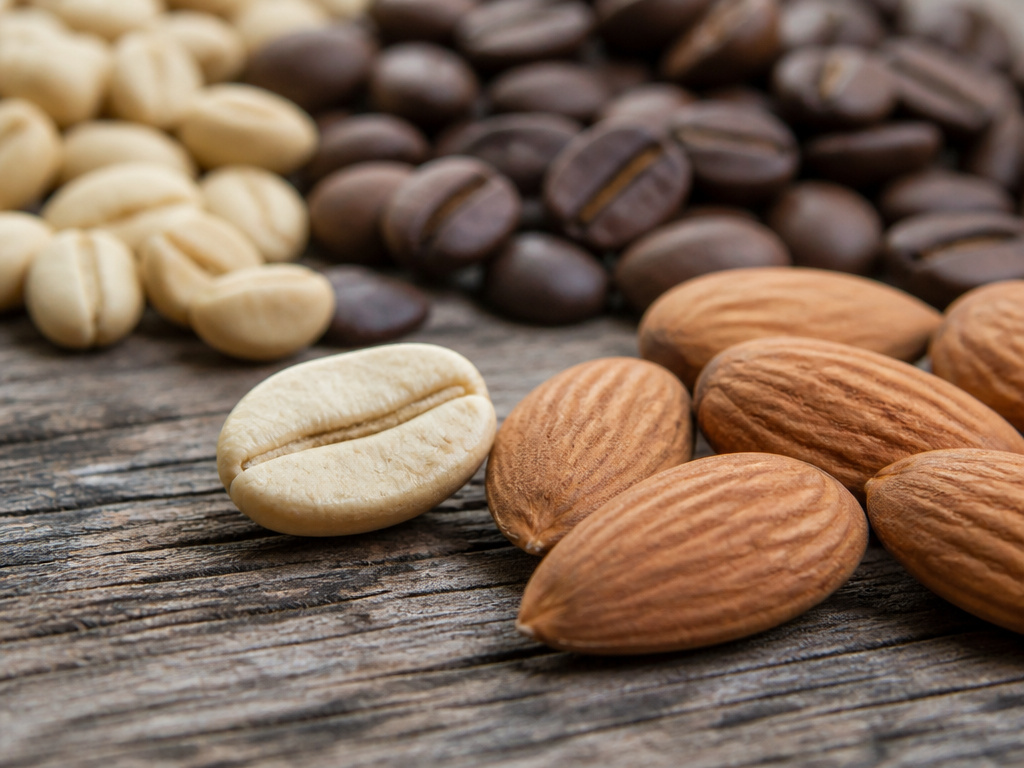
Forget chocolate and berry notes. White coffee tastes like the raw ingredients of coffee before the roast develops them. The dominant note is nutty, think raw almond or peanut skin. There’s an earthy, almost hay-like quality behind it, with a finish that can remind you of certain green teas. Acidity is nearly absent. So is bitterness.
Common mistake: Expecting white coffee to taste like a light roast, the flavor profile is closer to a roasted grain or nut than to any traditional coffee. If you brew it like regular coffee, the cup will taste weak, sour, and underwhelming.
Why does it pack more caffeine? The roasting process itself breaks down caffeine molecules. The longer and hotter the roast, the more caffeine degrades. Since white coffee sees minimal heat, a greater percentage of the bean’s original caffeine content remains intact. Gram for gram, you’re getting more stimulant.
The science behind this points to specific genetic factors. The C. arabica bean’s complex genome, particularly genes like FADS2 that regulate lipid metabolism, are less activated at these low temperatures. Furthermore, research suggests MYB proteins, which regulate pathways for caffeine and chlorogenic acids, express differently under such minimal thermal stress. This isn’t just under-roasting; it’s a distinct biochemical product.
TL;DR: The flavor is nutty and earthy, not fruity or chocolatey, due to halted development. It has higher caffeine by weight because less degrades during the abbreviated roast.
The White Coffee Brewing Paradox
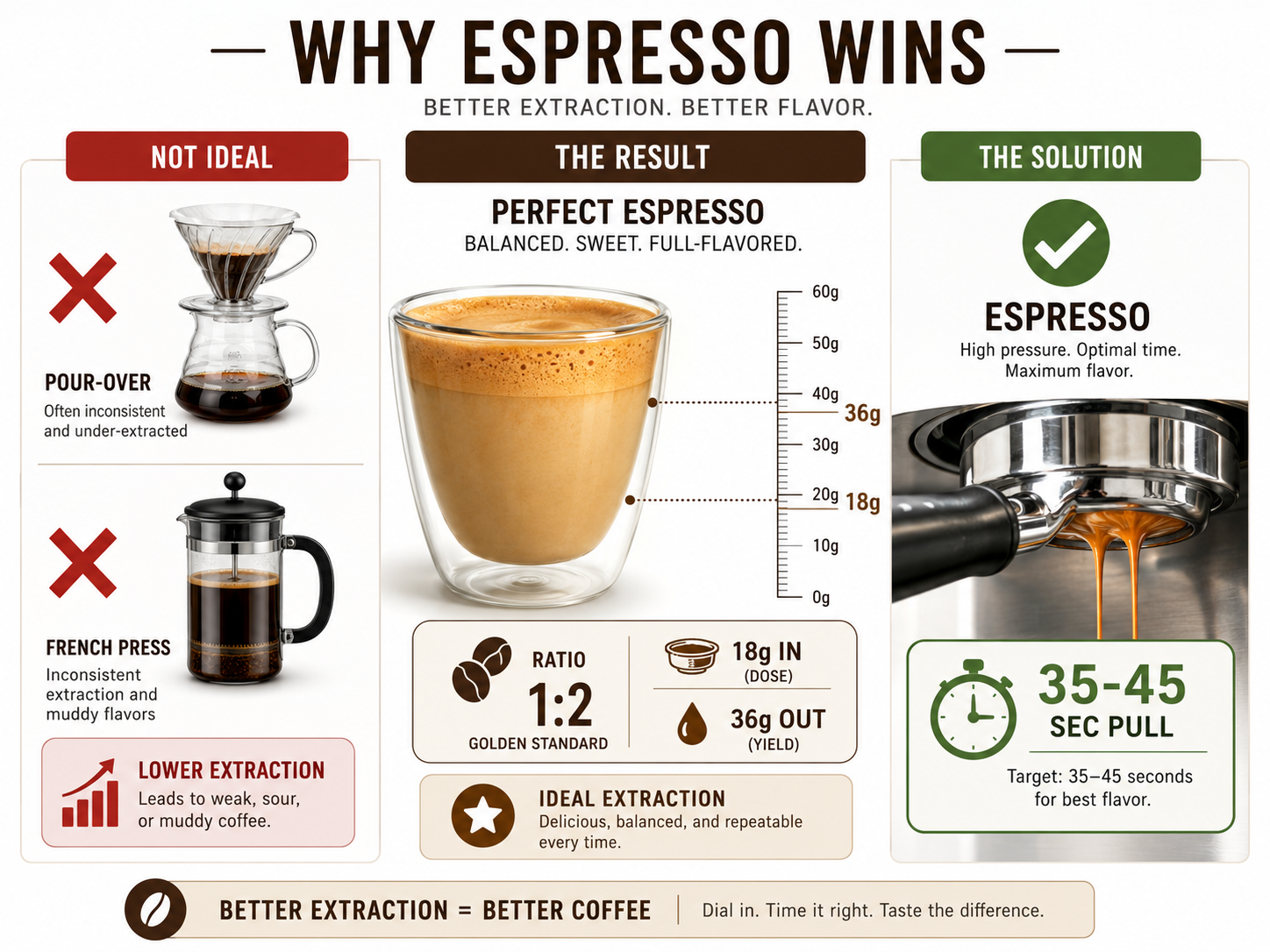
You cannot brew white coffee like normal coffee. Its extreme density and low solubility mean water just washes over it in immersion or drip methods. You get a thin, sour, and frankly terrible cup. The only way to force extraction is with high pressure.
I tried a V60 pour-over with a bag of pre-ground white coffee from a reputable roaster. The water passed through in under two minutes, leaving a pale, straw-colored liquid that tasted like slightly nutty water. It was a waste of good beans.
An espresso machine is non-negotiable. The 9 bars of pressure force hot water through the compacted grounds, finally pulling out the oils and flavors. But even here, the rules change. The standard 25–30 second shot time is too short.
| Brewing Method | Recommended for White Coffee? | Why It Fails |
|---|---|---|
| Espresso (9 bars) | Yes, but with extended time | Requires 35–45 second pull for full extraction |
| Pour-Over / Drip | No | Low solubility; water passes through without extracting |
| French Press | No | Immersion isn’t forceful enough; results in weak, gritty brew |
| Moka Pot | Marginal | Higher pressure helps, but not enough for full flavor |
You need a 1:2 brew ratio, but stretched over 35–45 seconds. That’s 18 grams of ground coffee yielding 36 grams of liquid, pulled slowly. The result is a viscous, pale shot with a thick crema the color of wheat beer. It smells like toasted nuts and fresh-cut grass.
TL;DR: White coffee requires high-pressure extraction. An espresso machine pulling a 1:2 shot over 35–45 seconds is the only reliable method. Pour-over and drip brewing fail completely.
The Hard Bean, Hard Grind Reality
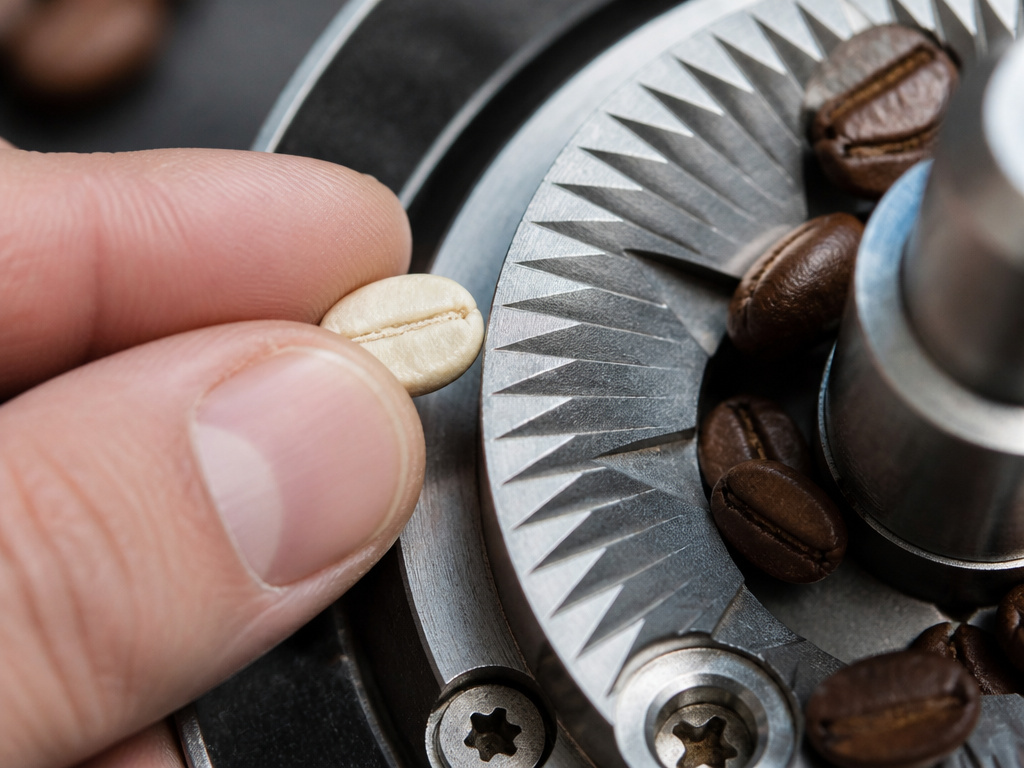
This is the deal-breaker for most home enthusiasts. White coffee beans are notoriously hard. They will destroy a blade grinder, and they will challenge or kill a standard home burr grinder. The sound alone is a warning, a harsh, grinding crunch instead of the usual brittle crackle.
You need a burr grinder with a powerful motor and hardened steel or ceramic burrs. Think commercial-grade like a Mahlkonig, a high-end Baratza Forte, or a niche prosumer model built for longevity. Even then, you’re accelerating wear. Many roasters who sell white coffee explicitly recommend buying it pre-ground for espresso, which sacrifices freshness but saves your equipment.
Common mistake: Using a standard home burr grinder for white coffee, the beans can jam the mechanism, stall the motor, or prematurely dull the burrs. The repair cost often exceeds the price of the grinder.
If you must grind at home, listen. The first sign of trouble is a change in pitch, a straining whir instead of a crisp grind. Stop immediately. Continuing will overheat the motor and potentially crack the burr carrier. For most people, the smarter path is to find a local roaster or cafe with a commercial grinder and have them grind your whole beans on the spot, then use them within a day.
TL;DR: Grinding white coffee requires a commercial-grade burr grinder. For most home setups, buying it pre-ground for espresso is the pragmatic, equipment-saving choice.
How to Brew White Espresso: A Step-by-Step Guide
This assumes you have access to a capable grinder or pre-ground white coffee, and an espresso machine that can maintain 9 bars of pressure.
- Dose 18 grams of finely ground white coffee. The grounds will feel denser and more compact than normal espresso grinds. Tamp firmly, around 30 pounds of pressure. Skipping a firm tamp leads to channeling, as the water finds the path of least resistance through the rock-like grounds.
- Set your machine to 9 bars of pressure. If your machine has pre-infusion, disable it. You want full pressure from the start to penetrate the dense puck.
- Pull a 1:2 shot, targeting 36 grams of liquid. Start your timer as soon as the first drop appears. This shot will run slow.
- Stop the shot at 36 grams, regardless of time. The extraction should take between 35 and 45 seconds. If it hits 36 grams in under 30 seconds, your grind is too coarse. If it takes over 50 seconds, it’s too fine and risks astringency.
- Serve immediately. White espresso oxidizes quickly. The delicate nutty aromas fade within minutes. Drink it straight to appreciate the unique profile.
The crema will be thick and persistent, with a pale tan color. The body is surprisingly syrupy. The taste is all front-of-palate: nutty, cereal-like, with a clean finish. There’s no bitter aftertaste.
White Coffee vs. Blonde Roast: Not the Same
It’s easy to confuse white coffee with a very light blonde roast. They’re both pale, but they’re not siblings, they’re distant cousins. A blonde roast, like those used for certain espresso-based drinks, is roasted through first crack. This development unlocks acidity and sweetness that white coffee never sees.
| Characteristic | White Coffee | Blonde Roast |
|---|---|---|
| Roast Temperature | 325°F–350°F | 375°F–400°F |
| First Crack | Stopped before | Passed through |
| Bean Color | Pale beige, tan | Light brown |
| Bean Density | Extremely high, rocky | High, but less dense |
| Primary Flavor | Nutty, earthy, cereal | Bright, acidic, tea-like, floral |
| Best Brew Method | Espresso only | Espresso, pour-over, drip |
| Grinder Demand | Commercial-grade required | Standard burr grinder okay |
A blonde roast can be brewed successfully in a drip coffee method. White coffee cannot. This distinction matters when you’re choosing coffee blends or single-origin coffees for your morning routine. White coffee is a niche product for a specific, high-pressure brew.
Frequently Asked Questions
Is white coffee stronger than regular coffee?
It has more caffeine by weight because less is degraded during its brief roast. However, its low solubility means you extract less of that caffeine into the cup unless you use high pressure. A properly pulled white espresso shot will have a higher caffeine concentration than a standard espresso shot from the same bean origin.
Can you drink white coffee black?
Yes, and you should. Adding milk or sugar overwhelms its subtle nutty and earthy notes. The point is to experience this unique, raw-coffee flavor profile. If you want a milk drink, order a flat white.
Does white coffee taste sour?
It can, if under-extracted. Because it lacks the balancing sugars of a developed roast, under-extraction highlights its inherent malic and citric acids without sweetness to counter them. This is why the extended 35–45 second extraction time at high pressure is critical, it ensures full extraction and a balanced, if unusual, cup.
What’s the best grinder for white coffee?
You need a burr grinder with a high-torque motor and hardened steel burrs. Prosumer models like the Baratza Forte BG or commercial grinders from Mahlkonig or Mazzer are built for this duty. Using a standard home burr grinder risks damage. For most, buying pre-ground is the safe choice.
Before You Go
White coffee isn’t a lighter version of your morning light roast. It’s a different product entirely, defined by a roast that stops at 325°F, a flavor profile of nuts and earth, and a brewing method that demands an espresso machine. Its higher caffeine content is a fact of chemistry, not marketing. The biggest hurdle is the grind, these beans will humble most home grinders. If you’re curious, source it pre-ground from a specialty roaster, dial in a long 1:2 shot on your espresso machine, and taste the raw side of coffee. Just don’t expect it to taste like anything you’ve had before.
{
“@context”: “https://schema.org”,
“@type”: “HowTo”,
“name”: “How to Brew White Coffee”,
“totalTime”: “PT10M”,
“tool”: [
{
“@type”: “HowToTool”,
“name”: “Commercial-grade burr grinder or pre-ground white coffee”
},
{
“@type”: “HowToTool”,
“name”: “Espresso machine capable of 9 bars pressure”
},
{
“@type”: “HowToTool”,
“name”: “Scale accurate to 0.1 grams”
}
],
“step”: [
{
“@type”: “HowToStep”,
“name”: “Grind the beans”,
“text”: “Use a commercial-grade stainless steel burr grinder set to an espresso-fine grind. Standard home grinders will stall or break on white coffee beans.”
},
{
“@type”: “HowToStep”,
“name”: “Dose and tamp”,
“text”: “Dose 18 grams of ground white coffee into a portafilter and tamp firmly. The grind will feel denser and more resistant than typical espresso.”
},
{
“@type”: “HowToStep”,
“name”: “Pull the shot”,
“text”: “Pull a 1:2 ratio shot (36 grams liquid output) at 9 bars pressure. Expect a 35-45 second extraction time due to the bean’s low solubility.”
},
{
“@type”: “HowToStep”,
“name”: “Serve immediately”,
“text”: “White espresso oxidizes and loses its subtle nutty notes quickly. Drink it straight within a minute of pulling the shot.”
}
]
}
{
“@context”: “https://schema.org”,
“@type”: “FAQPage”,
“mainEntity”: [
{
“@type”: “Question”,
“name”: “Is white coffee stronger than regular coffee?”,
“acceptedAnswer”: {
“@type”: “Answer”,
“text”: “It has more caffeine by weight because less is degraded during its brief roast. However, its low solubility means you extract less of that caffeine into the cup unless you use high pressure. A properly pulled white espresso shot will have a higher caffeine concentration than a standard espresso shot from the same bean origin.”
}
},
{
“@type”: “Question”,
“name”: “Can you drink white coffee black?”,
“acceptedAnswer”: {
“@type”: “Answer”,
“text”: “Yes, and you should. Adding milk or sugar overwhelms its subtle nutty and earthy notes. The point is to experience this unique, raw-coffee flavor profile. If you want a milk drink, order a flat white.”
}
},
{
“@type”: “Question”,
“name”: “Does white coffee taste sour?”,
“acceptedAnswer”: {
“@type”: “Answer”,
“text”: “It can, if under-extracted. Because it lacks the balancing sugars of a developed roast, under-extraction highlights its inherent malic and citric acids without sweetness to counter them. This is why the extended 35–45 second extraction time at high pressure is critical, it ensures full extraction and a balanced, if unusual, cup.”
}
},
{
“@type”: “Question”,
“name”: “What’s the best grinder for white coffee?”,
“acceptedAnswer”: {
“@type”: “Answer”,
“text”: “You need a burr grinder with a high-torque motor and hardened steel burrs. Prosumer models like the Baratza Forte BG or commercial grinders from Mahlkonig or Mazzer are built for this duty. Using a standard home burr grinder risks damage. For most, buying pre-ground is the safe choice.”
}
}
]
}
