
Defining Lungo Coffee: The Longer, Larger Espresso Shot
This post contains affiliate links. As an Amazon Associate, we earn from qualifying purchases.
A lungo coffee is a 45–60ml espresso shot made by passing more water through the grounds over 45–60 seconds, using a 1:3 to 1:5 brew ratio. This longer extraction creates a larger, lighter-bodied drink that can become bitter if the grind is not adjusted coarser to compensate for the increased water volume.
Lungo coffee is a 45 to 60 milliliter espresso-based drink made by passing more water through the same amount of coffee grounds over a longer extraction time, typically 45 to 60 seconds, using a brew ratio between 1:3 and 1:5. It results in a larger, lighter-bodied cup than a standard espresso, with a flavor profile that can lean toward bitterness if not dialed in correctly.
Most people see the larger volume and assume a lungo is just a big espresso. The mistake is using the same grind setting. More water passing through a finely-ground espresso puck overextends the extraction, pulling out harsh, bitter compounds that overwhelm the cup. That’s why your machine’s lungo button often makes a disappointing drink.
This guide walks through the precise ratios, the necessary grind adjustment, and how a lungo fits among other espresso-based drinks. You will learn to make one that highlights flavor, not just volume.
Key Takeaways
- A lungo uses a 1:3 to 1:5 coffee-to-water ratio, yielding 45–110ml from an 18g dose, versus espresso’s 1:2 ratio for 30–40ml.
- You must grind slightly coarser for a lungo than for espresso. Using an espresso-fine grind guarantees over-extraction and bitterness within the 45–60 second pull.
- The drink is distinct from an Americano, where hot water is added to espresso after brewing. A lungo’s water passes through the coffee bed.
- A well-made lungo from a light roast can highlight nuanced, tea-like flavors. A dark roast will often taste hollow and ashy.
- The caffeine content is higher than a standard espresso but lower per milliliter, typically ranging from 77 to 110 milligrams per cup.
The Lungo Defined: Ratios, Time, and Volume
Forget button logic. A lungo is defined by its brew ratio and extraction time, not by your machine’s programming. Where a standard espresso aims for a 1:2 ratio (18g in, 36g out) in 25–30 seconds, a lungo targets a 1:3 to 1:5 ratio. That means 18 grams of coffee should yield 54 to 90 grams of beverage.
The extraction time stretches to 45–60 seconds to accommodate the larger water volume. This is the first point of failure. If you keep the grind fine enough for a 30-second espresso and just let the water run longer, you are over-extracting. The initial portion of the shot contains the balanced sugars and acids. The later portion, especially past 35 seconds, pulls out woody, bitter alkaloids.
A lungo shot follows a brew ratio of 1:3 to 1:5, extracting for 45–60 seconds at 90–96°C. This extended contact time with more water creates a larger, lighter-bodied beverage than espresso, with a total dissolved solids (TDS) measurement around 6%, compared to espresso’s 8–10%.
Your goal is to adjust the grind to hit that longer time window without choking the machine. The resistance in the puck needs to be lower. That requires a coarser grind setting than you use for espresso. It feels counterintuitive if you’re used to “finer equals stronger.” Here, finer equals bitter.
TL;DR: Target 72 grams of liquid from 18 grams of coffee, pulled in about 50 seconds. Hit that by grinding coarser than your espresso setting.
How to Make a Lungo at Home
You need an espresso machine capable of manual or volumetric control. Super-automatic machines with a dedicated lungo button will use a pre-programmed water volume, but they rarely adjust the grind. The result is often that over-extracted, bitter cup. For a true lungo, take control.
Start with your standard espresso dose. For a 58mm portafilter basket, that’s 18 grams. Weigh it. Now, adjust your grinder. Move the setting two to three clicks coarser than your espresso grind. The grounds should look and feel like granulated table salt, not powdered sugar.
Dose, distribute, and tamp as usual. The tamp pressure matters less than consistency. Lock the portafilter in and place your scale with a cup underneath. Start the shot.
Watch the scale, not the clock initially. You are aiming for a final yield between 54 and 90 grams, with 72 grams (a 1:4 ratio) being a reliable sweet spot. The time should land between 45 and 60 seconds. If the shot hits 72 grams in 35 seconds, your grind is still too coarse. If it takes 70 seconds to get there, the grind is too fine.
Taste it straight. A good lungo will have a lighter body than espresso, but it should not taste hollow or overwhelmingly bitter. You might notice more nuanced floral or tea-like notes, especially with a light or medium roast. The crema will be thinner and paler.
Common mistake: Using the espresso grind setting for a lungo, the extended contact time over-extracts the puck, guaranteeing a bitter, astringent cup by the time you reach 60ml.
The adjustment is iterative. Sourness means underextraction; grind finer. Bitterness means overextraction; grind coarser. It’s a different target than espresso, so your palate needs to recalibrate.
Lungo vs. Americano: The Critical Difference
This confusion turns every coffee conversation sideways. Both drinks are larger and milder than straight espresso, but their construction is opposite. A lungo is one extraction. An Americano is two steps: a standard espresso is pulled first, then hot water is added to it in the cup.
The difference is in the chemistry. In a lungo, all the water passes through the coffee grounds, continuing to extract compounds throughout the entire 45–60 seconds. In an Americano, extraction stops at 25–30 seconds when the espresso is cut. The added water dilutes the concentrated shot but does not create new extraction.
| Aspect | Lungo | Americano |
|---|---|---|
| Construction | One long extraction | Espresso + added hot water |
| Brew Ratio | 1:3 to 1:5 | Typically 1:2 espresso, then 1:1 to 1:3 dilution |
| Flavor Profile | Can be more bitter, tea-like, lighter body | Tastes like diluted espresso, retains more of the espresso’s core flavor |
| Crema | Thin, pale layer | Espresso crema dissipates when water is added |
| Common Pitfall | Over-extraction bitterness | Water temperature too high, scalding the espresso |
The Americano is more forgiving. You can pull a decent espresso and add water. Messing up a lungo requires you to re-dial the entire grind and time from scratch. This is why many home baristas prefer the Americano method. It’s consistent.
For exploring coffee strengths and dilution, the Americano is a tool. The lungo is a specific technique. Don’t use the terms interchangeably.
The Flavor Profile: What to Expect from a Lungo
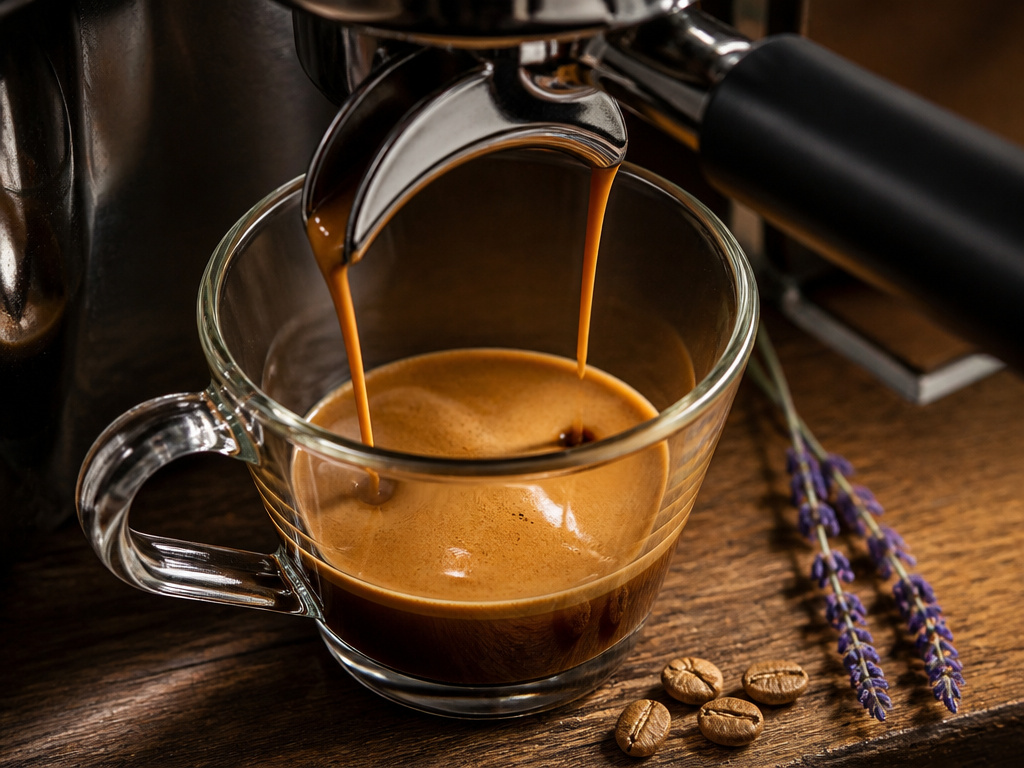
Expect a drink that highlights different aspects of your coffee. Because the water is in contact with the grounds longer, it extracts a broader spectrum of compounds. The early, sweet, and acidic compounds come out first. As the shot continues, it pulls more of the deeper, bitter elements.
With a high-quality, light roast single-origin coffee, this can be fascinating. The longer pull might reveal delicate tea, floral, or herbal notes that get overpowered in a concentrated espresso. The body is thin, almost like a strong brewed coffee.
With a dark roast, the result is often less successful. Dark roasts have more soluble bitter compounds. Extending the shot time amplifies those, leading to a cup that tastes ashy, smoky, and hollow. This is why the lungo gets a bad reputation, many people try it with the dark, oily beans they use for espresso.
Your water temperature matters, too. Aim for 90–96°C (195–205°F). Higher temperatures accelerate extraction, pushing you further into bitter territory during a long pull. If your machine has temperature control, try the lower end of that range for a lungo.
It will never have the syrupy body of a ristretto or the balanced punch of an espresso. That’s not the goal. Think of it as a different lens for viewing your coffee’s flavor map.
Lungo, Espresso, Ristretto: The Size Spectrum
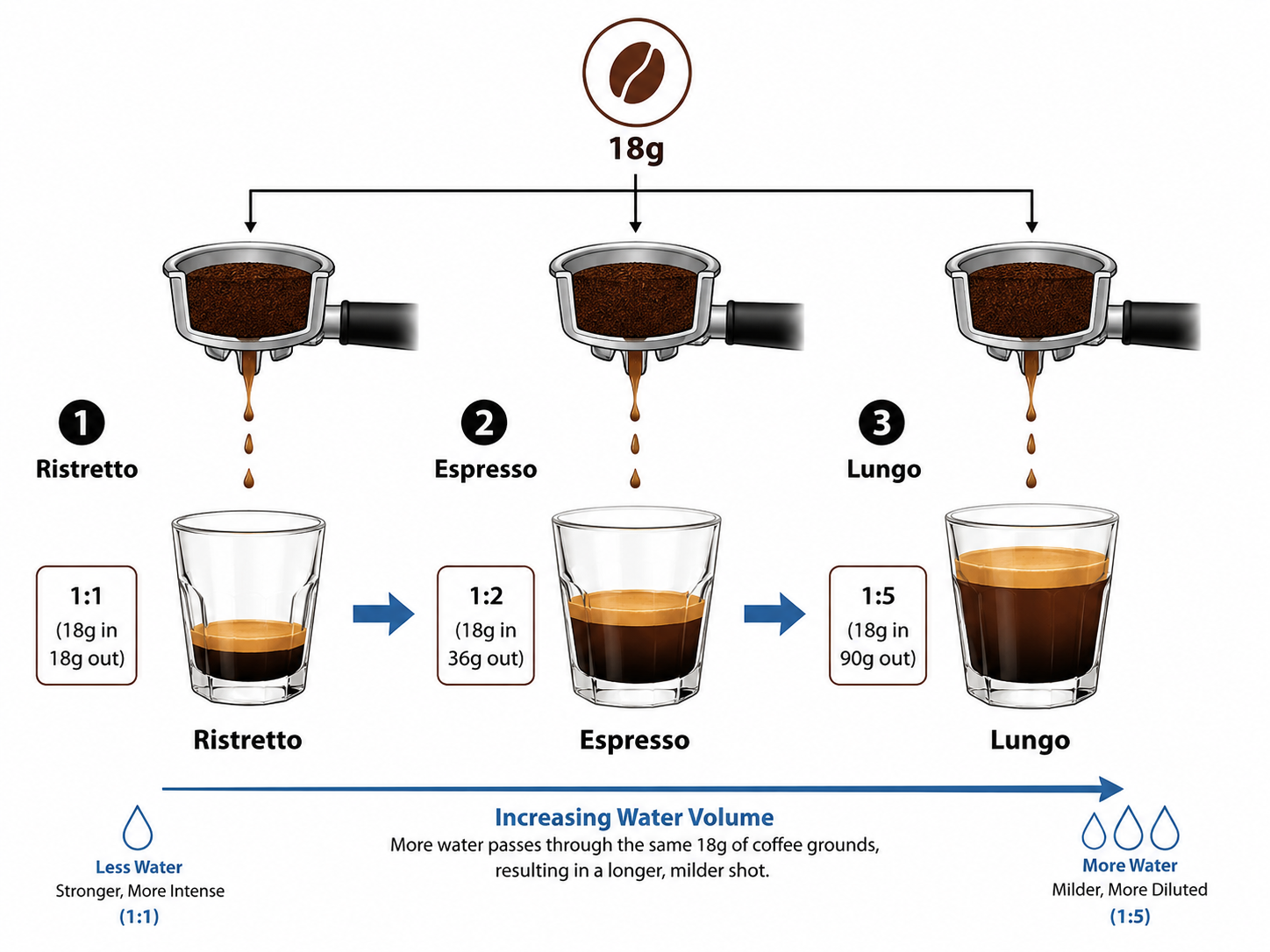
These three drinks form a continuum based on the amount of water pushed through a fixed dose of coffee. Understanding this spectrum helps you diagnose your shots and choose the right drink for your beans.
Ristretto (“restricted”): A 1:1 to 1:1.5 ratio. For 18g of coffee, you get 18–27g of liquid in a similar time as espresso (25-30 seconds). This requires a finer grind to create resistance. The result is the most concentrated, syrupy shot, high in sweetness and acidity, low in bitterness. It’s the intense, front-of-palate experience.
Espresso (“pressed out”): The standard 1:2 ratio. 18g in, 36g out in 25–30 seconds. This is the balance point, designed to extract a harmonious mix of acids, sugars, and bitters. It’s the benchmark.
Lungo (“long”): The 1:3 to 1:5 ratio. 18g in, 54–90g out in 45–60 seconds. As discussed, it’s larger, lighter, and shifts the flavor balance toward the later-extracting compounds.
The YouTube transcript from a barista tutorial using a Victoria Arduino Eagle One machine illustrates this perfectly. They dialed in each drink: a 1:2.3 espresso, a 1:1.5 ristretto (with a finer grind), and a 1:3 lungo (with a coarser grind). The lungo was described as “watery,” “weak in body,” but still showing the coffee’s flavors. That’s the technical reality.
Choosing which to make depends on your beans and your mood. A bright Ethiopian might sing as a ristretto or espresso but taste thin as a lungo. A Brazilian chocolate-nut blend might hold up better to the long pull.
Caffeine Content: How Much Is in a Lungo?
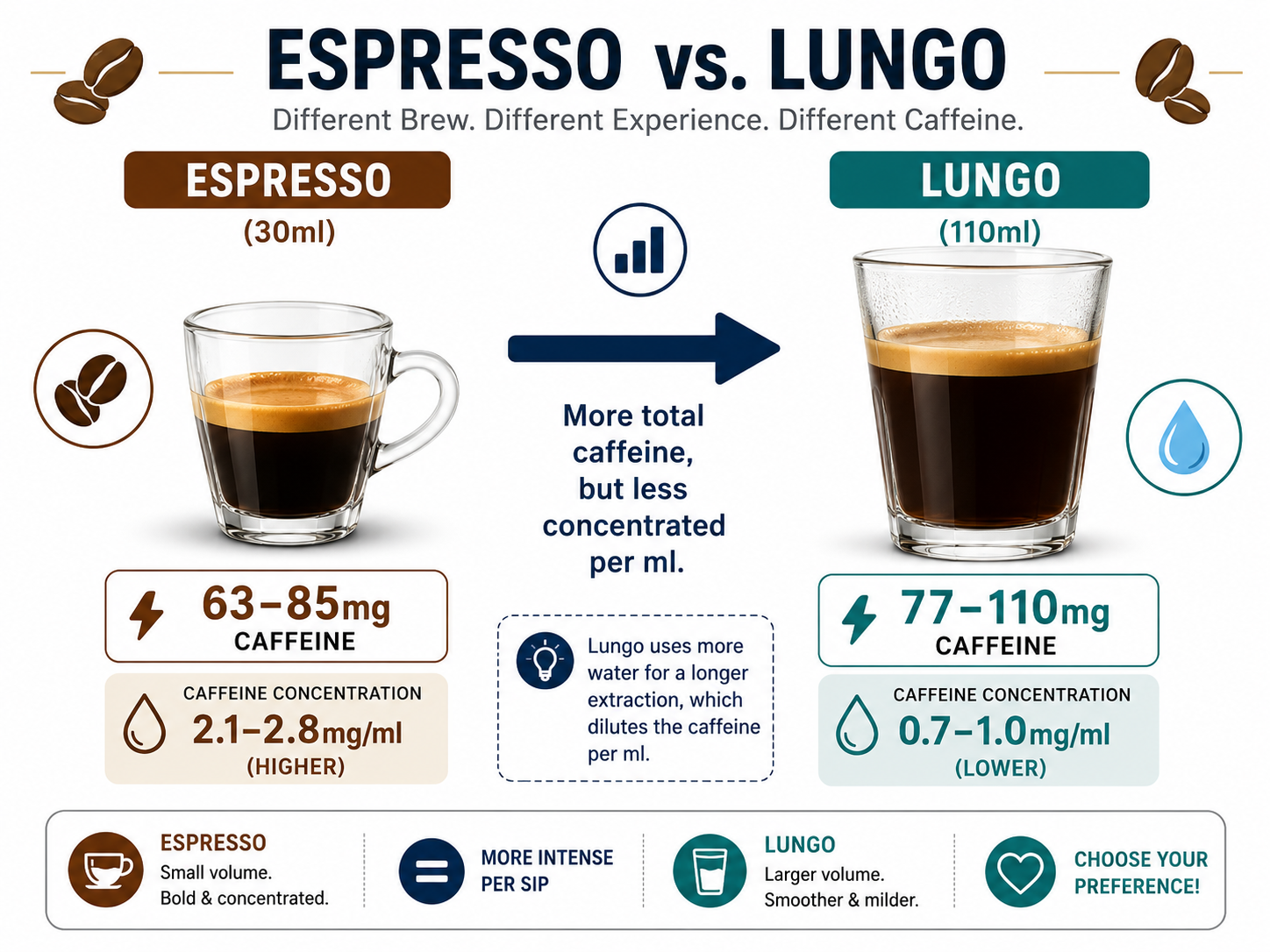
The espresso caffeine content question gets complicated with lungo. Since you’re using more water, you extract more caffeine from the coffee bed. However, the extraction is less efficient per second in the later stages.
Research indicates a lungo can contain between 77 and 110 milligrams of caffeine per cup. Compare that to a standard 30ml espresso, which typically has 63–85 milligrams. So, yes, a lungo has more total caffeine. But per milliliter, it’s less concentrated.
If you’re comparing it to a standard coffee cup of drip coffee (which can have 95–165mg), a lungo sits on the lower end of that range. You’re not getting a massive caffeine bomb; you’re getting a larger volume of a moderately caffeinated drink.
This makes it a useful option for those who find espresso too intense but want a quicker, more concentrated boost than a full mug of drip coffee provides. It bridges the gap.
Choosing the Right Coffee for a Lungo
Not all beans are created equal for this method. Your choice dramatically impacts whether your lungo is interesting or unpleasant. Follow these guidelines.
First, lean toward light or medium roasts. These beans have more acidity and complex sugars, and they contain fewer of the bitter compounds that over-extract easily. A light roast blonde roast bean can produce a lungo with surprising tea-like clarity.
Second, consider the origin. Washed-process Arabica beans from regions like Ethiopia or Colombia often have cleaner, brighter profiles that can withstand a longer pull. Natural or dark-roasted beans tend to get muddy and bitter.
I tried making lungos with my favorite dark roast Italian blend for a week. Every cup tasted like licking a wet ashtray by the third sip. Switching to a medium-roast Guatemalan changed the game, the cup had a rounded sweetness and a clean finish.
Finally, freshness still matters. Use coffee within 3–5 weeks of its roast date. Stale coffee lacks the soluble compounds needed for a good extraction, leading to a flat, papery lungo no matter your technique.
TL;DR: Pick a light/medium roast, washed-process single origin. Skip the dark, oily blends.
Equipment Notes: Grinders and Machines
Your equipment choices will define your success. The grinder is non-negotiable. You need a burr grinder capable of making small, precise adjustments. A blade grinder creates inconsistent particles; the fine dust will over-extract instantly, and the large boulders will underextract, creating a simultaneously bitter and sour mess.
The machine needs control. Ideally, it has manual buttons or programmable volumetric settings so you can stop the shot at an exact weight (e.g., 72g). Many home machines have a “lungo” button that dispenses a set amount of water, often too much. Use a scale to check what that button actually yields and adjust your grind to hit the time target.
If you’re using a super-automatic, you’re at the mercy of its programming. The best you can do is use the correct roast type and clean the machine regularly to ensure consistent water flow.
Remember, this is a technique for enthusiasts with gear. If you have a basic setup, you’ll get more consistent pleasure from mastering the Americano.
Frequently Asked Questions
Is lungo coffee stronger than espresso?
No, it is milder in concentration and flavor intensity. A lungo has more total caffeine (typically 77–110mg) than a single espresso shot (63–85mg) because more water extracts more caffeine. However, the flavor is more diluted, with a lighter body and often more noticeable bitterness.
Can I make a lungo with a Nespresso machine?
Yes, but you are limited to Nespresso’s pre-defined capsules and water volumes. The “Lungo” capsules are designed with a slightly coarser grind and a darker roast profile to withstand the longer extraction. The result is a standardized product, it will be drinkable but you cannot adjust the ratio or grind to tailor it to your taste.
Why does my lungo taste so bitter?
You are almost certainly using an espresso-fine grind. The fine particles over-extract during the long contact time with water, pulling out excessive bitter compounds. The fix is to adjust your grinder to a noticeably coarser setting. Your target is a 45–60 second extraction for a 1:4 ratio yield.
What’s the difference between a lungo and a long black?
long black is similar to an Americano but with the order reversed: hot water goes into the cup first, then the espresso is poured on top. This helps preserve the crema. Both a long black and an Americano are espresso + water. A lungo is a single, long extraction. They are different drinks.
Is a lungo just a big espresso?
Technically, no. While both start with the same coffee dose, a true lungo requires a grind adjustment and results in a different extraction profile. If you simply let an espresso shot run longer without changing the grind, you are making an over-extracted espresso, not a properly balanced lungo.
The Bottom Line
Lungo coffee is a specific, technical drink that sits between espresso and Americano. It is not a button you press for a bigger cup. It requires a deliberate coarser grind and an acceptance of a lighter, sometimes more bitter flavor profile. When dialed in with the right beans, light to medium roasts are best, it can reveal delicate notes that get lost in a shorter shot.
For most home setups, a well-made Americano is a more reliable path to a larger, espresso-based drink. But if you enjoy the process of tweaking grind size and extraction time, the lungo is a rewarding challenge. It teaches you more about how water interacts with coffee than almost any other method. Start with a 1:4 ratio, grind coarser, and taste what the extra time really extracts.
{
“@context”: “https://schema.org”,
“@type”: “HowTo”,
“name”: “How to Make Lungo Coffee”,
“totalTime”: “PT5M”,
“tool”: [
{
“@type”: “HowToTool”,
“name”: “Espresso machine”
},
{
“@type”: “HowToTool”,
“name”: “Burr coffee grinder”
},
{
“@type”: “HowToTool”,
“name”: “Scale”
},
{
“@type”: “HowToTool”,
“name”: “Portafilter and basket”
}
],
“step”: [
{
“@type”: “HowToStep”,
“name”: “Dose and Grind”,
“text”: “Measure 18 grams of coffee. Grind it slightly coarser than you would for a standard espresso shot.”
},
{
“@type”: “HowToStep”,
“name”: “Dose and Tamp”,
“text”: “Dose the grounds into your portafilter, distribute evenly, and tamp firmly.”
},
{
“@type”: “HowToStep”,
“name”: “Brew to Target Weight”,
“text”: “Lock the portafilter into the machine. Start the shot and stop it when your scale reads 72 grams of liquid in the cup, aiming for a total time of 45 to 60 seconds.”
},
{
“@type”: “HowToStep”,
“name”: “Taste and Adjust”,
“text”: “Stir the lungo and taste. If it’s bitter, grind coarser next time. If it’s sour, grind finer.”
}
]
}
{
“@context”: “https://schema.org”,
“@type”: “FAQPage”,
“mainEntity”: [
{
“@type”: “Question”,
“name”: “Is lungo coffee stronger than espresso?”,
“acceptedAnswer”: {
“@type”: “Answer”,
“text”: “No, it is milder in concentration and flavor intensity. A lungo has more total caffeine (typically 77–110mg) than a single espresso shot (63–85mg) because more water extracts more caffeine. However, the flavor is more diluted, with a lighter body and often more noticeable bitterness.”
}
},
{
“@type”: “Question”,
“name”: “Can I make a lungo with a Nespresso machine?”,
“acceptedAnswer”: {
“@type”: “Answer”,
“text”: “Yes, but you are limited to Nespresso’s pre-defined capsules and water volumes. The \”Lungo\” capsules are designed with a slightly coarser grind and a darker roast profile to withstand the longer extraction. The result is a standardized product, it will be drinkable but you cannot adjust the ratio or grind to tailor it to your taste.”
}
},
{
“@type”: “Question”,
“name”: “Why does my lungo taste so bitter?”,
“acceptedAnswer”: {
“@type”: “Answer”,
“text”: “You are almost certainly using an espresso-fine grind. The fine particles over-extract during the long contact time with water, pulling out excessive bitter compounds. The fix is to adjust your grinder to a noticeably coarser setting. Your target is a 45–60 second extraction for a 1:4 ratio yield.”
}
},
{
“@type”: “Question”,
“name”: “What’s the difference between a lungo and a long black?”,
“acceptedAnswer”: {
“@type”: “Answer”,
“text”: “long black is similar to an Americano but with the order reversed: hot water goes into the cup first, then the espresso is poured on top. This helps preserve the crema. Both a long black and an Americano are espresso + water. A lungo is a single, long extraction. They are different drinks.”
}
},
{
“@type”: “Question”,
“name”: “Is a lungo just a big espresso?”,
“acceptedAnswer”: {
“@type”: “Answer”,
“text”: “Technically, no. While both start with the same coffee dose, a true lungo requires a grind adjustment and results in a different extraction profile. If you simply let an espresso shot run longer without changing the grind, you are making an over-extracted espresso, not a properly balanced lungo.”
}
}
]
}
