
What Is Blonde Roast Coffee? The Agtron #65 Definition & Story
Blonde roast coffee is a light roast stopped just after first crack, with beans roasted to 355–400°F, matching the Agtron Gourmet scale reading of 63–65 (tile #65) per the Specialty Coffee Association’s standard. It preserves the bean’s origin flavors, resulting in higher perceived acidity, lighter body, and slightly more caffeine by weight than darker roasts.
Most definitions stop at “it’s a light roast.” That misses the specific color standard, the precise thermal window where flavor develops without burning off acidity, and the real reason you might hate your first bag. The label “blonde” is a marketing term, not a roaster’s term, and that distinction changes what you buy.
This guide walks through the SCA’s technical definition, the common flavor notes and pitfalls, and the brewing adjustments this roast demands.
Key Takeaways
- The official color standard is Agtron Gourmet 63–65 (SCA tile #65). If your “blonde” beans are darker, it’s a medium roast with a marketing label.
- Underdevelopment is the main flaw. A rushed roast tastes grassy or like boiled peanuts, lacking sweetness.
- Brew it hotter and longer. Use 205–208°F water and extend contact time by 15–20 seconds versus a dark roast recipe.
- Starbucks popularized the term “Blonde Espresso” in 2018, but their roast level often matches a conventional medium.
- It has marginally more caffeine by weight, but a typical serving has less because you use fewer grams of denser beans.
The Agtron #65 Definition
Forget “light brown.” The specialty coffee industry measures roast color on the Agtron scale. The Specialty Coffee Association’s Standard 102-2024 defines the “cupping level roast” for evaluation as an Agtron Gourmet reading between 63 and 65. That corresponds to tile #65 on their physical color guide.
A true blonde roast, per the SCA, is ground coffee with an L* (lightness) value in the CIELAB color space that maps to Agtron Gourmet 63–65. This is the baseline against which professional cuppers assess a coffee’s inherent qualities.
If a roaster or cafe deviates from this, like cupping a darker roast, they must report it. This standard exists because color directly correlates with the bean’s chemical state. Roast past this point, and you start burning off chlorogenic acids, which shifts the flavor profile from bright and complex to deep and smoky. Your bag of whole beans might be labeled “blonde,” but if the ground coffee is significantly darker than an Agtron #65 tile, you’re drinking a medium roast. This is a key point of contention between single-origin coffee roasters and large chains.
TL;DR: The professional definition is a color: Agtron #65. Anything marketed as “blonde” but darker is a medium roast.
Roast Profile: Temperature & Terminology
Roasters heat coffee beans in a drum until they undergo pyrolysis. The “first crack” is an audible popping sound, like popcorn, signaling the breakdown of the bean’s cellulose structure. For a blonde roast, the roast master stops the heat shortly after this crack begins, typically between 355°F and 400°F.
| Roast Level | Terminology | End Temperature | Key Visual |
|---|---|---|---|
| Blonde / Light | Cinnamon, Light City, New England | 355–400°F | Dry, light brown, no oil |
| Medium | American, Regular, City | 400–430°F | Medium brown, still dry |
| Dark | French, Italian, Espresso | 430–480°F | Dark brown to black, oily surface |
The historical name for this light roast was “Cinnamon Roast,” referring only to the color, not a cinnamon flavor. Terms like “Half City” and “New England Roast” also described this spectrum. “Blonde” entered the mainstream lexicon much later, primarily through cafe menus. The takeaway is that many traditional coffee bean origins are best expressed at this light roast level, which is why single-origin coffee offerings are often roasted this way.
Flavor Profile & Common Pitfalls
A well-executed blonde roast highlights the bean’s origin character. You taste the floral notes of a Yirgacheffe, the stone fruit of a Colombian, or the citrus brightness of a Costa Rican. The body is lighter, almost tea-like, and the perceived acidity is prominent. This is the “acidity” of a crisp apple, not stomach-churning acid.
The dominant failure mode is underdevelopment.
Common mistake: Rushing the roast at too high a temperature to save time, the beans reach color but not developed flavor. The result is a green, grassy, or hay-like taste. In severe cases, it mimics the aroma of boiled peanuts.
The roaster must apply enough heat for enough time to break down the bean’s sugars fully. If they pull the beans too early to hit the light color, those sugars remain locked in. No amount of brewing skill can extract sweetness that wasn’t created in the roaster. This is why buying blonde roast coffee beans from a reputable roaster matters more than buying a bag with a pretty label.
TL;DR: Good blonde roast is sweet and complex. Bad blonde roast tastes like grass or boiled peanuts because it was roasted too fast.
Caffeine & Acidity: The Numbers
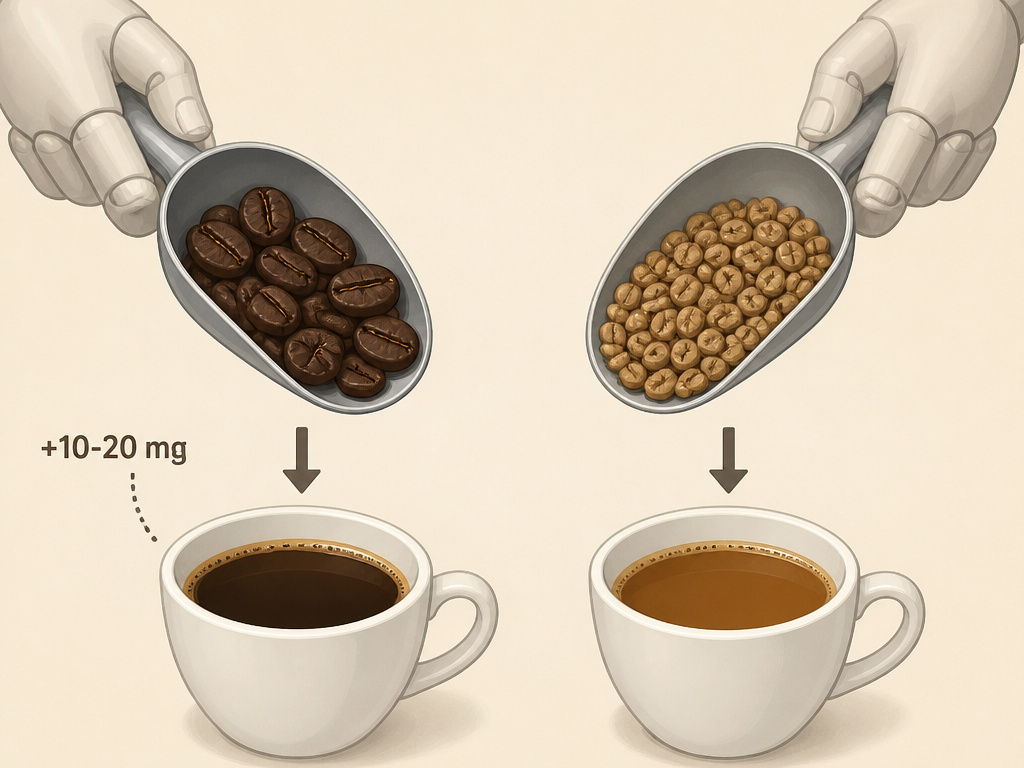
Two persistent myths need clarifying. First, caffeine content. Blonde roast beans have slightly more caffeine by weight because the roasting process degrades caffeine molecules slightly. However, blonde roast beans are denser. A scoop or a gram-based dose of blonde roast contains more individual beans than the same weight of a puffed-up dark roast. In practice, your cup of drip coffee from blonde beans might have marginally less caffeine because you’re physically brewing with fewer bean particles. The difference is minimal, perhaps 10-20 mg per cup. The caffeine content variation from bean origin and brew method is far greater.
Second, acidity. The pH of blonde roast is lower (more acidic) than dark roast. On a scale where tomato juice is around 4.5, blonde roast might sit near 4.8, while a dark roast is closer to milk at 6.5. This measurable coffee acidity is what gives the cup its bright, clean finish. It’s not inherently harsh. Harshness comes from under-extraction or poor bean quality.
Brewing for a Blonde Roast
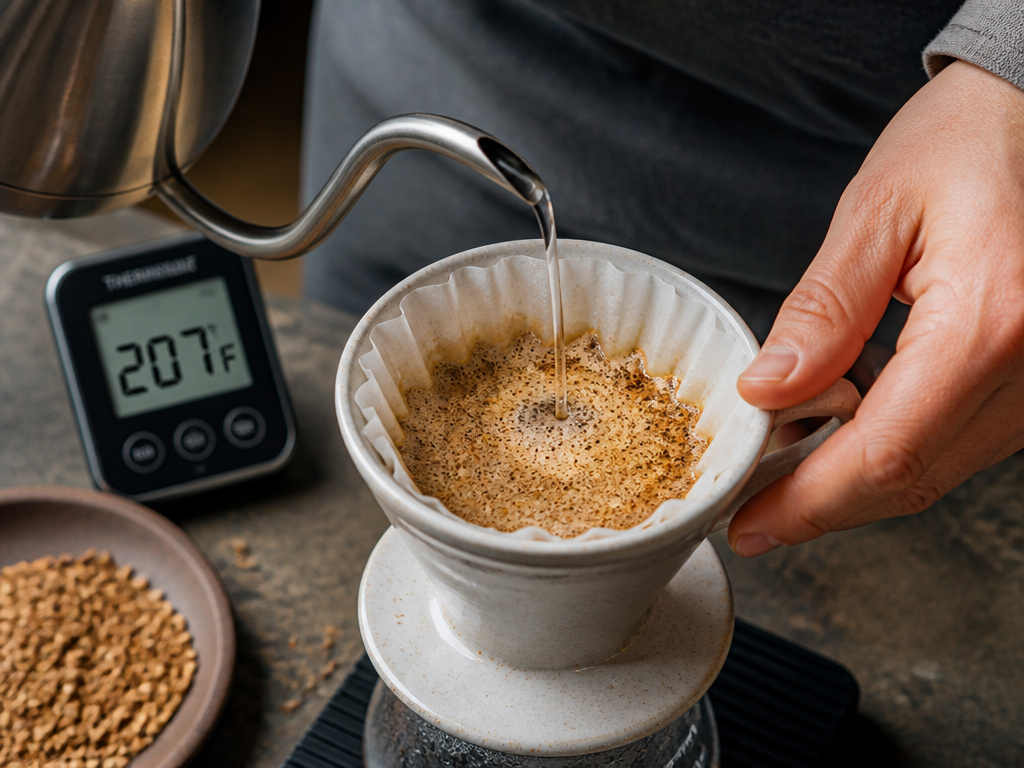
You cannot brew a blonde roast like a dark roast. The hard, dense bean requires more energy to extract its flavors. Use the wrong method, and you get a sour, weak cup.
- Grind Coarser. Start with a setting one click coarser on your burr grinder than you’d use for a dark roast. Fine grinds with blonde beans lead to over-extraction of the outer layers while the core remains underextracted, creating a simultaneous bitter and sour taste.
- Use Hotter Water. Aim for 205–208°F. The higher temperature helps penetrate the dense bean structure.
- Increase Contact Time. Whether for espresso shots or pour-over, extend the brew time. For a V60, add 15-20 seconds to your total pour time. For espresso, aim for a 30-35 second shot instead of 25-28.
- Preferred Method: Pour-over. The controlled, slower extraction of a pour-over is ideal. It gives you the time and temperature control to fully saturate the grounds and pull out the nuanced sugars.
The goal is full extraction. When done right, the cup is balanced, sweet, and complex. When done wrong, it’s thin and sharp. This is why many cafes use blonde roast for espresso-based drinks like iced Americanos, the crisp acidity cuts through the dilution and ice beautifully.
Starbucks & The “Blonde” Marketing Effect
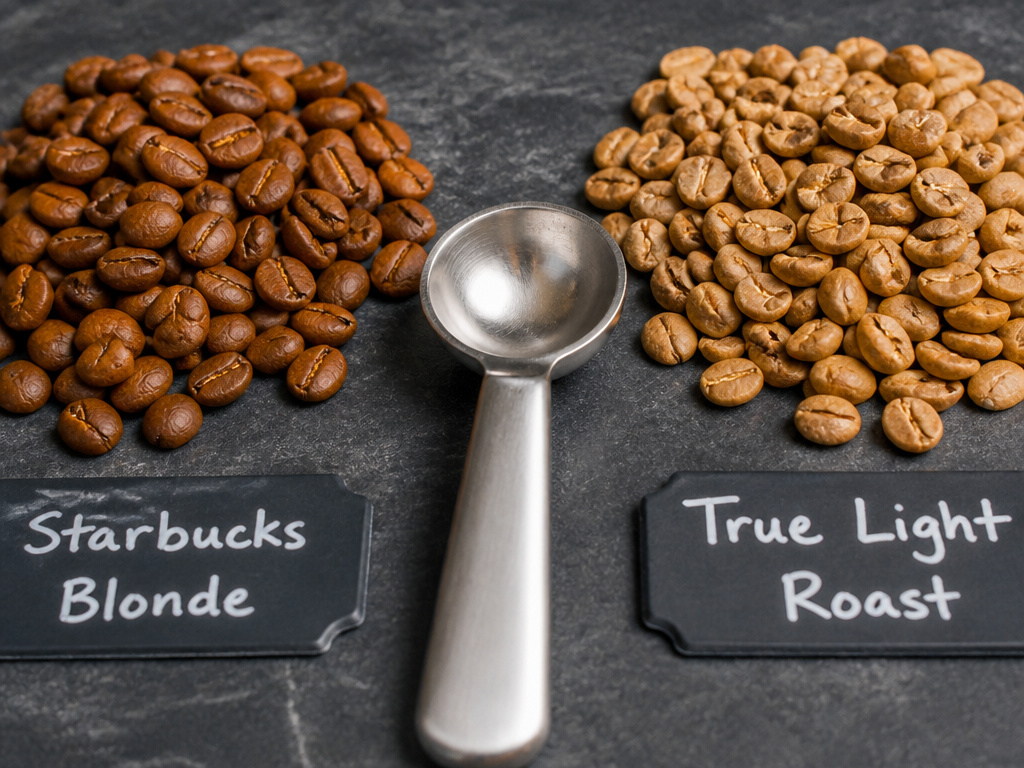
In January 2018, Starbucks launched “Blonde Espresso” in the U.S., marketing it as a smoother, less-bitter alternative to their traditional dark roast espresso. They popularized the term “blonde” for a generation of coffee drinkers. However, a side-by-side comparison often shows Starbucks’ “blonde” beans are closer in color to a conventional medium roast.
Some industry roasters argue this is a marketing move, not a roasting one. By using a familiar term for a slightly lighter profile, they made specialty coffee more approachable. As one roaster put it, they “don’t label coffees with terms like ‘blonde'” and focus instead on balance and clarity. This creates a disconnect: a consumer who likes Starbucks Blonde might find a true Agtron #65 roast from a local shop to be surprisingly bright and acidic. It’s not worse; it’s just different, and more authentic to the bean’s origin. Understanding this helps you navigate cafe menus and bag labels.
Frequently Asked Questions
Is blonde roast coffee stronger?
No, it’s not stronger in terms of body or roast flavor. It has a more intense, bright acidity and clearer origin flavors. Its marginally higher caffeine content by weight is offset by the bean’s higher density, so a typical cup is not noticeably more stimulating.
What is the difference between blonde roast and light roast?
There is no technical difference. “Blonde roast” is a marketing term for a light roast. However, due to Starbucks’ influence, “blonde” on a menu might indicate a roast slightly darker than a traditional light roast, closer to a medium.
Why does my blonde roast coffee taste sour?
Sourness indicates under-extraction. The dense blonde roast beans need more time or hotter water to release their sugars. Try grinding slightly finer, using water at 208°F, or increasing your brew time by 20 seconds.
Is blonde roast good for espresso?
Yes, but it requires adjustment. It’s excellent for iced drinks like shaken espressos. For hot espresso, you’ll need a finer grind and likely a longer extraction time (30+ seconds) to achieve a balanced, sweet shot without harsh acidity.
Before You Go
Blonde roast coffee is defined by a color standard. Agtron #65, and a narrow temperature window just after first crack. Its value is in showcasing what the bean itself tastes like, not what the roast tastes like. The risks are underdevelopment and improper brewing. Seek out roasters who label by origin, not just by roast color. Grind it coarser, brew it hotter and longer, and expect a cup that’s bright, complex, and clean. That’s the authentic version, before the marketing got to it.
{
“@context”: “https://schema.org”,
“@type”: “HowTo”,
“name”: “How to Identify and Brew Blonde Roast Coffee”,
“totalTime”: “PT5M”,
“tool”: [
{
“@type”: “HowToTool”,
“name”: “Agtron Gourmet scale or color tile #65”
},
{
“@type”: “HowToTool”,
“name”: “Burr grinder set to medium-coarse”
},
{
“@type”: “HowToTool”,
“name”: “Pour-over brewer like V60 or Chemex”
}
],
“step”: [
{
“@type”: “HowToStep”,
“name”: “Check the bean color against the standard”,
“text”: “Compare your ground coffee to the Specialty Coffee Association’s Agtron Gourmet scale. A true blonde roast reads between 63-65, matching tile #65.”
},
{
“@type”: “HowToStep”,
“name”: “Grind slightly coarser than for dark roast”,
“text”: “Set your burr grinder one click coarser than your setting for a dark roast. Blonde roast beans are denser and extract slower; a finer grind will over-extract and turn bitter.”
},
{
“@type”: “HowToStep”,
“name”: “Increase brew time or water temperature”,
“text”: “Use water at 205-208°F and aim for a total brew time 15-20 seconds longer than your recipe for a medium roast. This ensures full extraction of sugars.”
},
{
“@type”: “HowToStep”,
“name”: “Taste for development flaws”,
“text”: “Smell and taste the brewed coffee. Look for sweetness and clarity. A grassy, hay-like, or boiled peanut flavor means the roast was underdeveloped.”
}
]
}
{
“@context”: “https://schema.org”,
“@type”: “FAQPage”,
“mainEntity”: [
{
“@type”: “Question”,
“name”: “Is blonde roast coffee stronger?”,
“acceptedAnswer”: {
“@type”: “Answer”,
“text”: “No, it’s not stronger in terms of body or roast flavor. It has a more intense, bright acidity and clearer origin flavors. Its marginally higher caffeine content by weight is offset by the bean’s higher density, so a typical cup is not noticeably more stimulating.”
}
},
{
“@type”: “Question”,
“name”: “What is the difference between blonde roast and light roast?”,
“acceptedAnswer”: {
“@type”: “Answer”,
“text”: “There is no technical difference. \”Blonde roast\” is a marketing term for a light roast. However, due to Starbucks’ influence, \”blonde\” on a menu might indicate a roast slightly darker than a traditional light roast, closer to a medium.”
}
},
{
“@type”: “Question”,
“name”: “Why does my blonde roast coffee taste sour?”,
“acceptedAnswer”: {
“@type”: “Answer”,
“text”: “Sourness indicates under-extraction. The dense blonde roast beans need more time or hotter water to release their sugars. Try grinding slightly finer, using water at 208°F, or increasing your brew time by 20 seconds.”
}
},
{
“@type”: “Question”,
“name”: “Is blonde roast good for espresso?”,
“acceptedAnswer”: {
“@type”: “Answer”,
“text”: “Yes, but it requires adjustment. It’s excellent for iced drinks like shaken espressos. For hot espresso, you’ll need a finer grind and likely a longer extraction time (30+ seconds) to achieve a balanced, sweet shot without harsh acidity.”
}
}
]
}
