
Warming Cold Brew Coffee: The Right Way to Heat Your Coffee
To warm cold brew coffee, dilute the concentrate with near-boiling water or steam it. Never microwave the concentrate directly, as this scorches delicate compounds in under 90 seconds, driving off aromatics and creating a bitter, flat cup. The goal is to add heat without re-extracting the already-spent grounds.
Warming cold brew coffee requires diluting the concentrate with near-boiling water or steaming it, never microwaving the concentrate directly. Microwaving drives off volatile aromatics and can scorch the delicate compounds, turning a smooth cup bitter and flat in under 90 seconds. The goal is to add heat without re-extracting the already-spent grounds.
Most people ruin hot cold brew by treating it like reheating day-old drip coffee. They zap the concentrate and wonder why it tastes thin, bitter, or oddly sour. The mistake is forgetting that cold brew is a finished, extracted product, not leftovers.
This guide covers the two professional methods, explains why dilution is non-negotiable, and details how to use a steam wand for a texture you can’t get from a kettle. We’ll also look at the science behind flavor stability and why some “cold brew” machines aren’t brewing cold at all.
Key Takeaways
- Never microwave cold brew concentrate directly. The rapid, uneven heat destroys flavor compounds and can create a burnt, bitter taste.
- Always dilute concentrate with hot water first. The standard serving ratio is 1 part concentrate to 3 parts near-boiling water.
- For a latte-like texture, steam the diluted mixture with an espresso machine’s wand. This heats it evenly and adds body without scalding.
- Industrial studies show refrigerated shelf life is limited by sensory deterioration, not microbial growth. Heating accelerates this decline.
- Machines like the Ninja Hot & Cold Brewed System CP301 brew hot over ice; they aren’t making true cold-steeped concentrate.
Why Dilution Beats Direct Heating
Heating cold brew is not about reheating. It’s about dilution with a hot medium. The chemistry is simple: cold brew concentrate is a solution of coffee solubles extracted over 12-24 hours. Applying direct, aggressive heat to that solution—like in a microwave—vaporizes the most volatile aromatic compounds first.
You smell that pleasant coffee scent as it heats? That’s the flavor leaving the cup.
Common mistake: Microwaving cold brew concentrate — the top layer overheats while the bottom stays cool, driving off delicate top notes and leaving a flat, occasionally scorched taste in under two minutes.
A 2024 PMC study on cold brew shelf life found that sensory attributes deteriorate faster than microbial stability. Heat is a primary accelerator of that sensory decline. Pouring near-boiling water onto the concentrate dilutes it and brings the whole volume to a drinkable temperature without localized overheating. The result is a warm drink that retains the low-acidity, sweet character of the cold brew.
TL;DR: Add heat by adding hot water to the concentrate, not by applying heat directly to the concentrate.
The Two Ways to Serve Cold Brew Hot
You have two paths, and your tools decide which one you take.
The Simple Dilution Method
This is the standard, equipment-agnostic approach. You need a kettle and a way to measure.
Step 1: Start with proper concentrate.
True cold brew concentrate is typically a 1:4 coffee-to-water ratio steeped for 12-24 hours. The KitchenAid Cold Brew Coffee Maker manual specifies this yields about 840 mL of concentrate. If you’re using a ready-to-drink product, check the label—many are already diluted.
Step 2: Heat your water to just off the boil.
Aim for 200°F (93°C). Boiling water at 212°F (100°C) can slightly “cook” the concentrate, muting some floral notes. An electric kettle with temperature control is ideal, but a regular kettle removed just as it starts to whistle works.
Step 3: Mix one part concentrate with three parts hot water.
This is the classic dilution for a hot cup. For a stronger drink, try a 1:2 ratio. For something closer to an Americano, use a 1:4 ratio. The brewing methods you use for hot coffee, like pour-over or drip, involve fresh extraction; here, you’re just blending.
| Concentrate Ratio | Hot Water Added | Resulting Strength | Best For |
|---|---|---|---|
| 1 part concentrate | 2 parts water | Strong, intense | Espresso drinkers |
| 1 part concentrate | 3 parts water | Standard, balanced | Daily drinking |
| 1 part concentrate | 4 parts water | Mild, tea-like | Sensitive stomachs |
Step 4: Stir and taste immediately.
The drink will be hot but not scalding. It won’t have the same piercing heat as freshly brewed coffee, which is a feature, not a bug. The smooth, low-acid profile shines through.
The Steam Wand Method for Texture
This is the barista move. It creates a hot drink with a silky, almost creamy body that mimics a latte without milk.
You need an espresso machine with a steam wand. A frothing pitcher is helpful but not mandatory.
I tried steaming straight concentrate once. The result was a thin, overly intense shot that tasted hollow and left a weird film on my tongue. Now I always dilute first.
Step 1: Dilute your concentrate in the pitcher.
Use the same 1:3 ratio. Fill your steaming pitcher about halfway to leave room for expansion.
Step 2: Purge the steam wand.
Let it blast for a second to clear any condensed water. This ensures dry, hot steam.
Step 3: Submerge the wand tip and turn on the steam.
Keep the tip just below the surface. You’re heating, not frothing. Swirl the pitcher gently to distribute heat evenly. Your target temperature is 150-160°F (65-71°C). Go hotter, and you risk burning the coffee.
Step 4: Tap out the bubbles and pour.
The steam will create some microfoam. Give the pitcher a firm tap on the counter and a swirl to incorporate it. This method, highlighted in a Toddy official video, creates a drink with a crema-like body that highlights single-origin coffees beautifully.
What Not to Do: The Microwave Trap
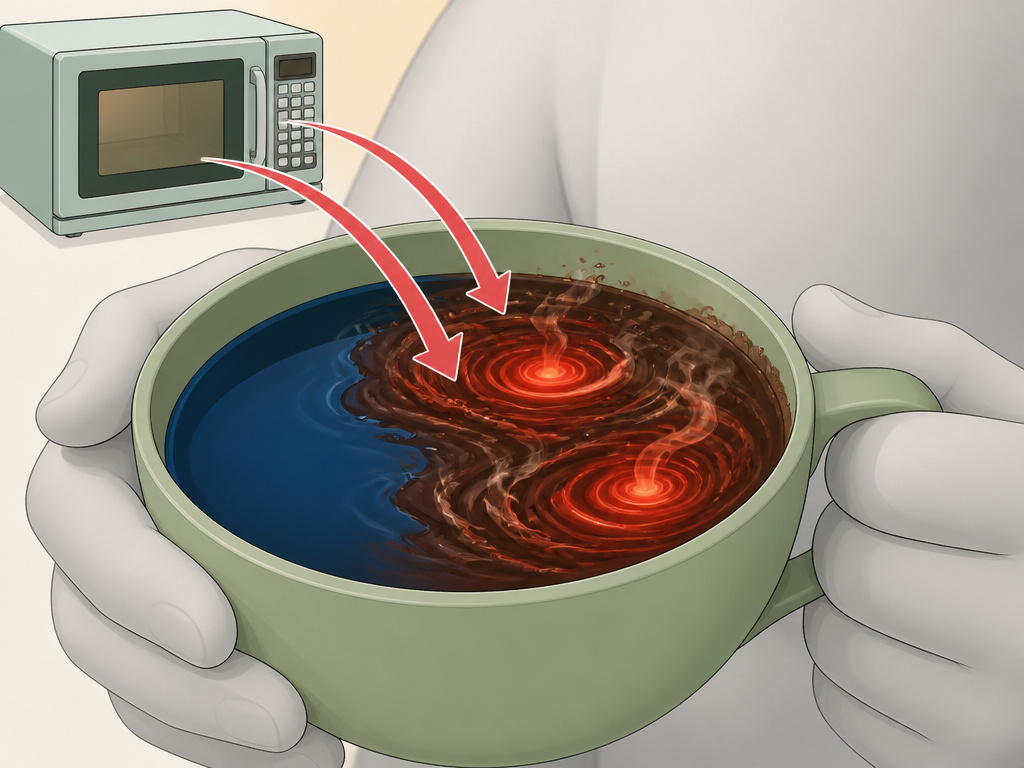
The microwave is the fastest way to ruin a batch of concentrate. The problem is physics.
Microwaves excite water molecules unevenly. This creates hot spots within the liquid while other parts remain cool. Those hot spots can reach temperatures high enough to break down chlorogenic acids and other compounds into bitter-tasting quinides. The PMC study on cold brew shelf life notes that sensory deterioration is the limiting factor for quality, and microwaving is a direct, fast-track to that outcome.
The other issue is container shape. A wide, shallow mug exposes more surface area, accelerating the loss of volatile aromatics. A tall, narrow vessel heats more evenly but takes longer.
If you must use a microwave, do it on the already-diluted drink, not the concentrate. And use a low power setting (50%) in short, 15-second bursts, stirring between each. It’s a salvage operation, not a recommendation.
The Science of Heat and Cold Brew Stability
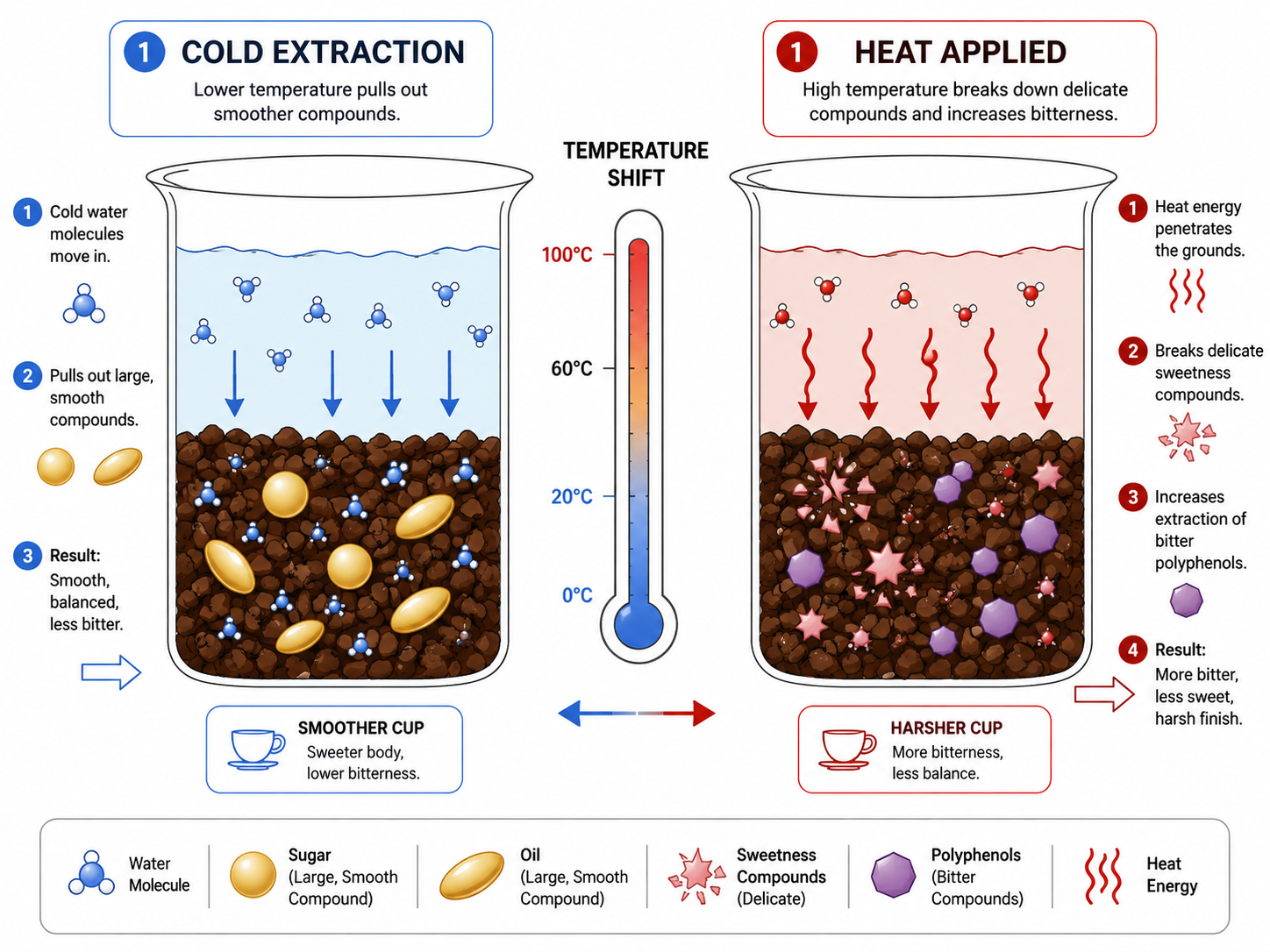
Why is cold brew so sensitive? The extraction process itself provides the answer.
Cold water pulls different compounds from coffee grounds than hot water. It gets more sugars, fewer bitter-tasting polyphenols, and almost no acidic compounds like quinic acid. This is why it tastes naturally sweeter and smoother. A 2023 study on high-pressure processing for cold brew confirmed that these sensory attributes are stable under refrigeration but degrade with heat and time.
Industrial producers use High-Temperature Short-Time (HTST) pasteurization to make shelf-stable products. An MDPI study on industrial cold brew storage tracked a 3000-liter batch and found phenolic compounds broke down significantly over 270 days, with the biggest drop in antioxidant activity happening in the first 90 days. Your home microwave applies heat far less evenly and controllably than an industrial pasteurization plate.
This is also why some automated brewers are misnamed. The Ninja Hot & Cold Brewed System CP301 manual explicitly states its “Cold Brew” and “Over Ice Brew” functions brew at elevated temperatures, relying on ice in the carafe to chill the drink. It’s not true cold extraction. It’s hot coffee quickly cooled, which is a different coffee strength comparison entirely.
Choosing and Prepping Your Concentrate
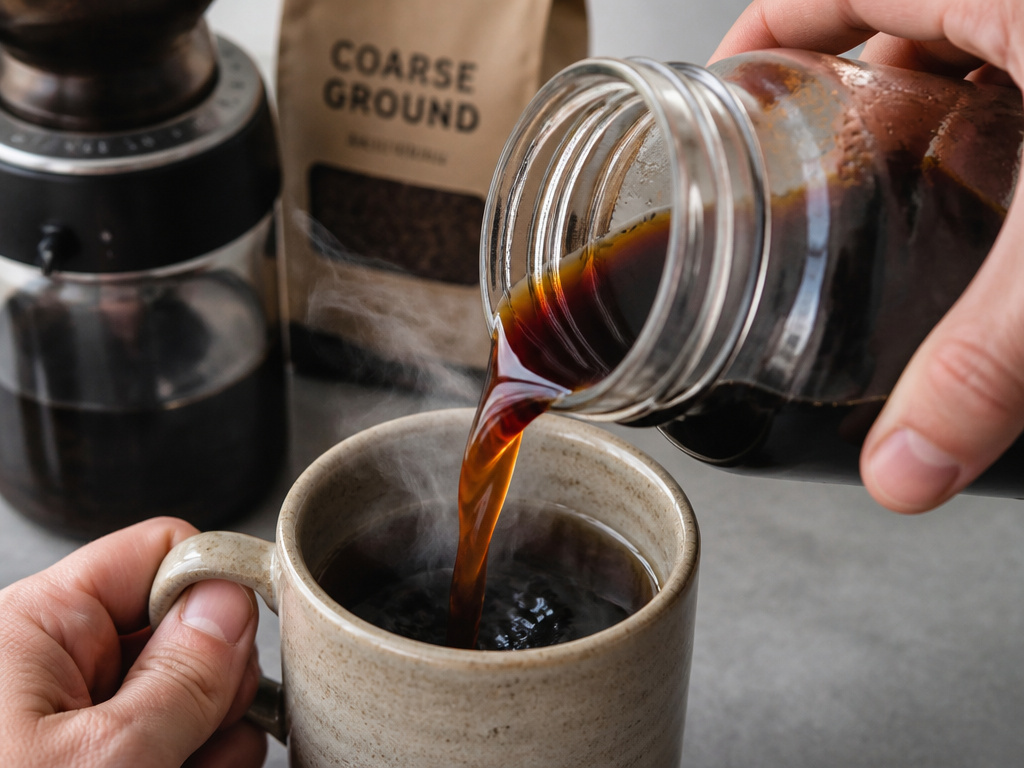
Not all cold brew is created equal, especially when you plan to heat it.
Grind size matters more than you think. The industrial standard for cold brew, per the MDPI study, is a coarse grind with a particle diameter of 1.5–2.0 mm. This size allows for full extraction over 12-24 hours without over-extracting bitter compounds. If your home grind is too fine, your concentrate will already have a harsh edge that heating will amplify. A consistent coarse grind setting from a burr coffee grinder is non-negotiable for quality.
Bean selection steers the flavor. Light roast coffee beans, or blonde roast coffee beans, retain more acidic and fruity notes that can become sharp when heated. Arabica beans from a single-origin like Colombia might present specific chocolate or nutty notes that warm nicely. A darker roast or a balanced coffee bean blend will often heat more predictably, as the roasting process has already developed the sugars and reduced acidity.
Concentrate is king for storage. Making a ready-to-drink batch and trying to heat the whole thing is a waste. Make a strong concentrate (a 1:4 ratio is standard) and store it in the fridge. The Pangea Coffee guide notes concentrate is more shelf-stable and can last up to two weeks. Dilute what you need, hot or cold, per serving.
FAQ: Warming Cold Brew Coffee
Can you heat cold brew coffee on the stove?
Yes, but use very low heat and constant stirring. Gently warm the already-diluted mixture in a small saucepan. Never let it simmer or boil. This method is better than a microwave but more hands-on than using hot water.
Does heating cold brew make it acidic?
Heating itself doesn’t create new acids. However, it can make existing subtle acidic notes more perceptible. The overall acidity will still be far lower than a hot-brewed cup. If you have a sensitive stomach, stick to the 1:3 or 1:4 dilution and avoid boiling water.
Can you steam cold brew for a latte?
Absolutely. Dilute the cold brew concentrate with a small amount of water or milk, then steam the mixture as you would regular milk. The result is a rich, hot latte with the signature smoothness of cold brew. This is a fantastic way to explore espresso-based drinks without an espresso machine.
How long does heated cold brew last?
Drink it immediately. Once heated, the clock speeds up. The same sensory deterioration that limits refrigerated shelf life to about two weeks happens in hours at room temperature. Don’t heat a full batch and save it.
Why does my heated cold brew taste bitter?
You likely overheated it, used a concentrate that was over-extracted (too fine a grind or too long a steep), or microwaved it. Switch to the hot water dilution method. If bitterness persists, check your coffee grind consistency and shorten your steeping time to 12 hours.
Before You Go
Warming cold brew is a simple way to extend your favorite summer drink into the colder months. The rule is gentle heat through dilution, never direct high heat. Ditch the microwave for a kettle or steam wand.
The method you choose depends on the texture you want. A quick dilution with hot water gets you a warm, clean cup in seconds. Taking the time to steam a diluted concentrate creates something special with a velvety body. Both preserve the low-acid, sweet character that makes cold brew worth the wait.
Your bean choice and grind are the foundation. A proper coarse grind from a quality grinder and a clean, Arabica bean will give you a concentrate that stands up to heating without turning. Now you know how to warm cold brew coffee without wrecking it.
{
“@context”: “https://schema.org”,
“@type”: “HowTo”,
“name”: “How to Warm Cold Brew Coffee Without Ruining It”,
“totalTime”: “PT5M”,
“tool”: [
{
“@type”: “HowToTool”,
“name”: “Steam wand on an espresso machine”
},
{
“@type”: “HowToTool”,
“name”: “Kettle for boiling water”
},
{
“@type”: “HowToTool”,
“name”: “Measuring shot glass or scale”
}
],
“step”: [
{
“@type”: “HowToStep”,
“name”: “Start with cold brew concentrate”,
“text”: “Use a standard cold brew concentrate, typically made at a 1:4 coffee-to-water ratio and steeped for 12-24 hours.”
},
{
“@type”: “HowToStep”,
“name”: “Dilute with hot water”,
“text”: “For a hot cup, mix one part cold brew concentrate with three parts near-boiling water (200°F / 93°C) in your mug.”
},
{
“@type”: “HowToStep”,
“name”: “Steam the mixture for texture”,
“text”: “For a latte-style drink, pour the diluted mixture into a steaming pitcher and use an espresso machine’s steam wand to heat and texture it until it reaches 150-160°F (65-71°C).”
},
{
“@type”: “HowToStep”,
“name”: “Taste and adjust”,
“text”: “The result will be less acidic than hot-brewed coffee. Adjust the dilution ratio to taste for more strength or sweetness.”
}
]
}
{
“@context”: “https://schema.org”,
“@type”: “FAQPage”,
“mainEntity”: [
{
“@type”: “Question”,
“name”: “Can you heat cold brew coffee on the stove?”,
“acceptedAnswer”: {
“@type”: “Answer”,
“text”: “Yes, but use very low heat and constant stirring. Gently warm the already-diluted mixture in a small saucepan. Never let it simmer or boil. This method is better than a microwave but more hands-on than using hot water.”
}
},
{
“@type”: “Question”,
“name”: “Does heating cold brew make it acidic?”,
“acceptedAnswer”: {
“@type”: “Answer”,
“text”: “Heating itself doesn’t create new acids. However, it can make existing subtle acidic notes more perceptible. The overall acidity will still be far lower than a hot-brewed cup. If you have a sensitive stomach, stick to the 1:3 or 1:4 dilution and avoid boiling water.”
}
},
{
“@type”: “Question”,
“name”: “Can you steam cold brew for a latte?”,
“acceptedAnswer”: {
“@type”: “Answer”,
“text”: “Absolutely. Dilute the cold brew concentrate with a small amount of water or milk, then steam the mixture as you would regular milk. The result is a rich, hot latte with the signature smoothness of cold brew. This is a fantastic way to explore espresso-based drinks without an espresso machine.”
}
},
{
“@type”: “Question”,
“name”: “How long does heated cold brew last?”,
“acceptedAnswer”: {
“@type”: “Answer”,
“text”: “Drink it immediately. Once heated, the clock speeds up. The same sensory deterioration that limits refrigerated shelf life to about two weeks happens in hours at room temperature. Don’t heat a full batch and save it.”
}
},
{
“@type”: “Question”,
“name”: “Why does my heated cold brew taste bitter?”,
“acceptedAnswer”: {
“@type”: “Answer”,
“text”: “You likely overheated it, used a concentrate that was over-extracted (too fine a grind or too long a steep), or microwaved it. Switch to the hot water dilution method. If bitterness persists, check your coffee grind consistency and shorten your steeping time to 12 hours.”
}
}
]
}
