
Is Tea Better Than Coffee? A Health & Caffeine Comparison
Tea is better than coffee for sustained, jitter-free alertness due to its L-theanine, which buffers caffeine’s spike. Matcha brewed at 90°C delivers the highest antioxidant score (219.39 mg TE/kg dm). However, coffee’s faster caffeine and different antioxidants may suit those needing a rapid, sharp energy boost.
Whether tea is better for you than coffee depends on three measurable things: caffeine release speed, antioxidant type and concentration, and your personal health markers for heart disease, cholesterol, and iron absorption. The L-theanine in tea creates a smoother stimulant effect, while coffee’s chlorogenic acids offer a different antioxidant profile. Matcha brewed at 90°C delivers the highest antioxidant score on the CUPRAC assay, 219.39 mg TE/kg dm, but black tea’s heart benefit window closes after four cups a day.
Most comparisons miss the crash. Coffee’s caffeine hits fast and drops hard. Tea’s L-theanine buffers the spike, so you get alertness without the three-hour slump. That difference matters more than milligrams per cup.
This guide walks through the chromatography data, the antioxidant assays, and the dose-response curves for heart health. You’ll see where each drink wins, where each loses, and which one fits your day.
Key Takeaways
- Tea’s L-theanine creates a calm, sustained alertness; coffee’s caffeine delivers a sharper, faster jolt that often ends in a crash.
- Matcha brewed at 90°C scores 219.39 mg TE/kg dm on the CUPRAC antioxidant test, black tea scores lower, and coffee’s chlorogenic acids work differently.
- For heart benefits, black tea peaks at 2–3 cups daily; more than four cups sees the benefit disappear. Green tea’s benefit increases with more intake.
- Unfiltered coffee contains diterpenes that raise LDL cholesterol; paper filters or instant coffee remove them.
- Both drinks inhibit non-heme iron absorption if consumed with meals; drink them an hour before or after eating if iron levels are low.
The Caffeine Difference Isn’t Just Numbers
A 200 mL cup of brewed coffee packs about 100 mg of caffeine. Instant coffee drops to around 60 mg. Decaf isn’t zero, it holds a residual amount.
Tea’s range is wider. Black tea lands near 50 mg per 200 mL cup. Green tea sits around 28 mg. White tea and oolong are lower, 5.8 mg and 4 mg respectively. Then there’s matcha, a powdered green tea, hitting 70 mg. Yerba mate pushes to 85 mg.
Those numbers come from a chromatography study published in Foods. The same study measured L-theanine, an amino acid that crosses the blood-brain barrier.
Black tea and green tea both deliver about 12.5 mg of L-theanine per 200 mL infusion. This compound modulates caffeine’s stimulant effect, producing a smoother, less jittery alertness.
L-theanine doesn’t just sit there. It changes how the caffeine feels. Coffee’s 100 mg hits like a switch flipped, sharp focus, maybe anxiety, a definite crash three hours later. Tea’s 50 mg with 12.5 mg of L-theanine feels more like a gentle ramp up and a sustained plateau.
I switched from coffee to black tea for a month after a week of sleepless nights. The first three days were sluggish. By day seven, the afternoon crash vanished. I could work through a four-hour block without the 3 PM fog. That’s L-theanine’s buffer.
TL;DR: Milligram counts tell half the story; L-theanine in tea creates a calmer, longer-lasting stimulant effect than coffee’s raw caffeine jolt.
Antioxidants: CUPRAC, FRAP, and DPPH Tell the Real Story
Antioxidant activity isn’t a single number. Researchers use three assays: CUPRAC (cupric reducing antioxidant capacity), FRAP (ferric reducing antioxidant power), and DPPH (2,2-diphenyl-1-picrylhydrazyl). Each measures a different chemical reaction.
A 2026 study in the Journal of Food Measurement and Characterization brewed matcha, black tea, oolong, and green tea at 45°C and 90°C, then ran all three assays.
Matcha at 90°C won every test. Its CUPRAC value jumped from 171.39 mg TE/kg dm to 219.39. FRAP went from 66.09 g TE/kg dm to 81.27. DPPH rose from 48.01 to 51.64. Black tea scored lowest across all three parameters.
Coffee doesn’t compete on these assays. Its primary antioxidants are chlorogenic acids, which work through different pathways. They’re potent, but they don’t show up on a CUPRAC sheet.
Common mistake: Assuming “antioxidant” means one universal benefit, the type of antioxidant (catechins in tea, chlorogenic acids in coffee) determines which health pathways it supports.
Catechins in green tea are fragile. Storing green tea at room temperature instead of -20°C cuts polyphenol levels within months. Brewing above 90°C accelerates catechin degradation. That’s why matcha’s high score requires precise temperature control.
Coffee’s chlorogenic acids are more stable during brewing but degrade in the gut. New encapsulation methods are being tested to improve their bioaccessibility.
| Tea Type | Primary Antioxidant | Key Health Pathway | Brewing Temp for Peak Activity |
|---|---|---|---|
| Matcha | Catechins (EGCG) | Neuroprotection, metabolic | 90°C |
| Black Tea | Theaflavins | Heart health, anti-inflammatory | 95–100°C |
| Green Tea | Catechins | Cancer risk reduction, cognitive | 70–80°C |
| Coffee | Chlorogenic Acids | Blood sugar regulation, liver protection | 92–96°C |
Theaflavins in black tea form when catechins oxidize. A ScienceDirect study found moderate brewing temperatures drive that oxidation best. Too hot, and the catechins break down before they couple.
TL;DR: Matcha at 90°C leads the antioxidant assays, but coffee’s chlorogenic acids support different health benefits. Storing green tea at -20°C preserves its catechins.
Heart Health: The 2–3 Cup Limit for Black Tea
Both drinks show cardiovascular benefits in the general range of two to five cups daily. The dose-response curve isn’t the same.
Black tea’s benefit peaks at two or three cups. Beyond four cups a day, the advantage disappears. Green tea’s benefit curve keeps climbing, more intake correlates with lower risk.
The difference likely ties to theaflavin concentration and caffeine load. Black tea’s higher caffeine might push blood pressure at higher doses, offsetting theaflavin’s anti-inflammatory effect.
Coffee’s heart benefit also sits in the two-to-five cup range. But unfiltered coffee. French press, espresso, Turkish, contains diterpenes. These compounds raise LDL cholesterol. Paper filters trap diterpenes. Instant coffee’s manufacturing process removes them.
If your cholesterol runs high, switch to filtered or instant coffee. Or move to tea.
I ran a French press daily for two years. My LDL crept up 15 points. Switching to a paper-filter drip machine brought it back down in six months. The cardiologist didn’t mention diterpenes, just said “maybe switch your brew method.”
The additives wreck both drinks’ heart benefits. Sugar and cream add calories, saturated fat, and simple carbs. A sweetened latte or a sugary chai turns a heart-healthy habit into a metabolic risk.
TL;DR: Black tea’s heart benefit window is 2–3 cups; green tea’s benefit grows with more intake. Unfiltered coffee raises LDL cholesterol via diterpenes.
Cancer, Cognitive Health, and the Temperature Danger
Coffee wins the cancer chapter. Consistent data links coffee intake to lower risks of liver cancer, endometrial cancer, and possibly colorectal cancer. Tea’s evidence is murkier, a possible link to lower oral cancer risk, but no strong signal for most other cancers.
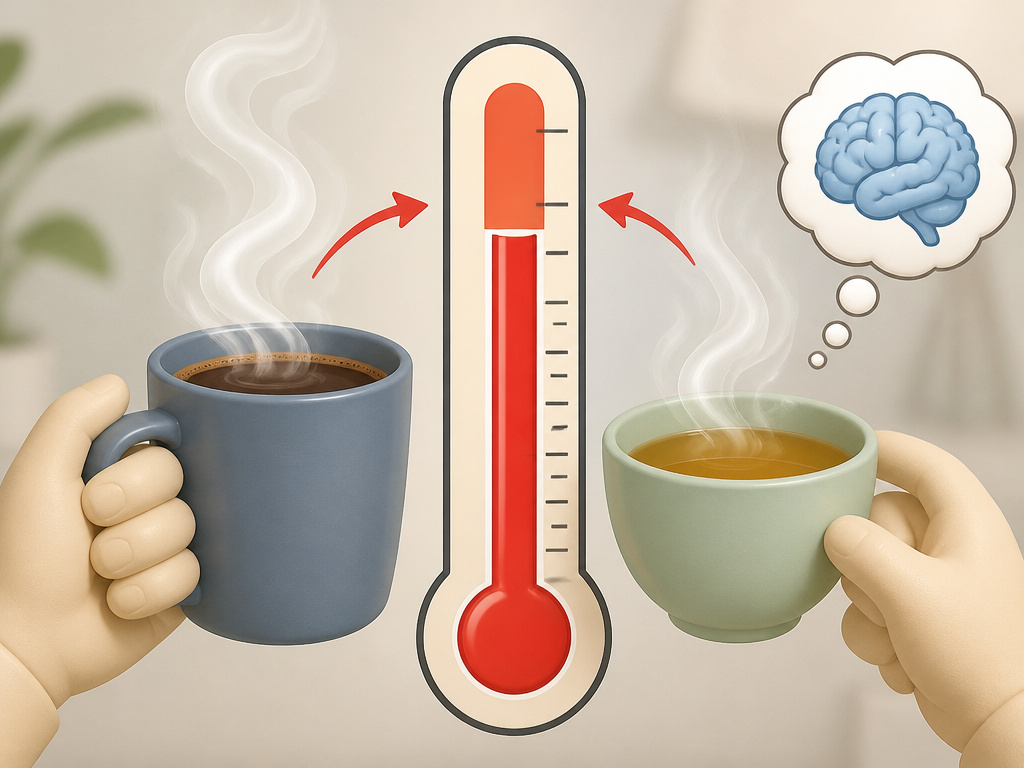
Neither drink raises cancer risk except through temperature. Consuming any beverage above 65°C increases esophageal cancer risk. That’s a straight physical burn, not a chemical effect.
Let your coffee or tea cool below 65°C before sipping. Five minutes off the boil usually does it.
For brain health, both drinks reduce cognitive impairment and dementia risk in the two-to-four cup daily range. L-theanine in tea may add a neuroprotective layer beyond caffeine’s stimulation.
The mental effects differ. Coffee’s sharp alertness works for focused tasks. Tea’s calm focus suits sustained concentration without anxiety. Historical associations match that, coffee with loud debate, tea with contemplation.
If caffeine gives you insomnia, tremors, or anxiety, tea is the better choice. The L-theanine buffer cuts the side effects.
The Iron Absorption Problem Both Drinks Share
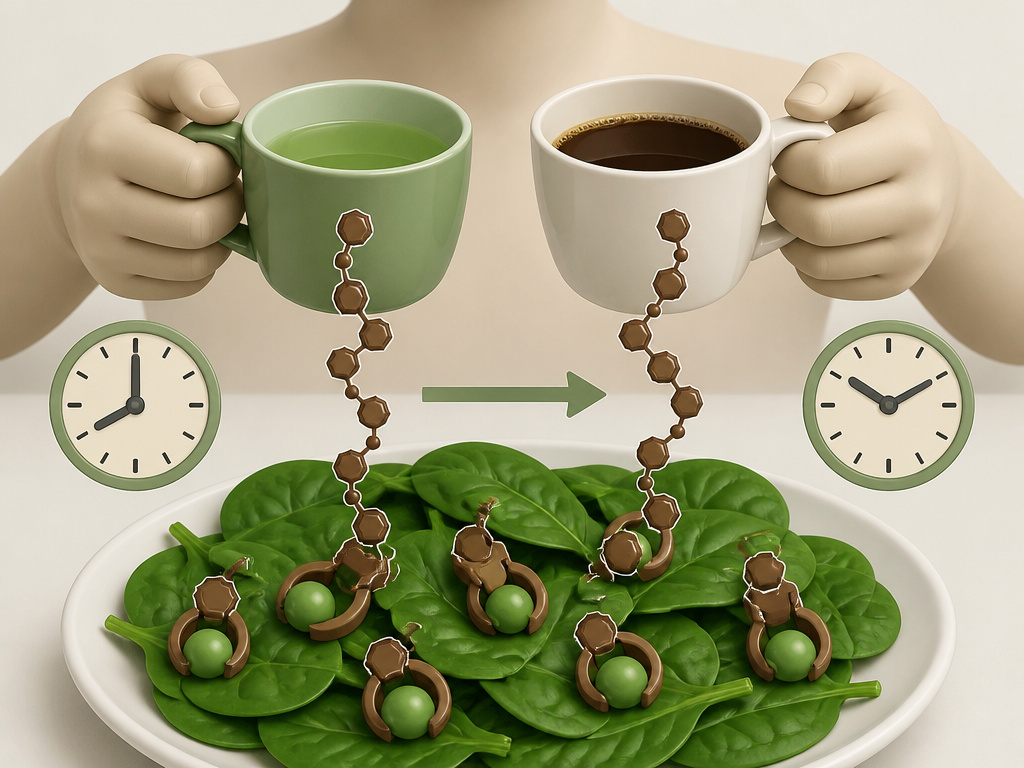
Coffee and tea inhibit non-heme iron absorption, the iron from plants, not meat. Tea’s inhibition is stronger.
The mechanism is simple. Polyphenols in both drinks bind non-heme iron in the gut, making it less available. Drinking tea or coffee with a meal can cut iron absorption by half.
If your iron levels are low, drink your beverage an hour before or after eating. That spacing minimizes the binding.
I learned this after a blood test showed borderline low iron despite a spinach-heavy diet. The doctor asked about tea timing. I drank green tea with breakfast. Shifting it to mid-morning brought my iron back up in two months.
Common mistake: Drinking tea or coffee with a meal when iron levels are low, the polyphenols bind non-heme iron and reduce absorption by up to 60%.
This isn’t a concern for most people with balanced iron. For those with anemia or low ferritin, it’s a real dietary tweak.
Which Drink Fits Your Day?
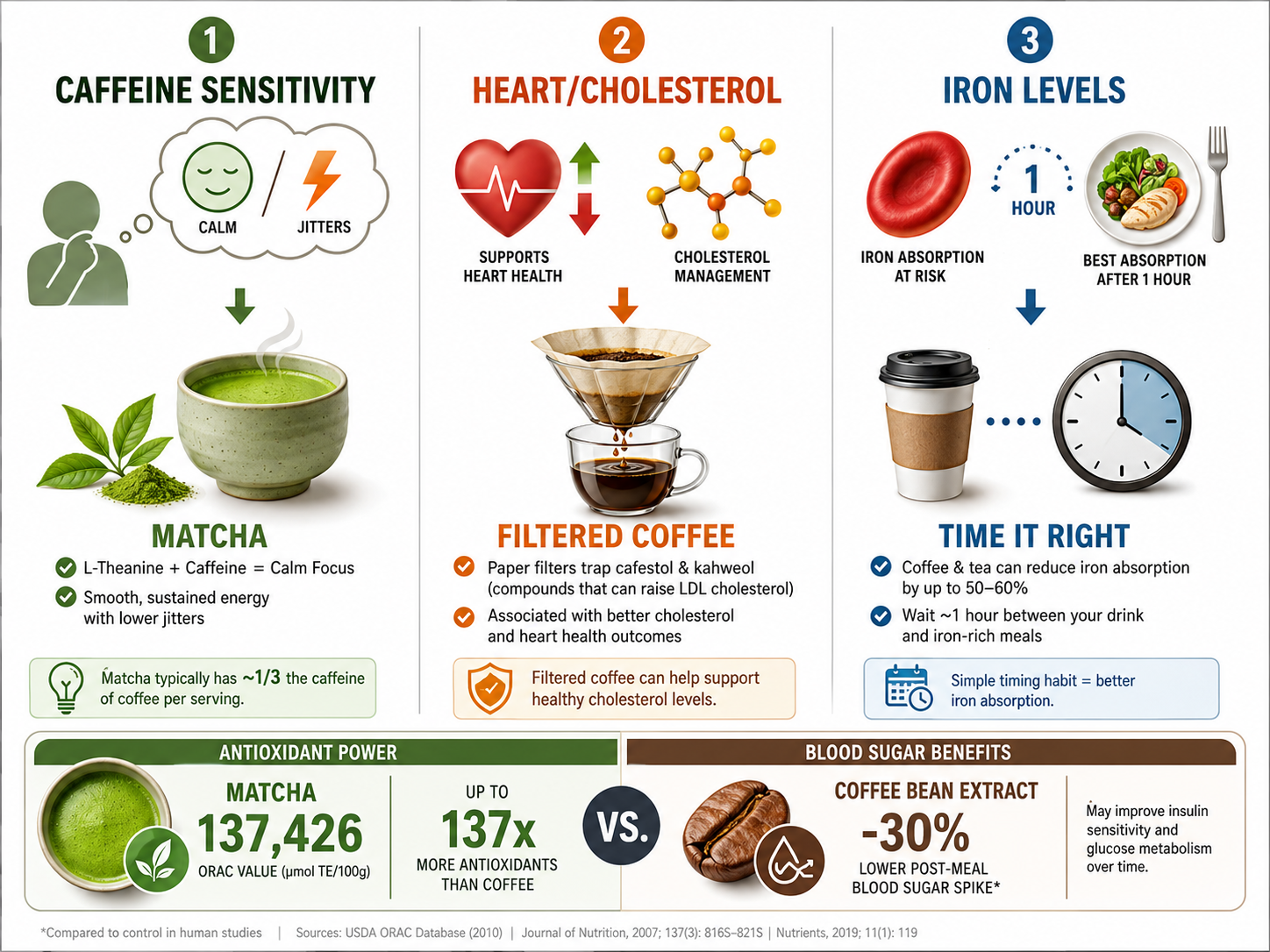
Your choice hinges on three personal factors: caffeine sensitivity, heart/cholesterol status, and iron levels.
If caffeine makes you anxious or ruins sleep, tea’s L-theanine buffer makes it the default pick. Matcha or yerba mate still deliver a caffeine kick without the jitters.
If cholesterol is high, avoid unfiltered coffee. Choose paper-filtered coffee, instant coffee, or any tea.
If iron is low, time your drink an hour away from meals. That rule applies to both beverages.
For pure antioxidant pursuit, matcha brewed at 90°C leads the lab tests. But coffee’s chlorogenic acids support blood sugar and liver health, a different win.
I keep both in rotation. Coffee for morning sharpness, black tea for afternoon sustained focus, green tea for evenings when I want calm alertness. That mix avoids the caffeine crash and spreads the polyphenol benefits.
TL;DR: Matcha for antioxidants, black tea for heart health (2–3 cups), coffee for cancer protection, and either for cognitive benefits, but always below 65°C and timed away from meals if iron is low.
Frequently Asked Questions
Does tea have more antioxidants than coffee?
It depends on the assay. Matcha brewed at 90°C scores higher on CUPRAC, FRAP, and DPPH antioxidant tests than any coffee preparation. Coffee’s primary antioxidants are chlorogenic acids, which work through different pathways and aren’t measured by those assays. So tea wins on the common lab tests, but coffee still delivers meaningful antioxidant activity.
Why does tea feel less jittery than coffee?
Tea contains L-theanine, an amino acid that crosses the blood-brain barrier and modulates caffeine’s stimulant effect. A 200 mL cup of black tea has about 12.5 mg of L-theanine alongside 50 mg of caffeine. That combination produces a smoother, more sustained alertness without the sharp spike and crash of coffee’s 100 mg caffeine hit.
How many cups of tea or coffee are optimal for heart health?
For black tea, the benefit peaks at 2–3 cups daily and disappears after four cups. Green tea’s benefit increases with more intake, there’s no clear upper limit in the studied range. Coffee shows general heart benefits in the 2–5 cup daily range, but unfiltered coffee (French press, espresso) contains diterpenes that raise LDL cholesterol. Filtered or instant coffee avoids that risk.
Can drinking hot tea or coffee cause cancer?
Consuming any beverage above 65°C (149°F) increases the risk of esophageal cancer. This is a thermal injury, not a chemical effect of tea or coffee. Let your drink cool for five minutes after brewing before sipping.
Should I avoid tea or coffee if I have low iron?
Both drinks inhibit non-heme iron absorption, the iron from plant sources. Tea’s inhibition is stronger. If your iron levels are low, drink tea or coffee at least an hour before or after a meal to minimize the binding effect. With adequate iron levels, timing is less critical.
The Bottom Line
Tea isn’t universally better than coffee. Coffee isn’t universally better than tea. Each wins in specific lanes: tea for calm stimulation and high antioxidant scores on certain assays, coffee for cancer protection and a sharper alertness.
The real choice comes down to your body. If caffeine makes you anxious, pick tea. If cholesterol is high, skip unfiltered coffee. If iron is low, time your drink away from meals. And never drink either above 65°C.
I keep both on the shelf. Coffee for the morning push, tea for the afternoon stretch. That split avoids the crash and covers more health bases. Your ideal mix probably looks different. Measure your caffeine, check your labs, and brew accordingly.
{
“@context”: “https://schema.org”,
“@type”: “HowTo”,
“name”: “Is Tea Better for You Than Coffee? A Step-by-Step Comparison”,
“step”: [
{
“@type”: “HowToStep”,
“name”: “Compare caffeine content and release”,
“text”: “Measure your caffeine intake per cup: brewed coffee delivers about 100 mg, black tea about 50 mg, green tea about 28 mg, and matcha up to 70 mg. Tea’s L-theanine modulates the caffeine jolt.”
},
{
“@type”: “HowToStep”,
“name”: “Evaluate antioxidant profiles”,
“text”: “Matcha brewed at 90°C scores 219.39 mg TE/kg dm on the CUPRAC antioxidant assay, while black tea scores lower. Coffee’s chlorogenic acids offer different antioxidant benefits.”
},
{
“@type”: “HowToStep”,
“name”: “Check your heart health and cholesterol”,
“text”: “Limit unfiltered coffee if cholesterol is high—diterpenes raise LDL. For heart benefits, black tea peaks at 2-3 cups daily; green tea benefits increase with more intake.”
},
{
“@type”: “HowToStep”,
“name”: “Consider temperature and additives”,
“text”: “Never drink either beverage above 65°C—it raises esophageal cancer risk. Avoid sugar and cream; they negate cardiovascular benefits.”
},
{
“@type”: “HowToStep”,
“name”: “Factor in personal sensitivities”,
“text”: “If caffeine causes anxiety or insomnia, switch to tea. If iron levels are low, drink tea or coffee an hour before or after meals to avoid inhibiting non-heme iron absorption.”
}
]
}
{
“@context”: “https://schema.org”,
“@type”: “FAQPage”,
“mainEntity”: [
{
“@type”: “Question”,
“name”: “Does tea have more antioxidants than coffee?”,
“acceptedAnswer”: {
“@type”: “Answer”,
“text”: “It depends on the assay. Matcha brewed at 90°C scores higher on CUPRAC, FRAP, and DPPH antioxidant tests than any coffee preparation. Coffee’s primary antioxidants are chlorogenic acids, which work through different pathways and aren’t measured by those assays. So tea wins on the common lab tests, but coffee still delivers meaningful antioxidant activity.”
}
},
{
“@type”: “Question”,
“name”: “Why does tea feel less jittery than coffee?”,
“acceptedAnswer”: {
“@type”: “Answer”,
“text”: “Tea contains L-theanine, an amino acid that crosses the blood-brain barrier and modulates caffeine’s stimulant effect. A 200 mL cup of black tea has about 12.5 mg of L-theanine alongside 50 mg of caffeine. That combination produces a smoother, more sustained alertness without the sharp spike and crash of coffee’s 100 mg caffeine hit.”
}
},
{
“@type”: “Question”,
“name”: “How many cups of tea or coffee are optimal for heart health?”,
“acceptedAnswer”: {
“@type”: “Answer”,
“text”: “For black tea, the benefit peaks at 2–3 cups daily and disappears after four cups. Green tea’s benefit increases with more intake, there’s no clear upper limit in the studied range. Coffee shows general heart benefits in the 2–5 cup daily range, but unfiltered coffee (French press, espresso) contains diterpenes that raise LDL cholesterol. Filtered or instant coffee avoids that risk.”
}
},
{
“@type”: “Question”,
“name”: “Can drinking hot tea or coffee cause cancer?”,
“acceptedAnswer”: {
“@type”: “Answer”,
“text”: “Consuming any beverage above 65°C (149°F) increases the risk of esophageal cancer. This is a thermal injury, not a chemical effect of tea or coffee. Let your drink cool for five minutes after brewing before sipping.”
}
},
{
“@type”: “Question”,
“name”: “Should I avoid tea or coffee if I have low iron?”,
“acceptedAnswer”: {
“@type”: “Answer”,
“text”: “Both drinks inhibit non-heme iron absorption, the iron from plant sources. Tea’s inhibition is stronger. If your iron levels are low, drink tea or coffee at least an hour before or after a meal to minimize the binding effect. With adequate iron levels, timing is less critical.”
}
}
]
}
