
How to Order Coffee in Italy Like a Local: Etiquette & Tips
To order coffee in Italy, walk into a bar, say “Buongiorno,” and ask for “un caffè, per favore.” Drink it standing at the counter (al banco). You pay either first at a cash register for a receipt or directly at the bar after drinking. A “caffè” is a single 25ml espresso shot, and a cappuccino is a 150ml drink taken only in the morning.
The universal mistake is treating an Italian bar like an American coffee shop. You don’t customize sizes, you don’t linger with a laptop, and you absolutely do not order a cappuccino after 11 a.m. unless you want a silent, judgmental stare from the person making your drink. The ritual is fast, precise, and built on unspoken rules.
This guide walks you through the drinks, the etiquette, the payment quirks, and the regional twists. You’ll learn what to say, when to say it, and how to leave feeling like you belong, not like a tourist holding up the line.
Key Takeaways
- A “caffè” is always a single espresso shot, served in a 25ml cup. Asking for a “large coffee” will confuse everyone.
- Drink standing at the counter (al banco). Sitting at a table (al tavolo) often doubles the price and slows down the ritual.
- Cappuccino, latte, and any milk-heavy drink are breakfast items. Ordering one past 11 a.m. breaks a core cultural rule.
- Payment is a two-step dance: often you pay at the register first, get a receipt (scontrino), then order at the bar with the ticket.
- Regional customs exist, like the Neapolitan “caffè sospeso” (suspended coffee) or being served a small glass of sparkling water with your espresso.
The Core Drinks: What “Un Caffè” Really Means
Walk into any bar in Italy and ask for a coffee. You’ll get one thing: a small, potent espresso. This isn’t a suggestion. The Istituto Nazionale Espresso Italiano (INEI) defines the certified Italian espresso by a strict set of specs. Your drink should be 25ml ± 2.5ml, extracted in 25 seconds ± 2.5 seconds, at 9 bar ± 1 bar of pressure. It will arrive in a tiny, thick-walled cup called a tazzina.
A Certified Italian Espresso, per the INEI, is 25ml of beverage including crema, served at 67°C ± 3°C, with a percolation time of 25 seconds ± 2.5 seconds. It is the baseline against which all other Italian coffee drinks are built.
That’s your foundation. Every other drink on the menu is a variation of this espresso shot. Understanding this explains why there’s no “small, medium, or large.” You’re dealing with a standardized ingredient.
Here’s the short menu you need to know. Memorize these five.
| Italian Name | What It Is | When to Order It | The Common Mistake |
|---|---|---|---|
| Caffè (Espresso) | A single 25ml shot. The default. | Anytime, but especially after meals. | Asking for a “large” one. It doesn’t exist. |
| Caffè Macchiato | Espresso “stained” with a dollop of milk foam. | Mid-morning or afternoon. A lighter option. | Confusing it with a latte macchiato (which is mostly milk). |
| Cappuccino | 150ml of equal parts espresso, steamed milk, foam. | Breakfast only, with a pastry. | Ordering it after 11 a.m. It’s considered a heavy meal. |
| Caffè Latte | Espresso with more steamed milk than a cappuccino, served in a glass. | Breakfast only. | Saying just “latte.” That means a glass of milk. |
| Caffè Americano | Espresso diluted with hot water. | If you truly want a larger, milder drink. | Expecting it to taste like drip coffee. It’s a different profile. |
TL;DR: “Un caffè” is a 25ml espresso. Cappuccino is for breakfast. Milk after 11 a.m. is a social faux pas.
The Unspoken Etiquette: Timing, Placement, and Payment
The coffee is half the experience. The ritual is the other half. Get the ritual wrong, and the quality of the drink almost doesn’t matter.
First, timing. The cappuccino rule isn’t a mild suggestion. It’s digestive science in the Italian mind. The belief is that the heavy milk interferes with digesting a meal. Order one after lunch and the barista might pause, but they’ll make it. The regulars at the counter, however, will notice. It’s a tourist flag.
Second, placement. You have two options: al banco (at the counter) or al tavolo (at a table).
- Al banco: This is the default. You stand, drink your coffee in two quick sips, and leave. It’s social, fast, and cheap. The price listed on the wall behind the bar is for this.
- Al tavolo: You sit, a server might come to you, and you’ll pay a coperto (cover charge) or a significantly marked-up price. In a piazza in Florence or Rome, a 1.50 Euro cappuccino can easily cost 4.50 Euro at a table.
Common mistake: Sitting down without checking for a two-tiered price list, you’ll pay 2-3 times the counter price for the exact same coffee, and service will be slower.
The payment system trips up more visitors than the language. Watch what locals do. The standard flow in city bars is:
1. Go to the cash register (cassa).
2. Tell them what you want (“Un caffè”) and pay.
3. Get a small receipt (scontrino).
4. Take the receipt to the bar, place it on the counter, and repeat your order to the barista.
In smaller towns, you might just order at the bar and pay after. When in doubt, watch and imitate. Have small change ready. Handing over a 50 Euro note for a 1.20 Euro coffee is its own kind of mistake.
Where and How to Order: The Step-by-Step Bar Flow
Let’s walk through a flawless visit. Assume you’re in a standard city bar.
Step 1: Enter and observe. Your first job is to scan. Is there a separate cash register with a line? Are people handing tickets to the barista? This tells you the payment protocol. If you see a price list with two columns, “Al Banco” and “Al Tavolo”, you’ve found your guide.
Step 2: Pay first (if required). If the system demands it, go to the cassa. Say “Un caffè, per favore” and pay. Take your scontrino. This tiny slip of paper is your contract for the coffee.
Step 3: Approach the counter. Find a spot at the bar. Don’t wave your receipt. Simply place it on the counter near the barista. Make eye contact. A simple “Buongiorno” (before 4 p.m.) or “Buonasera” (after) is the required greeting. Then state your order: “Un caffè, per favore.”
Step 4: Drink and go. Your coffee will arrive in seconds. Add sugar if you want (there’s usually a shaker on the counter). Stir it. Drink it. The whole process, from entering to leaving, should take about three minutes. If you need a little water after the intense espresso, it’s fine to ask for “Un bicchiere d’acqua, per favore.” Some places in Naples bring a small glass of sparkling water automatically.
Skipping the greeting is rude. Lingering at the bar for 20 minutes with an empty cup is inefficient. The barista’s job is to maintain a rapid, smooth flow. Your job is to participate in it.
Decoding the Regional Twists and Special Requests
Italy has a national standard, but local culture adds flavor. Knowing a few regional variations makes you look like you’ve done your homework.
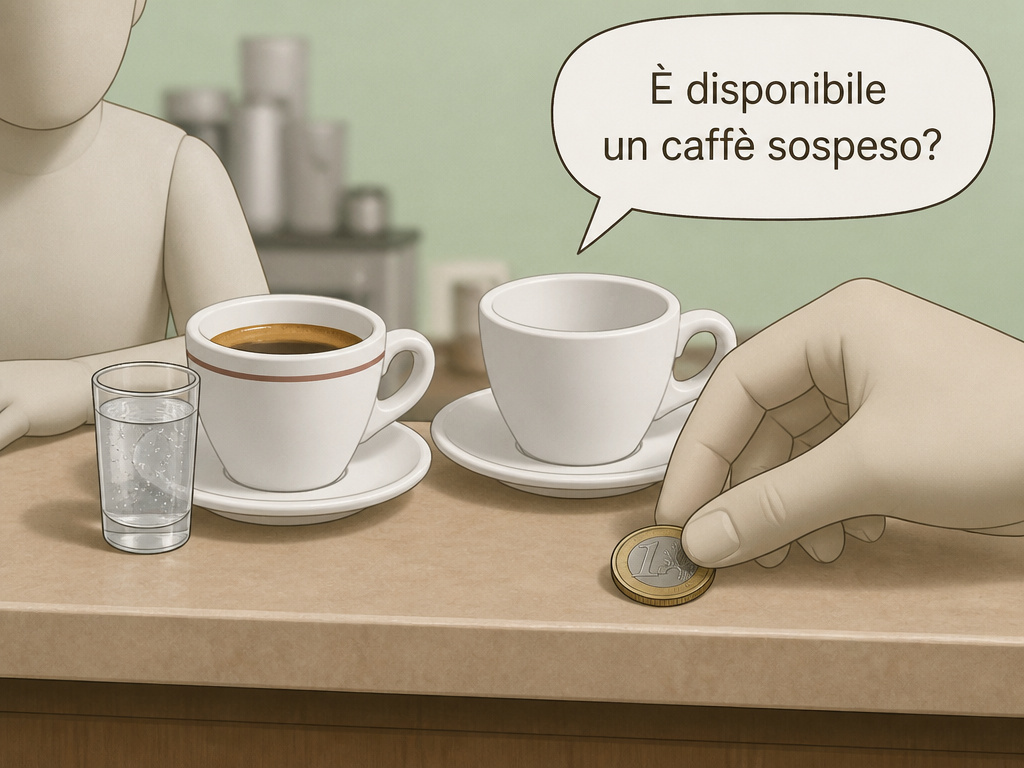
In Naples, your espresso might arrive with a small glass of acqua con gas (sparkling water) on the side. The tradition is to sip it first to cleanse your palate. They also practice caffè sospeso (suspended coffee). A customer pays for two coffees, drinks one, and leaves the second “suspended” for someone in need to claim later. It’s a beautiful custom. You can ask, “È disponibile un caffè sospeso?” to see if any are available.
In the North, especially in specialty coffee shops in cities like Milan or Turin, you might find more third-wave style menus with single-origin espresso options or alternative brewing methods. The core etiquette still applies, but the bean selection might be broader.
What about special requests?
* Decaf: “Un caffè decaffeinato, per favore.” It’s available, but in very traditional bars it may come from a pre-ground stash or a separate machine.
* Double Shot: “Un caffè doppio.” It’s not standard, but they’ll make it. You’ll get two shots in a slightly larger cup.
* Cooler Coffee: “Un caffè freddo.” This is usually a pre-made, sweetened espresso served over ice. Not to be confused with an iced latte.
Want something stronger? A caffè corretto is an espresso “corrected” with a shot of grappa, sambuca, or another spirit. It’s typically an after-dinner drink. The barista will often pour the spirit at the table or counter.
What Not to Do: The Tourist Traps and Instant Tells
You can follow all the steps and still give yourself away. Avoid these specific behaviors.
- Asking for a “to-go” cup as a first resort. The paper cup culture is a pandemic-era addition. The Italian experience is ceramic, at the bar. If you need it to go, ask “Da portare via, per favore.” But know you’re opting out of the ritual.
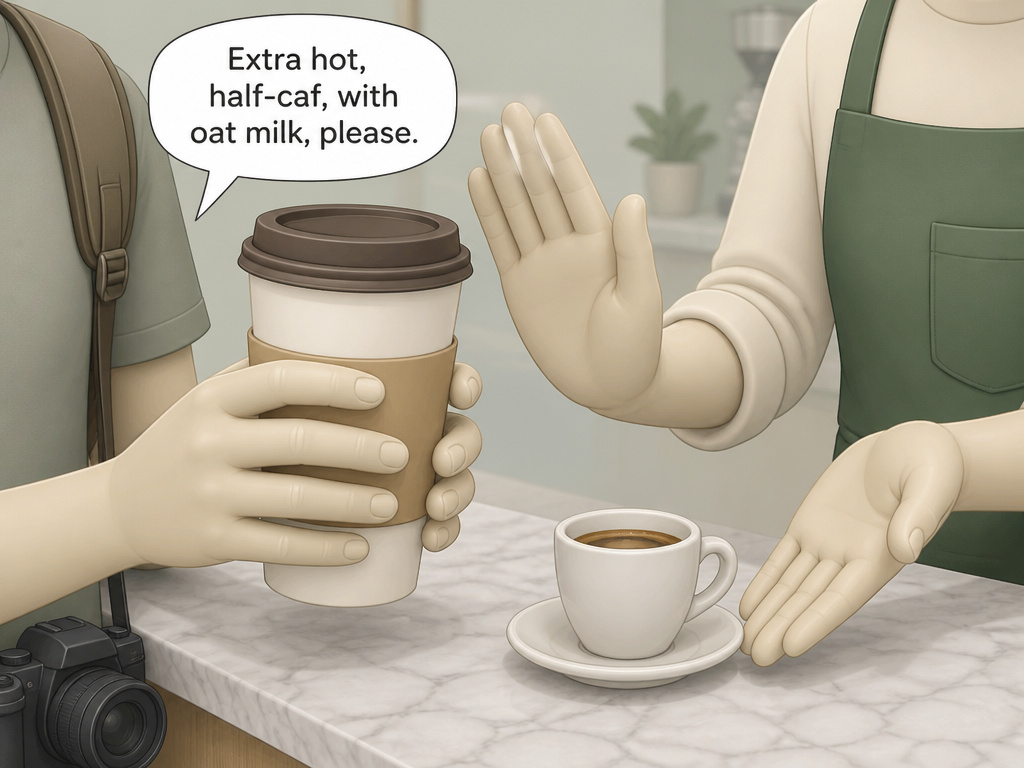
- Customizing the drink endlessly. Requests for half-caf, extra-hot, non-fat milk with vanilla syrup will be met with confusion or thinly veiled contempt. The menu is the menu. This isn’t the place for personalization.
- Tipping like you’re in America. You do not need to tip. Rounding up the change or leaving a few small coins on the counter if you received exceptional service is fine. Leaving a 20% tip is bizarre.
- Assuming all coffee is created equal. The 1 Euro espresso at the train station kiosk and the 1.30 Euro espresso at a historic bar are different products. You often get what you pay for in bean quality and machine care. The espresso caffeine content is roughly the same, but the flavor profile won’t be.
Common mistake: Ordering a “latte” and expecting a coffee. You will receive a glass of cold milk. The correct term is “caffè latte.”
Finally, don’t stress over perfect pronunciation. A “per favore” (pehr fah-VOH-reh) and a “grazie” (GRAHT-tsee-eh) delivered with a smile cover a multitude of accent sins. The effort is what registers.
Frequently Asked Questions
What is the most common coffee order in Italy?
“Un caffè.” This is the default, a single espresso shot. It’s what an Italian will order multiple times a day, after meals, as a quick break, or as a social ritual.
How much does a coffee cost in Italy?
Standing at the bar (al banco), an espresso typically costs between 1.00 and 1.50 Euro. A cappuccino is between 1.30 and 2.00 Euro. Prices are regulated and often posted. Sitting at a table can double or triple these prices.
Can I get a cappuccino after dinner in Italy?
You can, but you shouldn’t. It’s a cultural rule rooted in the belief that milk hinders digestion. The barista will serve it, but it immediately marks you as a tourist unfamiliar with local customs. Opt for an espresso, a caffè macchiato, or a caffè corretto instead.
Do I pay before or after I drink my coffee?
In most urban bars, you pay first at a cash register, get a receipt, then order at the counter with that ticket. In smaller towns or neighborhood bars, you may order, drink, and then pay the barista directly. Always watch what the locals do first.
What is a “caffè sospeso”?
“suspended coffee” is a pay-it-forward tradition, strongest in Naples. A customer pays for two coffees, receives one, and leaves the other “suspended” for someone in need to claim later. You can ask if any are available, or you can create one by paying for an extra coffee when you order.
Is it okay to order an Americano in Italy?
Yes, but understand what you’re getting. A caffè Americano is an espresso diluted with hot water. It’s not filter or drip coffee. It was historically made to mimic the larger, weaker coffee American soldiers wanted after WWII. It’s acceptable but not a common local order.
Before You Go
Ordering coffee in Italy is a lesson in efficiency and respect. Respect for the product, a precise 25ml espresso defined by national standards. Respect for the ritual, the quick stand at the bar, the morning-only milk, the uncluttered ordering. Respect for the people, the barista moving at speed, the regulars expecting the flow.
Forget customization. Embrace standardization. Your reward is a perfect, inexpensive shot of caffeine and the quiet satisfaction of fitting in. Walk in, say “buongiorno,” ask for “un caffè,” and drink it where you stand. That’s the entire script. Everything else is just scenery.
