
How to Make Espresso Coffee at Home With the Right Technique
How to make espresso coffee at home requires matching three things: fresh coffee ground to a fine sand-like consistency, a device that forces hot water through that coffee at 9 bars of pressure, and a 1:2 ratio of coffee to liquid brewed in 25-30 seconds. The water temperature should hit 94°C.
Most people buy the machine first. They get a shiny espresso maker, plug it in, and expect magic. The machine just pumps hot water. It’s the coffee grounds that create the pressure by resisting that water. Get the grind wrong, and you have expensive, weak tea.
This guide walks through the gear, the beans, and the physical steps that turn beans into espresso. We’ll cover why your grinder matters more than your machine, how to diagnose a shot by taste, and what to do when the standard advice fails.
Key Takeaways
- An espresso machine only provides hot water and pressure; the coffee grind creates the resistance necessary for proper extraction. A cheap grinder guarantees bad espresso.
- The standard starting recipe is 18g of coffee in, 36g of liquid espresso out, in 25-30 seconds. Sour means grind finer, bitter means grind coarser.
- Pressurized filter baskets (common on beginner machines) create artificial back-pressure for pre-ground coffee, while non-pressurized baskets require a precise, fine grind from a quality burr grinder.
- Community-developed fixes like “temperature surfing” for the Gaggia Classic Pro exist because the machine’s boiler design has a wide temperature swing the manual doesn’t address.
- Integrated grinder machines like the Breville Barista Express (BES870XL) have a known wear point; the grinder can become inconsistent or fail after 1-3 years of daily use.
The Gear That Actually Matters
Your grinder is not an accessory. It is the primary tool. The ISO 3509:2018 standard defines espresso as a beverage made by percolating hot water under pressure. That pressure, typically 9 bars, is not generated by a magic button. It is generated by the resistance of finely ground coffee packed into a small basket. A blade grinder produces uneven chunks and powder. Water finds the path of least resistance through the powder, leading to a fast, sour, and weak shot. A burr coffee grinder crushes beans between two surfaces for uniform particle size. This creates even resistance across the entire coffee puck, allowing for balanced extraction.
The machine’s job is simpler: heat water to 94°C and push it through that puck. A Gaggia Classic Pro does this with a 0.1-liter brass boiler. A Flair 58 does it with a manual lever. The method matters less than the result: consistent temperature and adequate pressure.
Before you start: The grouphead and steam wand on an espresso machine retain heat long after shutdown. The metal surfaces can cause second-degree burns on contact. Always assume they are hot. Wrap a thick cloth around the portafilter before removing it if the machine has been on within the last 30 minutes.
| Tool | Minimum Viable Spec | What Happens If You Skip It |
|---|---|---|
| Burr Grinder | Conical or flat burrs, stepless or micro-adjustable settings | Uneven extraction. Sour and bitter notes in the same shot, regardless of bean quality. |
| Scale | 0.1g resolution, timer function | Inconsistent dose and yield. You’ll chase flavor problems without reproducible data to diagnose them. |
| Tamper | Matches your portafilter basket diameter (e.g., 58mm) | An undersized tamper leaves grounds uncompressed at the basket wall. Channeling and uneven extraction result. |
| WDT Tool | 0.4mm acupuncture needles or thin wires | Clumped grounds create density variations. Water channels through weak spots, producing astringent, fast shots. |
TL;DR: Buy a burr grinder before you buy a fancy machine. Inconsistent grounds cannot produce balanced espresso, no matter how much you spend on the machine.
Choosing Your Beans and Your Battle
A medium roast blend is the most forgiving starting point. The roasting process develops sugars and reduces acidity, making the extraction window wider and more forgiving of slight grind variations. A single origin coffee from Ethiopia might have dazzling blueberry notes, but its density and solubility can change dramatically bag to bag, requiring daily grind adjustments. A blend is engineered for consistency.
The bean’s age is critical. Coffee releases carbon dioxide for weeks after roasting. Beans used within 3-5 weeks of their roast date have enough gas to create crema, the reddish-brown foam, but not so much that they resist water flow entirely. Stale beans (older than 8 weeks) produce flat, papery shots with thin, pale crema.
I kept a bag of a celebrated blonde roast beans for a “special occasion.” By week ten, the shots ran impossibly fast, 18g in, 36g out in 18 seconds, even at the finest grind setting. The beans had degassed completely, offering no resistance. The espresso tasted like hot, bitter water. Now I mark the roast date on the bag and freeze half the batch if I won’t use it within a month.
Blonde roast espresso is possible, but it’s a high-difficulty endeavor. Light roasts are denser and less soluble, requiring a finer grind, higher temperature, and often a longer pre-infusion to extract properly. For your first bags, choose a medium or medium-dark roast labeled specifically for espresso.
The 18g Dose and 25-Second Shot Target
The 1:2 brew ratio is the industry scaffold for a reason. It balances strength (intensity) and extraction (flavor development). Eighteen grams of coffee is a standard double-shot dose that fits most 58mm baskets. Your yield is double that weight in liquid: 36 grams.
Start your timer the moment you activate the pump or lever. The liquid should begin flowing after 5-8 seconds (this is pre-infusion). The main flow should resemble warm honey. The entire process, from pump start to reaching 36g, should take 25-30 seconds.
The 25-30 second range is a diagnostic tool, not a holy commandment. If your shot hits 36g at 22 seconds and tastes balanced and sweet, your recipe is correct. The timer tells you where to look when the taste is wrong. A 22-second shot that’s sour needs a finer grind. A 35-second shot that’s bitter needs a coarser grind.
This is where your scale is non-negotiable. Volumetric measurements on machines are unreliable because crema volume varies. Weight is constant. If you pull 45g of liquid from an 18g dose, you’ve over-extracted, the water has pulled out too many bitter, astringent compounds. A 30g yield is under-extracted and sour.
TL;DR: Weigh everything. 18g coffee in, 36g espresso out, in 25-30 seconds. Taste trumps time, but time tells you which way to adjust.
Pressurized vs. Non-Pressurized: Two Different Worlds
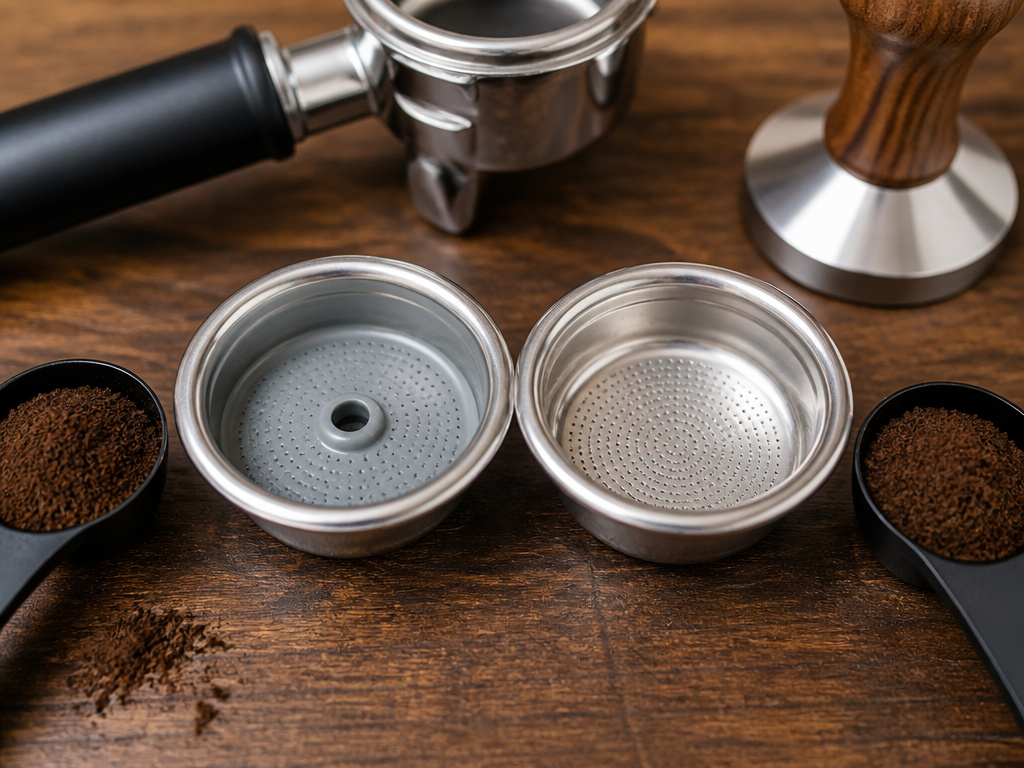
This is the most common point of confusion for new home baristas. Your machine likely came with two filter baskets. The one with a single hole at the bottom and a plastic or metal disc inside is the pressurized basket. The one with many tiny holes is the non-pressurized basket.
- Pressurized Basket: Designed for pre-ground or inconsistently ground coffee. The basket’s design creates the back-pressure artificially. It will produce a crema-like foam even with stale or coarse grounds. Tamping pressure is less critical. This is a training-wheel system.
- Non-Pressurized Basket: Requires a fine, consistent grind from a quality grinder. The coffee puck itself creates all the resistance. Tamping and distribution are critical. This is the path to real, nuanced espresso.
If you’re using a pressurized basket, you can ignore half the advice in this article about grind fineness and distribution. But you’ll also hit a flavor ceiling quickly. The move to a non-pressurized basket is the single biggest upgrade you can make, and it demands you invest in a proper grinder.
The 7-Step Pull (and the One Step Nobody Skips)
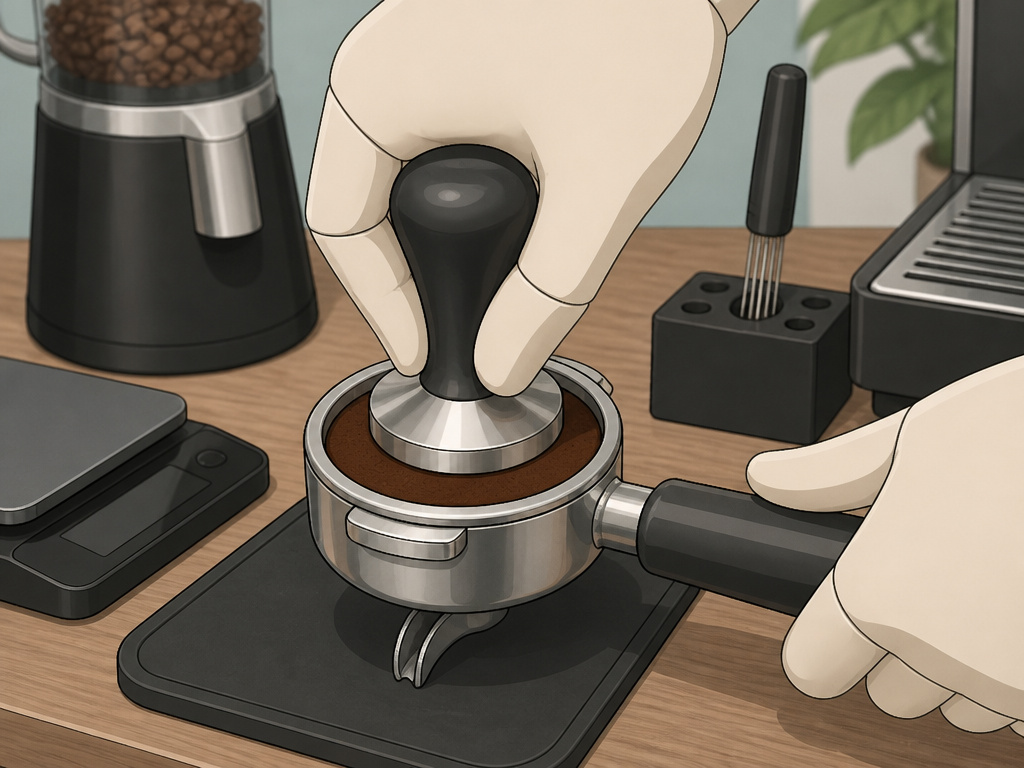
This is the physical sequence. Miss one step, and the shot will tell you.
- Weigh and Grind. Dose 18g of beans into your grinder. Grind directly into your portafilter or a dosing cup. The grounds should look like fine sand and clump slightly when pinched. Skipping the scale means your dose is a guess. A 2-gram variance changes the entire extraction.
- Distribute. This is the step everyone skips. Dumped grounds pile in the center. Use a WDT tool, a few 0.4mm needles, to stir the grounds and break up clumps. Level the bed with a gentle side tap. Clumps create density channels. Water blasts through them, over-extracting those spots while under-extracting the rest.
- Tamp. Place the tamper level on the coffee. Apply firm, even pressure, about 15-20kg, until you feel solid resistance. Twist slightly to polish the top. An uneven tamp creates a slope. Water will flow faster through the higher, less compacted side. The polish prevents grounds from sticking to the shower screen.
- Lock and Start. Secure the portafilter in the grouphead. Place your scale with cup underneath. Start the pump and your timer simultaneously.
- Observe and Weigh. The first drops should appear after 5-8 seconds. The stream should thicken to a steady, mouse-tail flow. Stop the pump when your scale reads 36g. Note the total time.
- Taste. Take a small spoon and sip the espresso straight. Look for balance. Is it sharp and sour (under-extracted)? Is it dull and bitter (over-extracted)? Is it sweet, with notes of chocolate or caramel?
- Adjust. Based on taste, change one variable for the next shot. Almost always, this is grind size. Sour = grind finer. Bitter = grind coarser. Only change the dose if you’re consistently hitting your time target but the shot is too strong or too weak.
Common mistake: Tamping on an uneven bed of grounds, the slope directs water to one side of the basket, and you’ll see the espresso stream jetting from only one side of a bottomless portafilter within 3 seconds of the shot starting.
Diagnosing Your Shot by Sight and Taste
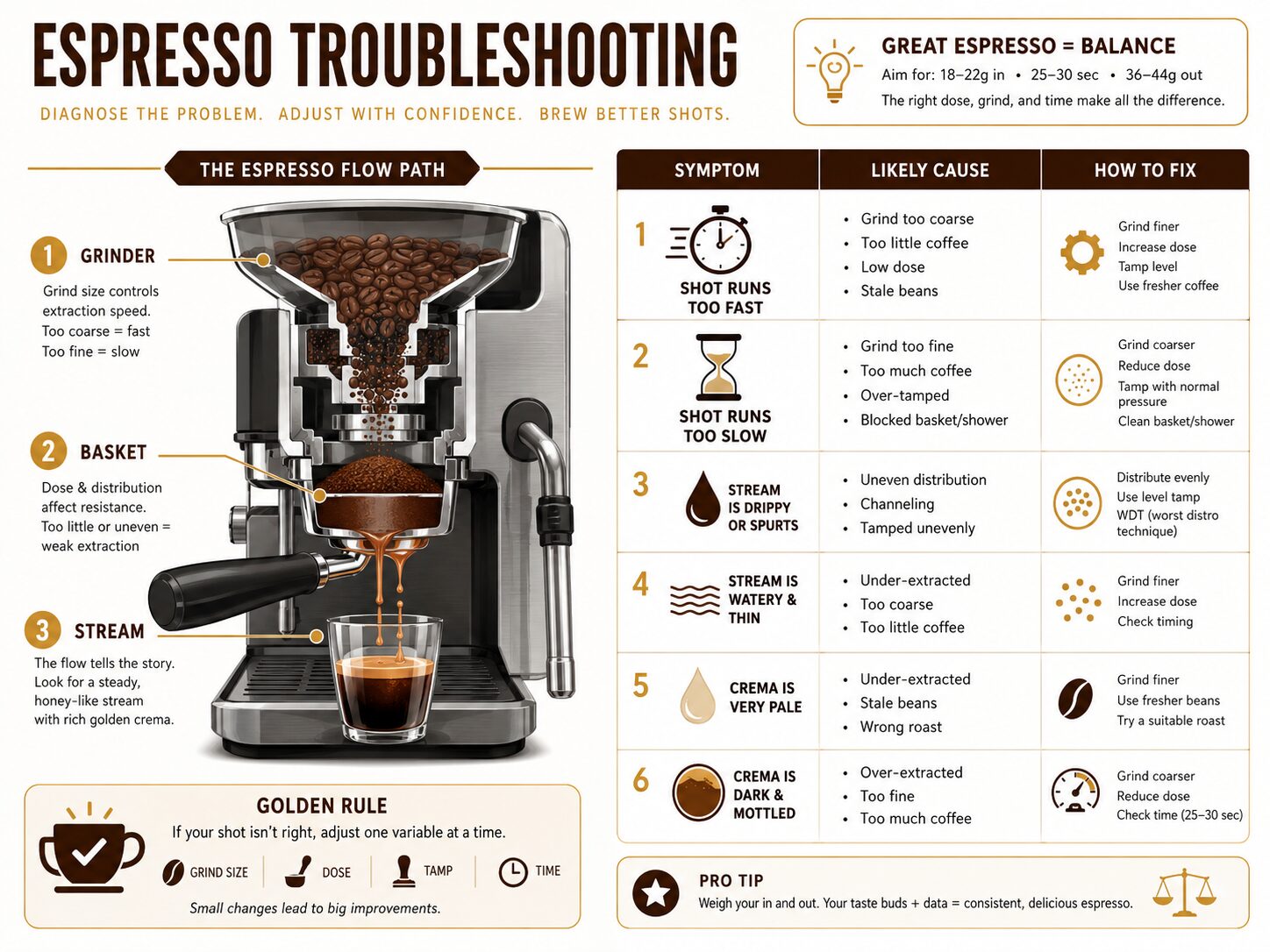
Your senses are the best diagnostics. The chart below maps symptoms to their most likely causes.
| Symptom | Likely Cause | Immediate Fix |
|---|---|---|
| Shot runs too fast (<22s), tastes sour | Grind is too coarse | Adjust grinder to a finer setting |
| Shot runs too slow (>35s), tastes bitter | Grind is too fine | Adjust grinder to a coarser setting |
| Espresso sprays or jets from portafilter | Severe channeling from poor distribution or uneven tamp | Use WDT tool, ensure level tamp |
| No crema, shot tastes flat | Beans are stale (older than 8 weeks) | Use fresher beans |
| Crema is very pale, shot is weak | Dose is too low or grind is far too coarse | Increase dose by 1g, check grind setting |
| Bitter and sour notes in same cup | Extreme channeling from clumped grounds | Implement WDT distribution step |
The visual cue is powerful. A bottomless portafilter reveals everything. A good shot will start as a single, centered drip that merges into a unified, syrupy stream. Channeling shows as multiple thin streams or aggressive spurting.
Why Machine Maintenance Isn’t Optional
An espresso machine is a small boiler and pump. Minerals in water, especially calcium, build up as limescale. This restricts water flow, reduces heating efficiency, and can kill the pump. If you have a Breville machine filter cartridge, use it. It softens water and protects the internals.
Backflush the grouphead with water after each session to remove coffee oils. Use a blind basket and cleaner like Cafiza once a week if you pull multiple shots daily. The oils go rancid. They make every shot taste vaguely of old peanuts, and no amount of bean switching will fix it.
The Gaggia Classic Pro boiler is small. Its temperature swings are wide. The owner community developed “temperature surfing”, flushing water through the grouphead to cycle the boiler heater, to get a consistent brew temperature. The manual doesn’t mention it because it’s a workaround for a design quirk. If you own one, you’ll learn it.
Frequently Asked Questions
Can I make espresso without a machine?
Yes, but you still need pressure. A manual lever machine like the Flair 58 or a stovetop Moka pot can produce espresso-like coffee. The Moka pot produces about 1.5 bars of pressure, resulting in a stronger, more concentrated coffee than true 9-bar espresso. A cafe Americano (espresso diluted with hot water) is a good alternative if you only have a regular drip coffee maker.
What’s the difference between espresso and regular coffee?
Espresso is a brewing method, not a bean type. It uses pressure to extract coffee quickly, producing a concentrated, syrupy beverage with crema. Regular coffee uses gravity or steeping. The espresso caffeine content is often higher per ounce, but a standard 8-ounce cup of drip coffee usually contains more total caffeine than a single 1-ounce espresso shot.
How fine should I grind for espresso?
The grind should be fine like table salt or fine sand. It should clump slightly when squeezed. The exact setting is unique to your grinder and beans. Start with your grinder’s “espresso range” and adjust based on shot time. A burr vs blade grinders comparison shows burrs are mandatory for this level of consistency.
Why is my espresso so bitter?
Bitterness is typically a sign of over-extraction. Your grind is too fine, your dose is too high, your water is too hot, or your shot time is too long. First, try a coarser grind. A pinch of salt in the cup can counteract bitterness in a finished shot, but it’s a band-aid, not a fix for the root cause.
What are the best beans for espresso?
Start with a medium or medium-dark roast blend. Blends are crafted for balance and consistency in espresso. Many roasters offer an espresso blend designed specifically for this brewing method. As you gain experience, experiment with single origin coffee to explore specific flavor profiles.
The Bottom Line
Making espresso at home is a mechanical process. The machine pumps hot water. The ground coffee resists it. Your job is to calibrate that resistance through grind size, dose, and distribution. Start with the 18g/36g/30s recipe and a medium roast blend. Taste every shot. Let sour and bitter be your guides to finer or coarser grinding.
The gear hierarchy is non-negotiable: a quality burr grinder first, then a machine that can deliver hot water at pressure. A pressurized basket is a fine starting point, but the real craft begins with a non-pressurized one. Clean your machine regularly. Your patience will be rewarded with a shot that has body, sweetness, and complexity, a world away from anything you can buy in a shop.
