
How to Get Coffee Out of White Shirt: A Step-by-Step Guide
This post contains affiliate links. As an Amazon Associate, we earn from qualifying purchases.
To get coffee out of a white shirt, you must immediately blot, flush the stain from the back with cold water, then pre-treat with detergent before a cold wash. Heat permanently sets the stain, so avoid hot water and the dryer until the mark is entirely gone. The cold-water flush is critical to float the tannins out.
To get coffee out of a white shirt, blot the spill immediately, flush the stain from the back with cold water, pre-treat with dish soap or detergent, then wash on cold. Heat sets the stain, so never use hot water or a dryer until the mark is completely gone. Skipping the cold-water flush pushes the coffee tannins deeper into the cotton fibers, and that’s the step most people miss in a panic.
The panic move is to rub at the spot. That grinds the coffee particles into the fabric weave. What works is a sequence that lifts the stain out, not scrubs it in.
This guide covers the right tools, the chemistry behind why coffee stains white fabric, and how to handle the worst cases, dried stains and coffee with cream.
Key Takeaways
- Blot, never rub. Rubbing grinds the stain particles into the fabric.
- Flush from the back with cold water only. Hot water opens fabric fibers and sets the stain.
- Treat cream or sugar as a grease stain first with dish soap, then tackle the coffee tannins.
- For a dried stain, soak the garment in a detergent solution for 30 minutes before washing.
- Never put the shirt in the dryer until the stain is 100% gone. Heat permanently sets it.
The 4 Tools That Replace a Dry Cleaning Bill
You don’t need specialty chemicals. The effective stuff is already under your sink or in the laundry room.
Keep a white towel handy, colored towels can bleed dye onto the wet shirt. Dawn dish soap cuts through the cream and sugar fats. A bottle of white vinegar handles the acidic tannin stain. Hydrogen peroxide (the standard 3% solution) bleaches any leftover color without damaging white cotton. Powdered oxygen bleach, like OxiClean, provides a soak for set-in stains.
The wrong tool is a colored rag or a generic “stain remover” spray that doesn’t specify it works on tannins. Those just spread the pigment around.
Before you start: Work in a well-ventilated area. Hydrogen peroxide can bleach skin and clothing on contact if spilled. Wear gloves if you have sensitive skin. Keep all chemicals away from children and pets.
Why Does Coffee Stain White Fabric?
Coffee contains tannins, which are acidic polyphenols. These molecules bind to the protein sites in cotton fibers. Think of the fabric as having tiny hooks. The tannin molecules latch on.
White fabric shows the stain because the tannins are brown. The color isn’t sitting on top; it’s chemically bonded inside the fiber. That’s why water alone doesn’t wash it out, you need something to break that bond.
Heat makes it worse. Hot water or dryer heat causes the cotton fibers to swell and open, allowing the tannins to penetrate deeper and bond more firmly. A study published in the Textile Research Journal details how thermal energy accelerates the adsorption of polyphenols onto cellulose, which is the scientific paper on coffee stains you’d cite for the mechanism. Cold water keeps the fibers tight, so you’re flushing the coffee out, not cooking it in.
TL;DR: Coffee stains are a chemical bond, not a surface smudge. Cold water keeps the fabric’s “hooks” closed so you can rinse the tannins away before they set.
Immediate Action: The 5-Minute Save
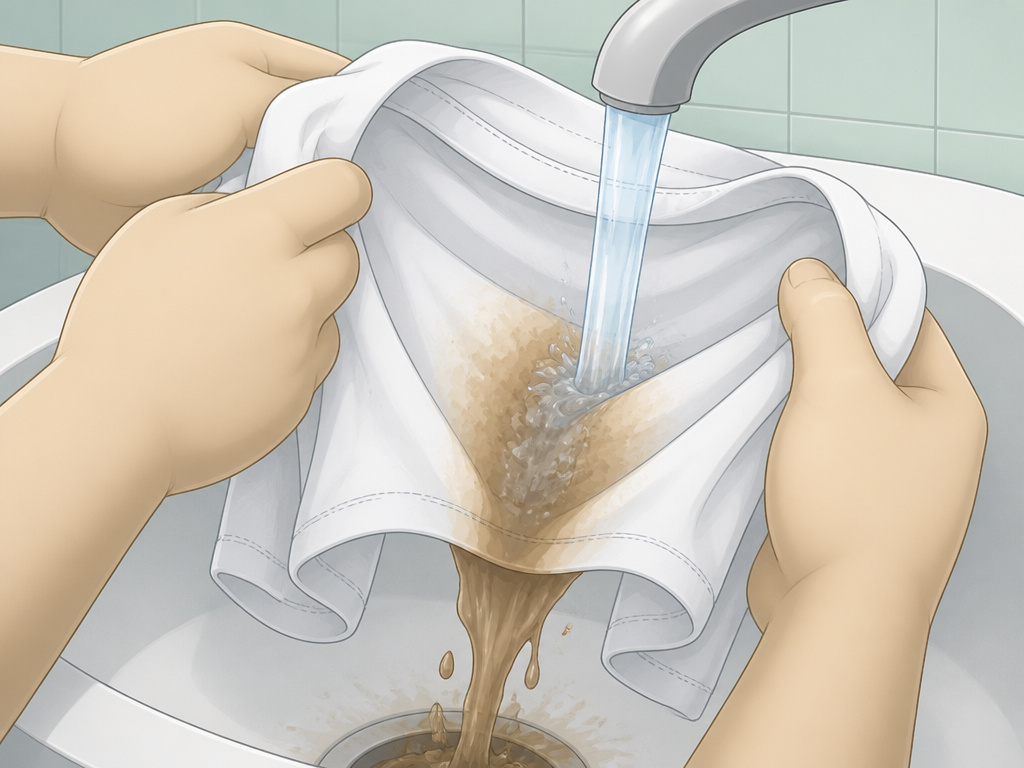
The clock starts at the spill. What you do in the first five minutes decides if you’ll spend five hours later.
Step 1: Blot, don’t rub. Place a clean, white towel under the stain. Use another to blot from the top, soaking up liquid. Press straight down. Rubbing grinds the coffee grounds into the weave.
Step 2: Flush from the back. Hold the stained area under a cold tap, inside-out. Let the water push the coffee out through the front of the fabric. You’ll see the brown stream running clear after about thirty seconds. Skipping this step leaves a reservoir of coffee in the fibers that the washer can’t reach.
Step 3: Pre-treat. Apply a dime-sized amount of liquid dish soap or heavy-duty laundry detergent like Tide directly to the stain. Gently work it in with your fingers. Let it sit for five minutes. The surfactants break the surface tension and start pulling the tannins loose.
Step 4: Wash cold, alone. Toss the shirt into the washing machine by itself. Use the cold water setting and your regular detergent. Adding other clothes risks transferring the stain.
Step 5: Air dry and inspect. Hang the shirt to dry. Do not use the dryer. Once it’s dry, check the spot in good light. If it’s gone, you’re done. If a shadow remains, the stain is still bonded, move to the next section.
| Mistake | Consequence | Timeline |
|---|---|---|
| Using hot water | Opens fabric fibers, sets stain | Stain sets within 1 wash cycle |
| Rubbing the spill | Grinds particles into weave | Permanent discoloration in 2 minutes |
| Skipping the flush | Leaves a reservoir of coffee in fibers | Faint shadow remains after washing |
| Using the dryer | Heat bonds remaining tannins | Stain becomes permanent immediately |
When Vinegar and Peroxide Take Over
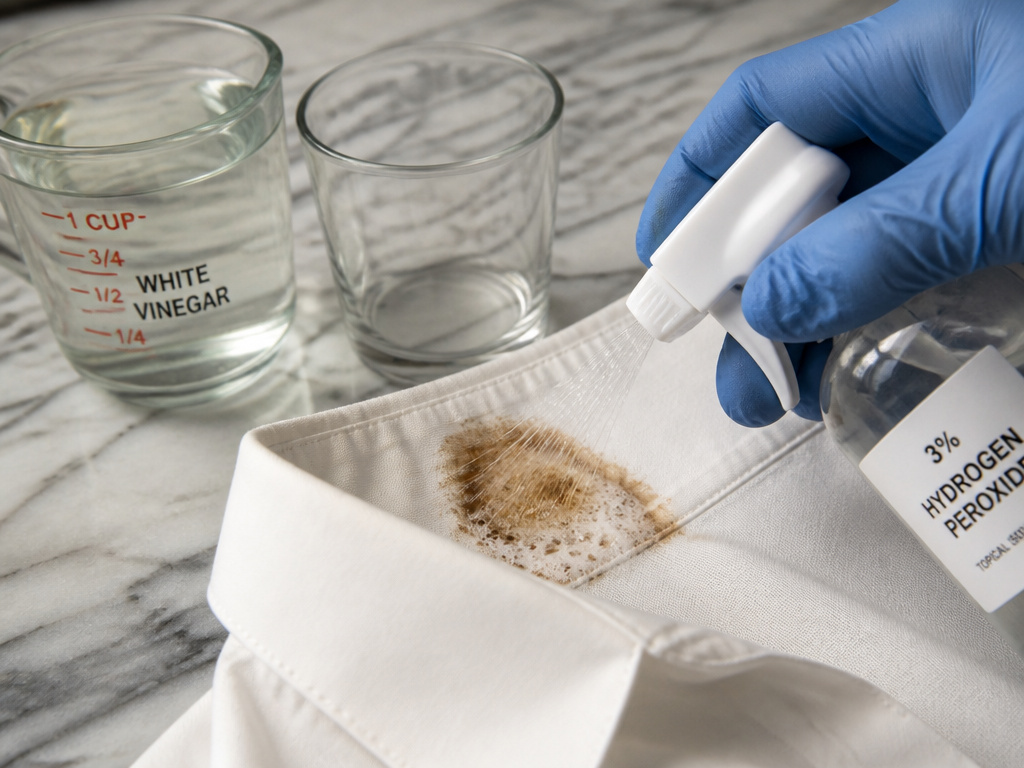
If the cold wash didn’t do it, the stain is set. Now you need chemistry.
White vinegar is acidic, like coffee. The “like removes like” principle means the acetic acid can displace the tannic acid on the fiber. Soak the stain in a 50/50 mix of white vinegar and cold water for thirty minutes. Then wash again on cold.
I soaked a linen shirt in straight vinegar once. The stain came out, but the shirt smelled like a pickle jar for three washes. A fifty-fifty mix with water works just as well without the odor.
Hydrogen peroxide is a mild oxidizer. It breaks the double bonds in the colored tannin molecules, bleaching them colorless. Spray the 3% solution directly on the dry stain, let it bubble for fifteen minutes, then wash. It’s safe for white cotton but will bleach colored threads or prints.
TL;DR: For bonded tannins, use vinegar. For a visible color shadow, use peroxide. Never mix vinegar and peroxide in the same treatment, they neutralize each other.
The Cream and Sugar Problem
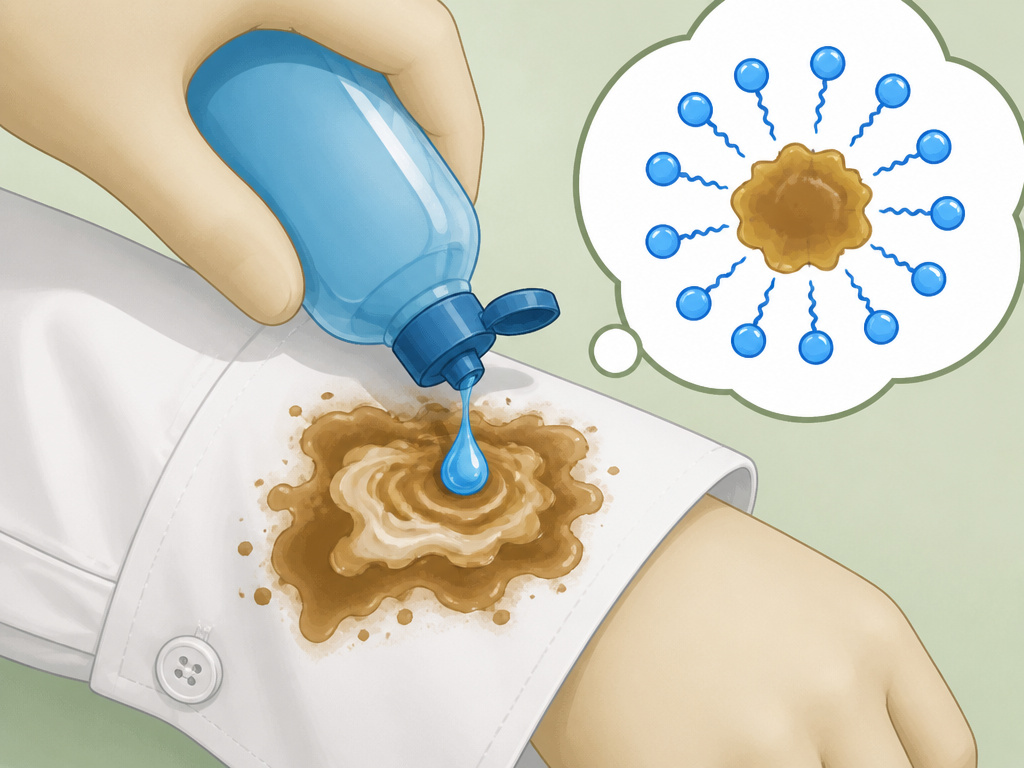
Black coffee is one enemy. Coffee with cream or sugar is two.
The dairy fat in cream or half-and-half creates a grease stain. The sugar caramelizes with heat. You have to treat the grease first, or the detergent will never reach the coffee tannin underneath.
First, follow the immediate action steps with one change: use dish soap like Dawn for the pre-treatment. The surfactants in dish soap are designed to break down oils. Let it sit for ten minutes, not five. Then flush and wash.
If the stain persists after that wash, you’re dealing with the remaining coffee tannin. Switch to the vinegar or peroxide method.
The University of Illinois Extension classifies coffee with cream as a “combination stain” for this exact reason. Their guidance stresses treating the oily component first.
Common mistake: Using only laundry detergent on a latte spill, the detergent isn’t strong enough on the fats, so a greasy ring remains around the coffee stain after washing.
The Dried Stain Protocol
A dried coffee stain has had hours or days to bond. You can’t flush it. You must rehydrate and lift it.
Make a solution of hot water and powdered oxygen bleach, following the package directions for a soak. Submerge the shirt and let it sit for thirty minutes. The Good Housekeeping Institute’s stain removal guide specifies this thirty-minute soak for dried coffee stains. The oxygen bleach breaks down the organic compounds.
After soaking, wash the shirt on the warm water setting (not hot) with detergent. Check it before drying. You may need to repeat the soak once.
For old, set-in stains that still show a shadow, a paste of powdered oxygen bleach and a few drops of water applied directly to the stain can work. Spread the paste, let it sit for an hour, then wash. This is abrasive, so don’t use it on delicate fabrics like silk.
| Stain Type | First Treatment | Second Treatment | Do Not Use |
|---|---|---|---|
| Fresh black coffee | Cold flush + detergent | Vinegar soak | Hot water |
| Coffee with cream | Dish soap + cold flush | Vinegar soak | Dryer |
| Dried coffee | Oxygen bleach soak | Peroxide spray | Scrubbing brush |
| Old set-in stain | Oxygen bleach paste | Repeat soak | Chlorine bleach |
Why Your Last Attempt Failed
You followed the steps, but a faint shadow remains. One of three things happened.
First, you used hot water in the initial rinse or wash. Even warm water can set the stain if the coffee was fresh and concentrated. Next time, use cold only.
Second, you didn’t pre-treat long enough. Five minutes is the minimum. For a heavy spill or a fabric like linen, give it fifteen.
Third, and this is the subtle one, you put the shirt in the dryer “just to see” if the stain was gone. The heat from a single dryer cycle sets any residual tannin permanently. The stain won’t come out after that. You’ll need to move to the heavy-duty peroxide or oxygen bleach soak, and even then, it might be permanent.
TL;DR: Cold water, longer pre-treatment, and never using the dryer until the stain is invisible are the three rules people break.
Frequently Asked Questions
Can you use baking soda on a coffee stain?
Yes, but only as a paste with water on fresh stains. Baking soda is a mild abrasive and can help lift particles. It’s not a chemical stain remover like vinegar or peroxide. For set-in stains, it’s ineffective.
Does salt get coffee out of clothes?
Salt can help blot a fresh spill by absorbing moisture, but it doesn’t break down tannins. It’s a first-aid step, not a treatment. Use it to soak up liquid before you flush, then move on to soap and water.
Will bleach remove coffee stains from white shirts?
Chlorine bleach can, but it’s a last resort and risky. It weakens cotton fibers over time and can cause yellowing. Oxygen bleach (powdered) is safer and works on the organic compounds in coffee without damaging the fabric.
How do you get old coffee stains out of white shirts?
For old stains, rehydrate with a thirty-minute soak in a solution of hot water and powdered oxygen bleach. After soaking, wash with detergent on a warm cycle. If a shadow remains, apply a 3% hydrogen peroxide spray directly to the dry stain, let it sit, then wash again.
Can you put a shirt with a coffee stain in the dryer?
Never. The heat will permanently set any remaining stain. Always air dry the shirt completely after washing and inspect it in good light. Only use the dryer once you confirm the stain is 100% gone.
Before You Go
Coffee on white is a race against the clock and chemistry. Blot, flush cold, pre-treat with soap, and wash cold. Remember cream is a grease stain, hit it with dish soap first. For anything dried, soak it in oxygen bleach. The one rule that overrides all others is no heat until the stain is gone. Keep vinegar, peroxide, and oxygen bleach on hand. They cost less than a single dry cleaning bill, and they work while the stain is still a problem, not a permanent mark.
