
How to Clean Your Mr. Coffee Maker & Prevent Burnt Smells
To clean a Mr. Coffee maker, you need to match your machine’s type, manual or programmable, to the correct vinegar descaling method, and follow the 80-brew or 3-month rule printed in the manual. Skipping the 30-minute pause during the vinegar cycle leaves scale in the heating element, which is why your third pot tastes like burnt plastic.
Most people see the “Clean” light flash and think they can just run vinegar through. They miss the pause step. The machine heats the vinegar, the scale loosens, but without that soak time, the chunks just relocate and jam the thermostat. You get weak, lukewarm coffee and a smell you can’t scrub out.
This guide walks through both cleaning methods, what to do with water filters and thermal carafes, and the one mistake that wrecks the warming plate.
Key Takeaways
- Descaling is not optional. The Mr. Coffee manual for the BVMC-SJX33GT states to do it every 80 brew cycles or 3 months. Ignoring this leads to limescale clogging the heating tube.
- Remove the water filter disc before running vinegar. Vinegar destroys the carbon filter medium, and the manual explicitly says to take it out.
- The 30-minute pause in the middle of the vinegar cycle is non-negotiable. This lets the acetic acid dissolve mineral deposits. Running straight through just moves the problem.
- Thermal carafes are not dishwasher safe. The BVMC-PSTX91 manual specifies hand-wash only. Glass carafes can go on the top rack.
- Never use abrasive scrubbers on the carafe or warming plate. A micro-scratch on the glass becomes a nucleation point for faster scaling next time.
Before You Start: The Two Things That Crack Carafes
Unplug the machine and let it cool for at least thirty minutes. This isn’t a gentle suggestion.
Pouring cold vinegar into a hot reservoir thermal-shocks the plastic. You won’t see a crack immediately, but the stress fracture will leak next week. The warming plate also needs to be room temperature before you set a cold, wet carafe on it. Glass carafes are tougher, but a thermal carafe’s stainless steel inner layer can warp from the sudden temperature change.
Before you start: Vinegar is acidic and can damage internal components if left sitting too long. Never leave a vinegar solution in the reservoir overnight. The 30-minute soak during the cycle is the maximum exposure time.
Grab a soft sponge or brush and mild dish soap. Abrasive pads or steel wool are banned here. They leave microscopic scratches on the glass carafe or the plastic filter basket. Those scratches give minerals a textured surface to grab onto, making the next round of scale build up faster and stick harder.
The 3-Step Vinegar Descale (Manual Method)
Manual Mr. Coffee makers don’t have a “Clean” button. You initiate and control the cycle yourself. The official Mr. Coffee support video confirms the steps, but most people gloss over the timing.
Step 1: Mix and pour the solution.
The manual for the 12-Cup Programmable (BVMC-SJX33GT) specifies a 1 part white household vinegar to 3 parts cold water solution. For a standard descale, you’ll use about 4 cups of liquid total. If your water is very hard, use straight vinegar. Fill your carafe to the 4-cup line with your chosen solution, then pour it into the empty water reservoir.
Step 2: Start the brew, then pause.
Place an empty paper filter in the basket, this catches loosened scale, and put the empty carafe on the warming plate. Turn the brewer on. Let it run until about three-quarters of the vinegar solution has brewed into the carafe. Now turn the machine off. This is the critical pause.
Let it sit for exactly thirty minutes. This soak time lets the acetic acid work on the calcium and magnesium carbonate deposits coating the internal aluminum heating tube. If you just run the vinegar straight through, it heats and flushes, but it doesn’t have time to dissolve the scale. You’re just giving it a hot bath.
Step 3: Finish and flush.
After the thirty-minute soak, turn the machine back on and let it brew the remaining vinegar solution through. Discard the full carafe of vinegar. Now, run at least two full carafes of clean, cold water through the machine with a fresh filter to rinse. Some people stop after one rinse. Don’t. The lingering vinegar taste will carry into your next several pots of coffee.
TL;DR: For manual machines: vinegar solution, brew 75%, pause 30 min, finish brew, then double-rinse with water.
What Happens If You Skip a Step?
| Skipped Step | Direct Consequence | Timeline |
|---|---|---|
| Removing the water filter | Vinegar saturates the carbon block, rendering it useless for future filtration. The next 30 brew cycles taste like vinegar. | Immediate |
| The 30-minute pause | Scale isn’t fully dissolved. Chunks travel and re-lodge in the thermostat or flow valve. Coffee output slows, temperature drops. | Within 10 brews |
| The second water rinse | Vinegar residue remains in the heating tube. Your next pot of coffee tastes sour and metallic. | Next brew cycle |
Cleaning a Programmable Mr. Coffee (With the ‘Clean’ Light)
Models like the BVMC-PSTX91 Optimal Brew have a dedicated cleaning cycle. When the red “Clean” light starts flashing, the manual says it’s time. This cycle is automatic but long, between 45 and 60 minutes.
Press and hold the “Clean” or “Select Off” button until the light stays solid. The machine will slowly brew three cups of vinegar, pause for thirty minutes, then brew the remainder. You don’t have to manually time the pause. The machine does it for you.
The programmable cleaning cycle brews vinegar slower than a normal cycle. This extended contact time is why it’s more effective than the manual method if you have hard water.
After the cycle finishes and the light turns off, discard the vinegar. You still need to run the rinse cycles manually. Fill the reservoir with fresh water and run a full brew cycle. Do this twice. The “Clean” cycle does not include a rinse.
Why does the clean light come on?
The machine counts your brew cycles. After approximately 80 cycles, or three months of daily use, the internal timer triggers the light. It’s a reminder, not a sensor. You can clean before it flashes.
The Removable Parts: Carafe, Basket, and That Filter
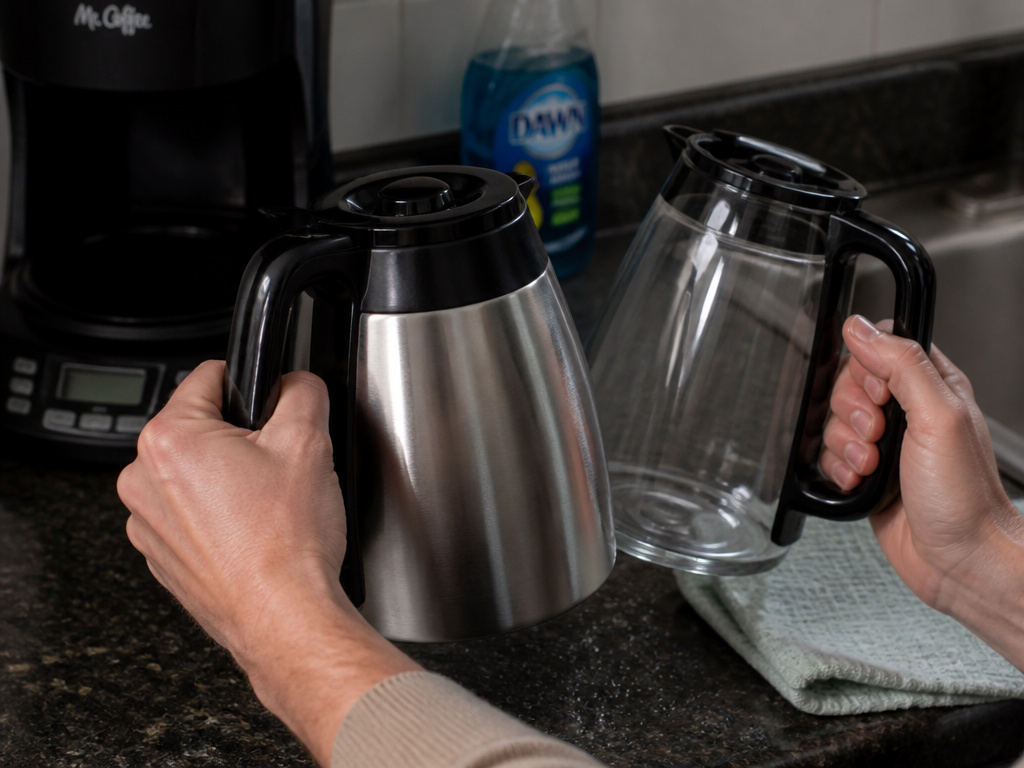
Every cleaning guide says to wash the carafe and basket. Few explain the differences that break things.
Glass vs. Thermal Carafes
The BVMC-SJX33GT manual states its glass carafe and lid are dishwasher safe (top rack). The BVMC-PSTX91 manual explicitly says its thermal carafe is not dishwasher safe. The dishwasher’s heat and jet spray can compromise the vacuum seal between the stainless steel layers. Hand wash with warm, soapy water only.
The Lift & Clean Filter Basket
Most Mr. Coffee models have a simple, removable plastic basket. Newer ones like the BVMC-SJX33GT have a “Lift & Clean” basket that snaps out for easier washing. Soak it in hot, soapy water to dissolve coffee oils. A soft brush gets into the corners. Never use baking soda paste here, it’s abrasive enough to cloud the plastic.
Water Filter Discs: Remove Before Cleaning
If your model has a water filtration system, you must take the filter disc out of the reservoir before adding vinegar. The manual is clear: “remove the water filter disc prior to cleaning.” Vinegar will neutralize the activated carbon. A spent filter won’t improve taste, but a vinegar-soaked one will make it worse.
Common Problems and Their Fixes
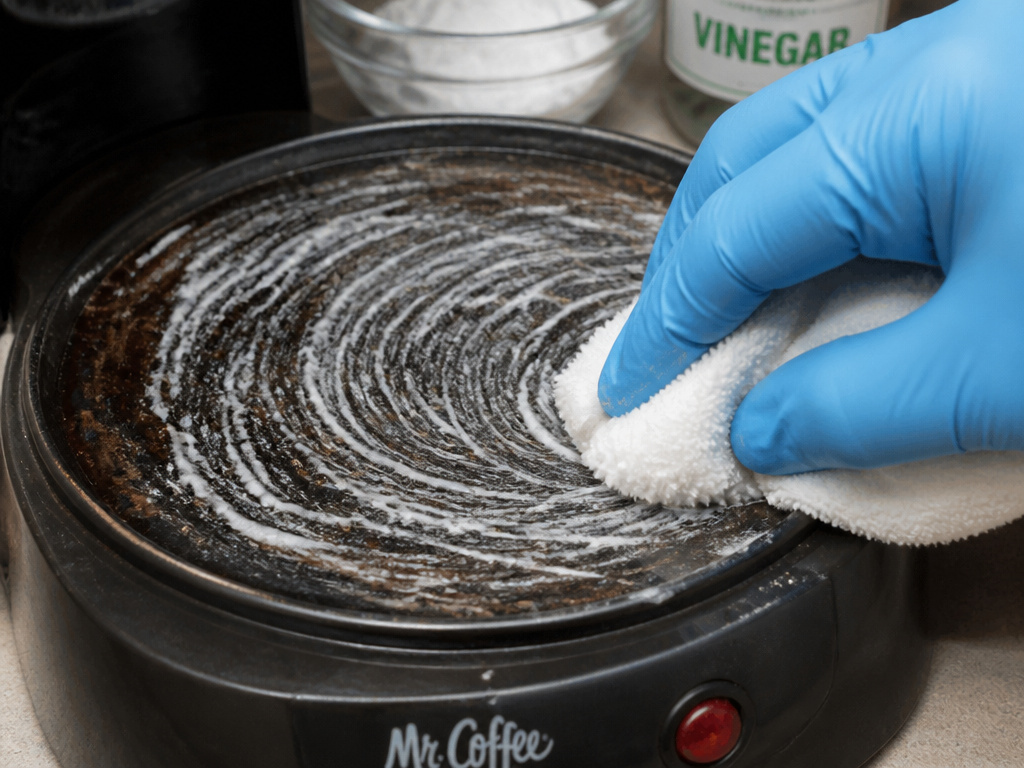
The warming plate is stained brown.
That’s baked-on coffee overflow. Make a paste with baking soda and a few drops of water. Apply it to the cool, unplugged plate. Let it sit for fifteen minutes, then wipe with a damp cloth. Do not scrub with anything abrasive, you’ll scratch the aluminum coating and the stains will come back faster.
Common mistake: Using steel wool on the warming plate, the scratches trap coffee residue and the plate stains permanently within two weeks.
There’s a persistent burnt smell after cleaning.
Scale chunks relocated during an incomplete descale and are now burning directly on the heating element. You need to run a more aggressive cleaning cycle. Use straight vinegar (no water dilution) and ensure the thirty-minute pause is strictly observed. If the smell remains, the heating tube may be damaged.
Water drains slowly from the reservoir.
Mineral scale has built up in the inlet valve. This often happens when the water filter disc is left in place for more than its 30-day/30-cycle life. Replace the filter. Then run a cleaning cycle with straight vinegar, ensuring the pause step is followed.
The coffee tastes like vinegar.
You didn’t rinse enough. Run two more full cycles with fresh water. If the taste persists, the vinegar may have softened old coffee oils in the lines. Run a cycle with a Breville coffee machine filter-style cleaning tablet (citric acid based) followed by three water rinses.
Frequently Asked Questions
Can I use citric acid or descaling solution instead of vinegar?
Yes, and many prefer it. Commercial descalers are formulated to be less pungent and sometimes more effective on heavy scale. Follow the product’s dilution instructions, not the vinegar ratio. The process, run, pause, rinse, remains the same.
How often should I clean my Mr. Coffee maker?
The official manual says every 80 brew cycles or 3 months, whichever comes first. In hard water areas, make it every 60 cycles or 2 months. Visual cue: if your carafe has a white film at the bottom, you’re late.
Is the “Clean” light on my Mr. Coffee a sensor?
No. It’s a timer based on the number of brew cycles or elapsed time. You can manually start the cleaning cycle anytime by pressing the clean button, even if the light isn’t flashing.
Can I put the carafe lid in the dishwasher?
Check your manual. For the BVMC-SJX33GT (glass carafe), the lid is dishwasher safe. For the BVMC-PSTX91 (thermal carafe), the lid is hand-wash only. The plastic and rubber seals can degrade under high dishwasher heat.
Why does my coffee taste bad after cleaning?
Two likely reasons. First, insufficient rinsing left vinegar residue. Run two more plain water cycles. Second, the cleaning process dislodged old, rancid coffee oils that were stuck in the lines. Those need to be flushed out. Using a bleached coffee filter versus an unbleached coffee filter won’t cause this, but old oil buildup will.
Before You Go
Cleaning a Mr. Coffee maker isn’t about making it look new. It’s about preserving the heating element and the thermostat. Scale buildup acts as an insulator, forcing the heater to work longer and hotter. That extra heat is what eventually cracks the plastic housing or gives you that burnt-plastic aroma.
Stick to the 80-brew or three-month schedule. Respect the thirty-minute pause during the vinegar cycle. Remember the material rules: thermal carafes hand-wash only, and always remove the water filter disc. Your machine will brew hotter, faster, and cleaner for years. The alternative is weak, lukewarm coffee that tastes like yesterday’s mistakes.
{
“@context”: “https://schema.org”,
“@type”: “HowTo”,
“name”: “How to Clean a Mr. Coffee Maker”,
“totalTime”: “PT90M”,
“tool”: [
{
“@type”: “HowToTool”,
“name”: “White household vinegar”
},
{
“@type”: “HowToTool”,
“name”: “Mild dish soap”
},
{
“@type”: “HowToTool”,
“name”: “Soft-bristle brush or non-abrasive sponge”
}
],
“step”: [
{
“@type”: “HowToStep”,
“name”: “Unplug and cool the machine”,
“text”: “Never pour anything into a hot, plugged-in machine. Let it sit for at least 30 minutes after its last brew cycle.”
},
{
“@type”: “HowToStep”,
“name”: “Remove and wash removable parts”,
“text”: “Take out the carafe, lid, and filter basket. Wash them in warm, soapy water. Glass carafes are dishwasher-safe; thermal carafes are hand-wash only.”
},
{
“@type”: “HowToStep”,
“name”: “Run the vinegar descaling solution”,
“text”: “For manual models, pour 4 cups of undiluted vinegar into the reservoir. Run half the cycle, pause for 30 minutes, then finish. For programmable models with a ‘Clean’ light, press the button and let the 45-60 minute automatic cycle run.”
},
{
“@type”: “HowToStep”,
“name”: “Flush with clean water”,
“text”: “Discard the vinegar. Run 2-3 full carafes of clean water through the machine to eliminate all vinegar taste and residue.”
}
]
}
{
“@context”: “https://schema.org”,
“@type”: “FAQPage”,
“mainEntity”: [
{
“@type”: “Question”,
“name”: “Can I use citric acid or descaling solution instead of vinegar?”,
“acceptedAnswer”: {
“@type”: “Answer”,
“text”: “Yes, and many prefer it. Commercial descalers are formulated to be less pungent and sometimes more effective on heavy scale. Follow the product’s dilution instructions, not the vinegar ratio. The process, run, pause, rinse, remains the same.”
}
},
{
“@type”: “Question”,
“name”: “How often should I clean my Mr. Coffee maker?”,
“acceptedAnswer”: {
“@type”: “Answer”,
“text”: “The official manual says every 80 brew cycles or 3 months, whichever comes first. In hard water areas, make it every 60 cycles or 2 months. Visual cue: if your carafe has a white film at the bottom, you’re late.”
}
},
{
“@type”: “Question”,
“name”: “Is the \”Clean\” light on my Mr. Coffee a sensor?”,
“acceptedAnswer”: {
“@type”: “Answer”,
“text”: “No. It’s a timer based on the number of brew cycles or elapsed time. You can manually start the cleaning cycle anytime by pressing the clean button, even if the light isn’t flashing.”
}
},
{
“@type”: “Question”,
“name”: “Can I put the carafe lid in the dishwasher?”,
“acceptedAnswer”: {
“@type”: “Answer”,
“text”: “Check your manual. For the BVMC-SJX33GT (glass carafe), the lid is dishwasher safe. For the BVMC-PSTX91 (thermal carafe), the lid is hand-wash only. The plastic and rubber seals can degrade under high dishwasher heat.”
}
},
{
“@type”: “Question”,
“name”: “Why does my coffee taste bad after cleaning?”,
“acceptedAnswer”: {
“@type”: “Answer”,
“text”: “Two likely reasons. First, insufficient rinsing left vinegar residue. Run two more plain water cycles. Second, the cleaning process dislodged old, rancid coffee oils that were stuck in the lines. Those need to be flushed out. Using a bleached coffee filter versus an unbleached coffee filter won’t cause this, but old oil buildup will.”
}
}
]
}
