
How Long Is Brewed Coffee Good For? Maximizing Freshness
Brewed coffee is good for about 30 minutes at room temperature for peak flavor, and safely drinkable for up to 12-24 hours if kept hot (above 135°F) or refrigerated promptly. Once milk, cream, or sugar is added, treat it as a perishable dairy product with a safe window of just 2 hours at room temp or 2 days refrigerated.
Most guides talk about taste falling off after an hour. They miss the point where safety and flavor split. The clock doesn’t start when you pour the cup. It starts when the temperature drops into the danger zone.
This guide breaks down the official food safety rules, explains why black coffee and espresso age differently, and gives you storage steps that actually work.
Key Takeaways
- The FDA Food Code marks 135°F (57°C) as the safe holding minimum. Below that, bacterial growth becomes possible.
- Black coffee’s enemy is oxidation, not microbes. It turns stale, not unsafe, for days in the fridge.
- Adding dairy changes everything. The safe window shrinks to 2 hours at room temperature.
- Cold brew is a different product. Its low acidity and refrigeration from the start allow a shelf life of up to two weeks.
- Reheating coffee once is fine. Reheating the same batch multiple times cooks off volatile aromatics and leaves a flat, bitter cup.
The Clock Starts at 135°F (The FDA’s Rule)
Forget the one-hour rule. The real timer is a thermometer. The FDA Food Code sets 135°F (57°C) as the minimum safe holding temperature for prepared foods that support bacterial growth. Coffee, with its water and organic compounds, fits the profile.
Bacteria grow most rapidly in the range of temperatures between 40 °F and 140 °F (4 °C and 60 °C), doubling in number in as little as 20 minutes. This foundational principle from the USDA Food Safety and Inspection Service defines the “danger zone” for perishable items, including brewed coffee.
A thermal carafe or a heated plate on your drip machine exists to keep coffee above this line. The moment your pot dips below 135°F, you have entered the window where microbes, if present, can multiply. For plain black coffee, this is mostly a theoretical risk unless contaminated. For coffee with additives, it’s a concrete deadline.
TL;DR: Keep it hot (above 135°F) or get it cold (below 40°F). The space between is where trouble brews.
Flavor Lifespan vs. Safety Lifespan

Coffee doesn’t spoil like milk. It degrades. Two separate processes run on different schedules.
Oxidation attacks flavor immediately upon contact with air. The fragrant oils and volatile compounds that create aroma and acidity break down. This is what you taste as “stale” or “flat.” It happens even if the coffee is perfectly safe to drink.
Microbial growth is the safety clock. It requires contaminants (like from dairy, sugar, or a dirty container) and time in the danger zone. Black coffee, due to its heat, acidity, and lack of nutrients, is a hostile environment. Add milk, and you’ve delivered a bacterial buffet.
| Coffee Type | Peak Flavor Window | Safe Consumption Window (Room Temp) | Safe Consumption Window (Refrigerated) |
|---|---|---|---|
| Black Drip Coffee | 20–30 minutes | Up to 12 hours | 3–4 days (tastes stale after 1) |
| Espresso Shot | 10 minutes | 1–2 hours | Not recommended |
| Black Cold Brew | N/A (pre-chilled) | 2–3 days (sealed) | 10–14 days |
| Coffee with Dairy/Sugar | 5–10 minutes | 2 hours max | 1–2 days |
The numbers for black coffee are conservative. I’ve drunk day-old refrigerated black coffee many times. It tastes like brown water with a memory of caffeine, but it never made me sick. The caffeine content is still there, doing its job.
Why Black Coffee and Espresso Age Differently
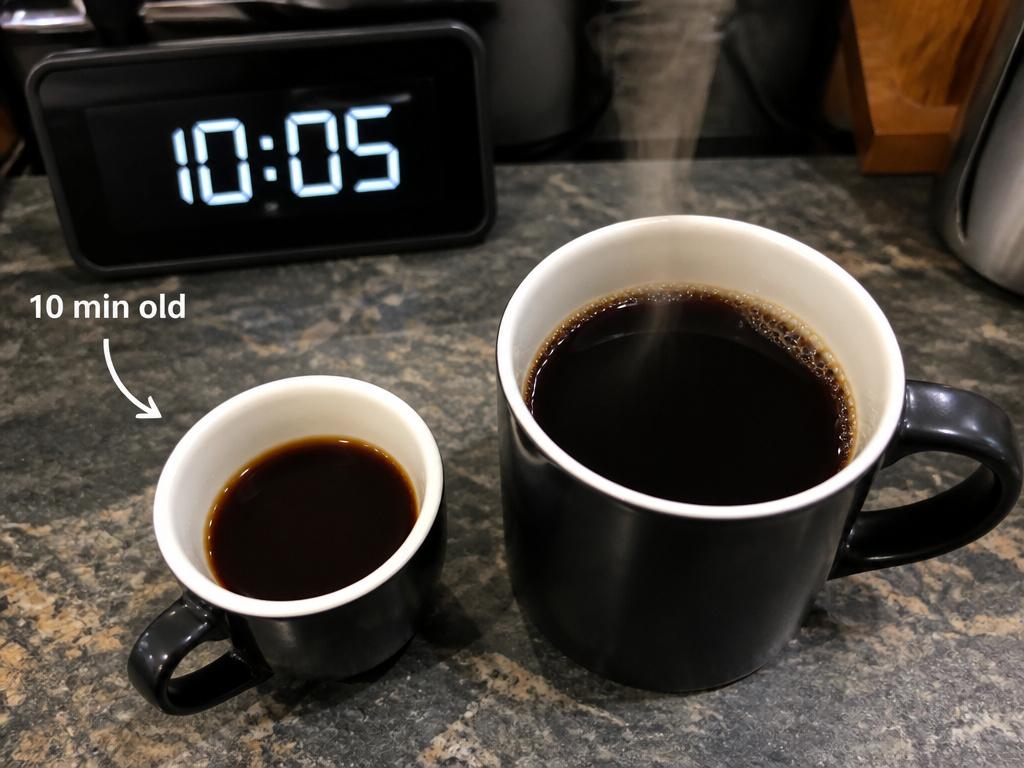
A shot of espresso dies faster than a pot of drip. It’s a matter of surface area and concentration.
Espresso is about 1.5 ounces of intensely extracted coffee. Every molecule is exposed to air the second you stop pulling. The crema, that beautiful tan foam, collapses within minutes, taking the brightest aromatic notes with it. By ten minutes, it’s a bitter, concentrated slug. Storing it is pointless.
A full pot of drip coffee has volume on its side. The coffee in the middle of the carafe is somewhat insulated from the air at the top. This is why transferring to a smaller, airtight container the moment you finish brewing is the single best thing you can do for longevity. It drastically reduces the coffee’s exposed surface area.
I once tried to save a double espresso for an afternoon pick-me-up. I put a lid on it and left it on the counter. Four hours later, it tasted like someone had stewed pencil shavings. The high concentration of dissolved solids just turns against itself.
Common mistake: Leaving the coffee on the warming plate for hours, the constant heat accelerates oxidation, and the flavor turns ashy and sharp by the second cup.
The Game Changer: Adding Milk, Cream, or Sugar
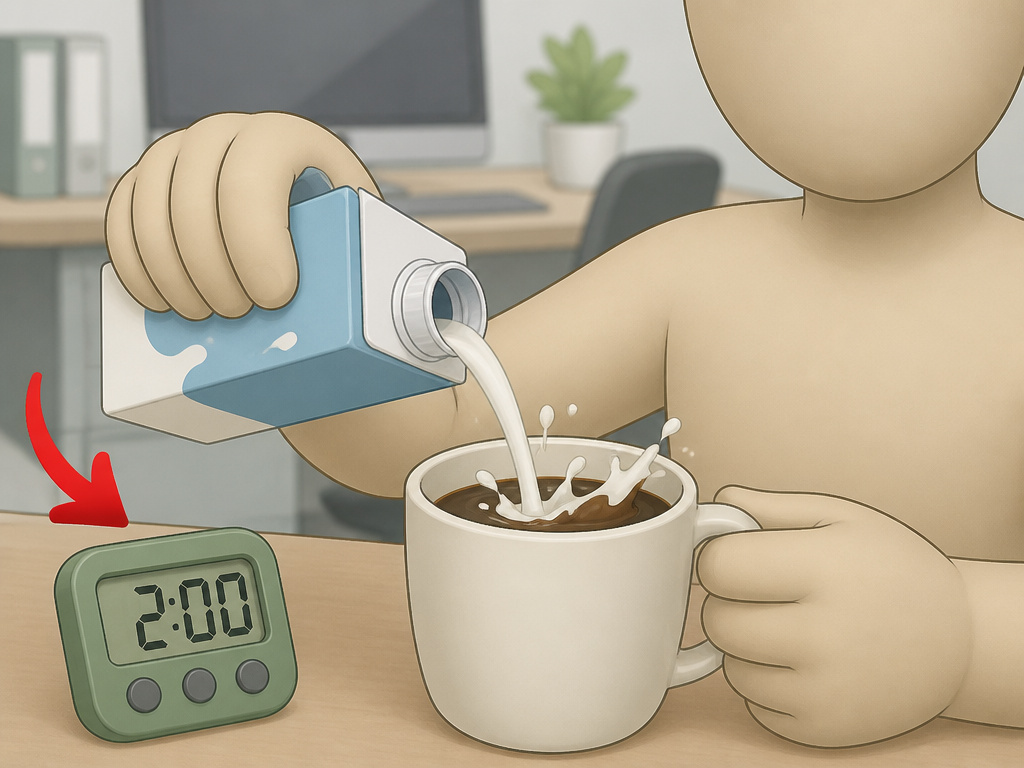
This is the line. Cross it, and the rules change completely.
Dairy and sugar introduce proteins, fats, and carbohydrates. These are prime nutrients for microbial growth. The coffee’s natural acidity is also diluted. According to food safety guidelines, this combination should be treated like any other dairy beverage.
Common mistake: Leaving a latte on your desk all morning, the dairy turns the coffee into a perishable food with a 2-hour room-temperature safety limit. After that, you’re gambling.
If you take your coffee with cream, drink it fast. If you can’t, refrigerate it immediately. The official stance is to discard any dairy-containing coffee left out for more than two hours (one hour if the room is above 90°F).
For iced coffees with milk, this rule is even more critical. The ice dilutes the coffee further and may not keep it cold enough to stay out of the danger zone.
Your Storage Playbook: Airtight, Cool, and Fast
The procedure isn’t complicated. Speed and the right container are everything.
- Choose the right vessel. A glass or stainless steel airtight container is best. Plastic can absorb flavors. Pre-warm the container with hot water if storing hot coffee to reduce thermal shock.
- Transfer immediately. Don’t let the coffee sit in the brewer’s glass carafe. Pour it into your storage container within 10 minutes of the cycle finishing.
- Cool with purpose. If refrigerating, let the sealed container sit at room temperature for no more than 30 minutes to avoid heating your fridge. Then place it in the back, where it’s coldest.
- Label it. Write the brew date and time on a piece of tape. You will forget whether it’s from today or yesterday.
- Reheat once. Pour what you need into a mug and microwave it until steaming. Reheating the entire batch repeatedly cooks what’s left of the flavor.
A quality burr grinder producing fresh grounds will give you a better starting point, but even the best brewed coffee fades. The goal is to slow the fade.
The Cold Brew Exception
Cold brew operates under a different set of rules, a fact backed by recent research like the PMC study on cold brew shelf life. It’s brewed cold, stored cold, and has a different chemical profile, typically lower in acidity.
This combination grants it exceptional shelf life. A sealed bottle of cold brew can last 10–14 days in the refrigerator. The study on industrial cold brew storage confirms that its physical-chemical characteristics remain stable for much longer than hot-brewed coffee. Even studies on high-pressure processing safety assessment for cold brew focus on extending shelf life for weeks, not days.
TL;DR: Cold brew is the marathon runner. Treat it like a juice or iced tea, not like yesterday’s pot of coffee.
Troubleshooting Old Coffee
How do you know when it’s truly time to pour it out?
- It smells off. Not just stale, but sour, musty, or cheesy. This is a sign of microbial activity, especially in coffee with dairy.
- You see visual clues. Mold (fuzzy spots) is an instant discard. So is any unexplained sliminess.
- The taste is unpleasantly bitter or sour. Age-related bitterness is one thing. A sharp, vinegar-like sourness is another.
When in doubt, throw it out. The cost of a new batch is lower than the cost of a foodborne illness. This is a good principle to apply to all your brewing equipment, keeping everything clean to prevent contamination in the first place.
Frequently Asked Questions
Can you drink day-old black coffee?
Yes, from a safety standpoint. Day-old black coffee that’s been refrigerated is very unlikely to make you sick. It will, however, taste stale, flat, and uninteresting. The enjoyable flavors are long gone.
Does reheating coffee kill bacteria?
Reheating to a high temperature (above 165°F) can kill many bacteria, but it does not destroy any toxins they may have already produced. If coffee with dairy has spoiled, reheating it will not make it safe.
How long does coffee last in a thermal carafe?
good thermal carafe will keep coffee above the 135°F safety threshold for 4-6 hours. Flavor will degrade significantly after the first 2 hours due to prolonged heat exposure and slow oxidation.
Can you freeze brewed coffee?
You can, but manage expectations. Freezing is great for preserving the coffee for later use in cooking or making iced coffee. When thawed and reheated to drink hot, it will taste noticeably muted and woody. Use frozen coffee within a month for best results.
Before You Go
The lifespan of your coffee hinges on temperature and ingredients. Keep black coffee hot or get it cold fast, and you buy yourself time. The moment dairy enters the picture, the clock accelerates dramatically.
For the best daily experience, brew what you’ll drink within the hour. Use an airtight container if you must store it. And remember that your coffee maker manual likely has specific cleaning advice to keep your machine, and your coffee, free of old residues that can spoil fresh batches. The goal is a great cup every time, not a science experiment in your carafe.
{
“@context”: “https://schema.org”,
“@type”: “HowTo”,
“name”: “How to Store Brewed Coffee for Maximum Freshness and Safety”,
“totalTime”: “PT5M”,
“tool”: [
{
“@type”: “HowToTool”,
“name”: “Airtight container (glass or stainless steel)”
},
{
“@type”: “HowToTool”,
“name”: “Refrigerator”
},
{
“@type”: “HowToTool”,
“name”: “Thermometer”
}
],
“step”: [
{
“@type”: “HowToStep”,
“name”: “Transfer immediately after brewing”,
“text”: “Pour hot coffee into a clean, pre-warmed airtight container within 10 minutes of finishing the brew cycle to minimize oxidation.”
},
{
“@type”: “HowToStep”,
“name”: “Cool rapidly for refrigeration”,
“text”: “If storing for more than 2 hours, let the sealed container sit at room temperature for no more than 30 minutes, then place it in the refrigerator.”
},
{
“@type”: “HowToStep”,
“name”: “Label with brew time”,
“text”: “Use a piece of tape or a marker to note the date and time you brewed the coffee directly on the container.”
},
{
“@type”: “HowToStep”,
“name”: “Reheat correctly”,
“text”: “When ready to drink, pour the desired amount into a mug and reheat in the microwave until steaming hot (over 165°F). Do not reheat the entire stored batch repeatedly.”
}
]
}
{
“@context”: “https://schema.org”,
“@type”: “FAQPage”,
“mainEntity”: [
{
“@type”: “Question”,
“name”: “Can you drink day-old black coffee?”,
“acceptedAnswer”: {
“@type”: “Answer”,
“text”: “Yes, from a safety standpoint. Day-old black coffee that’s been refrigerated is very unlikely to make you sick. It will, however, taste stale, flat, and uninteresting. The enjoyable flavors are long gone.”
}
},
{
“@type”: “Question”,
“name”: “Does reheating coffee kill bacteria?”,
“acceptedAnswer”: {
“@type”: “Answer”,
“text”: “Reheating to a high temperature (above 165°F) can kill many bacteria, but it does not destroy any toxins they may have already produced. If coffee with dairy has spoiled, reheating it will not make it safe.”
}
},
{
“@type”: “Question”,
“name”: “How long does coffee last in a thermal carafe?”,
“acceptedAnswer”: {
“@type”: “Answer”,
“text”: “good thermal carafe will keep coffee above the 135°F safety threshold for 4-6 hours. Flavor will degrade significantly after the first 2 hours due to prolonged heat exposure and slow oxidation.”
}
},
{
“@type”: “Question”,
“name”: “Can you freeze brewed coffee?”,
“acceptedAnswer”: {
“@type”: “Answer”,
“text”: “You can, but manage expectations. Freezing is great for preserving the coffee for later use in cooking or making iced coffee. When thawed and reheated to drink hot, it will taste noticeably muted and woody. Use frozen coffee within a month for best results.”
}
}
]
}
