
How Long Do Coffee Beans Last & The Critical Aroma Decline
Whole coffee beans stored correctly at room temperature remain at peak freshness for about 7–14 days post-roast and stay enjoyable for brewing for 4–6 weeks. Once ground, coffee loses up to 60% of its key aromatics within 15 minutes and should be used within a week for any semblance of flavor. The roast date, not a ‘best by’ date, is your only reliable timer.
Most people watch the calendar for a ‘best by’ date printed months out. They miss the real clock that started ticking the day the beans were roasted. Storing beans next to the stove or in a clear canister accelerates the countdown silently. You taste the flat, stale result weeks later and blame the bean, not the timeline.
This guide breaks down the exact shelf life of whole beans and ground coffee, why the numbers matter, and the storage methods that actually work versus the ones that backfire. We’ll ground everything in industry data and the practical reality of keeping coffee drinkable, not just ‘safe’.
Key Takeaways
- The roast date is your primary freshness indicator. Whole beans are at their absolute best within 7–14 days of this date.
- Grinding is the great accelerator. Exposing the internal oils and structure to air causes rapid oxidation and staling.
- Never use the fridge for coffee storage. The constant humidity cycle and presence of other odors will damage the beans faster than room temperature air.
- Freezing is a valid long-term strategy, but only if done once, in an airtight, moisture-proof package. Repeated thawing introduces condensation that ruins flavor.
- Your storage container matters more than its location. An opaque, airtight canister in a dark cupboard beats a fancy clear jar on the counter every time.
The Whole Bean vs. Ground Coffee Timeline
Industry guidelines and real-world experience often conflict here. The National Coffee Association USA states whole beans stay fresh for “up to two weeks” after roasting with proper storage. That’s the consensus target for peak flavor. Ground coffee gets “up to one week.”
Whole bean coffee degrades through oxidation and the release of volatile aromatic compounds. Grinding increases the surface area exposed to oxygen by several orders of magnitude, accelerating this process exponentially. Staling compounds form within hours.
The two-week mark for whole beans is a quality peak, not an expiration cliff. A Scientific Reports coffee storage study analyzing chemical markers found that while certain desirable acids and aromatics decline steadily after roasting, the coffee remains palatable and brewable for a month or more if protected from air, light, and heat. Many users on home-barista forums report enjoying beans at four weeks, especially darker roasts where some initial brightness has mellowed.
The moment you grind, the equation changes violently.
TL;DR: Treat whole beans to a 2-week peak and a 4–6 week drinkable window. Treat pre-ground coffee to a 1-week maximum countdown from the day it was ground.
Why Grinding Changes Everything
A whole coffee bean is a sealed package. Its complex internal structure protects oils and delicate aromatic compounds. A burr grinder or blade coffee grinder shatters that structure.
The new, massive surface area is immediately vulnerable. Oxygen attacks the oils, turning them rancid. Those beautiful volatile compounds, the ones that give you notes of berry, chocolate, or citrus, begin to evaporate. This isn’t a slow fade. Data from coffee research videos indicates a loss of up to 60% of those key aromatics can occur in the first 15 minutes after grinding.
That’s why the single best thing you can do for flavor is to buy whole beans and invest in a decent burr coffee grinder. Grind right before you brew. Every minute the ground coffee sits, it becomes more generic, more flat, more stale.
| Coffee Form | Peak Freshness Window | Practical ‘Drinkable’ Window | What Happens After |
|---|---|---|---|
| Whole Bean | 7–14 days post-roast | 4–6 weeks with good storage | Flattened acidity, muted aromatics, eventual papery taste. |
| Ground Coffee | 15 minutes – 1 day | Up to 1 week | Rapid loss of aroma (>60% in 15 min), increased bitterness, flat flavor. |
| Pre-Ground (Sealed) | Until package is opened | 1–2 weeks after opening | Stales from moment of grinding; flavor is compromised before you buy it. |
Decoding Dates: Roast Date vs. Best By
You have two dates on a bag. The ‘roast date’ is the day the green beans were heated. The ‘best by,’ ‘use by,’ or ‘enjoy by’ date is a conservative estimate set by the roaster or retailer, often 6–12 months out, for unopened bags.
The roast date is the only one that matters for freshness. The ‘best by’ date is a food-safety placeholder for an extremely shelf-stable product. A bag roasted nine months ago with a ‘best by’ date next month is not fresh coffee. It is old coffee that is still safe to consume.
Common mistake: Buying coffee based only on a distant ‘best by’ date, the beans inside could have been roasted eight months prior, leaving you with a flat, woody cup regardless of the brew method.
Your buying rule should be simple: look for the roast date. If it’s not printed on the bag, ask. If they won’t tell you, buy elsewhere. For the freshest experience, aim for beans roasted within the past two weeks. This is especially critical for more delicate blonde roast coffee beans or nuanced single-origin coffee beans, where fading aromatics are more noticeable.
The Enemies of Freshness and How to Fight Them
Coffee staling is a chemical battle against three specific adversaries: oxygen, light, and heat. Moisture is a fourth, sneaky contender. Your storage strategy is your defense.
Oxygen is the primary villain. It causes oxidation of the oils, leading to rancidity and stale flavors. This process begins the second roasting ends but is contained while the bean is whole. The one-way valve on quality coffee bags exists solely to manage this. It lets carbon dioxide (a byproduct of roasting) escape without letting oxygen in.
Light, especially sunlight, carries UV radiation that breaks down chemical compounds. It’s why coffee bags are usually opaque. A clear glass jar on a sunny windowsill is a staling accelerator.
Heat speeds up all chemical reactions, including staling. Storing beans above the oven or next to the coffee machine’s heat source is a common error.
Moisture leads to mold and destroys the porous structure of the bean. This is why the refrigerator is such a poor choice, it’s a humid environment.
Your defense is straightforward:
1. Use the original bag if it’s opaque, resealable, and has a one-way valve.
2. Transfer to an airtight container if the bag isn’t resealable. Choose an opaque one or store a clear one in a dark cupboard. The container’s seal is more important than it being ‘coffee specific.’
3. Pick a cool, dark, dry spot. A pantry shelf is perfect. A cabinet away from appliances works.
This approach applies equally whether you’re storing robust coffee bean blends or delicate Arabica coffee beans. The chemistry of degradation doesn’t discriminate by origin.
The Freezer Gambit: Pro Move or Flawed Backup?
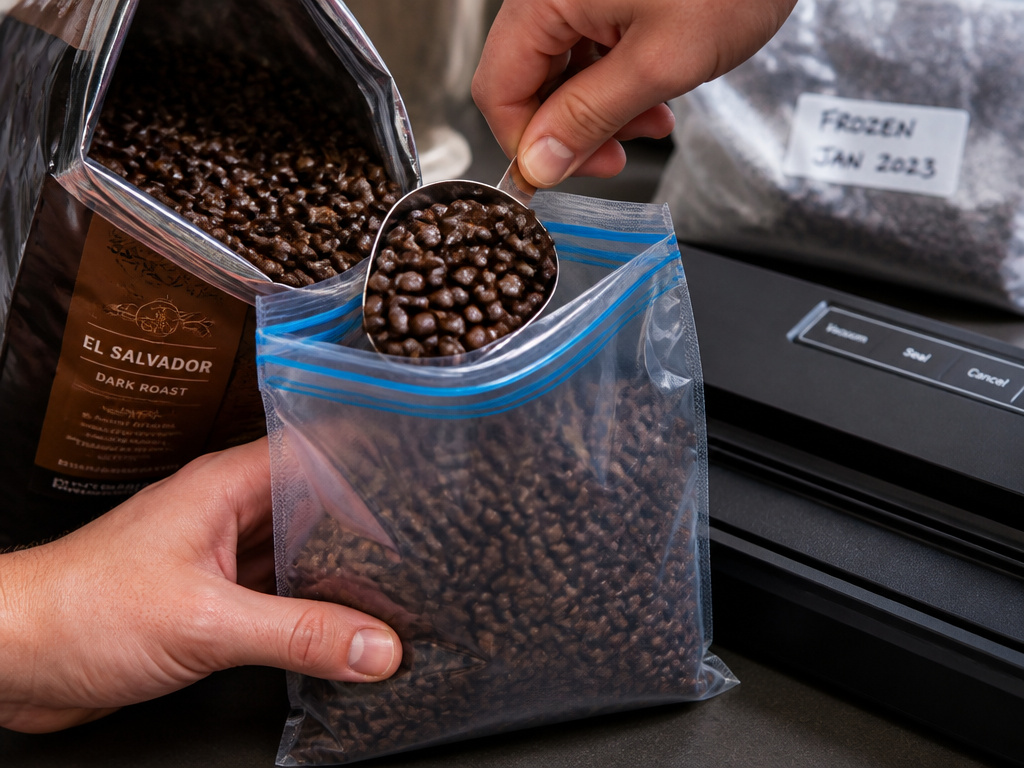
The standard advice is to avoid the freezer. The standard advice is incomplete. Freezing is a powerful tool for long-term storage, but it has non-negotiable rules. Breaking them makes things worse.
The problem with a home freezer isn’t the cold. It’s the humidity cycle and the risk of odor transfer. Every time you open the freezer door, warm, moist air rushes in. Some of that moisture can deposit on your coffee package as frost. If that package isn’t sealed against moisture, the beans will absorb it.
I once divided a two-pound bag of a favorite single-origin beans guide into a regular zipper bag and threw it in the freezer. A month later, the beans felt damp when I poured them out. The resulting brew tasted musty, like a damp basement. The coffee was ruined by water I couldn’t even see initially.
The correct way to freeze coffee:
- Divide immediately after opening. Portion the beans into amounts you’ll use in one week.
- Use a true moisture barrier. A vacuum-sealed bag is ideal. A high-quality, thick freezer bag with the air squeezed out is a good second choice. The original paper bag with a valve is not sufficient.
- Freeze and forget for long-term. This is for storage measured in months, not weeks.
- Thaw once, completely. When you’re ready to use a portion, take the sealed bag out and let it come to room temperature before opening it. This prevents condensation from forming on the cold beans inside your warm, humid kitchen.
- Do not refreeze. Once thawed, keep that portion at room temperature and use it within a week or two.
This method effectively pauses the staling clock. An NIH research article on coffee storage supports that low-temperature storage significantly slows the degradation of key quality parameters. It’s a valid strategy for buying in bulk or preserving a special roast. For daily use, room-temperature storage is simpler and safer.
What Not to Do: The Storage Failures That Flatten Flavor
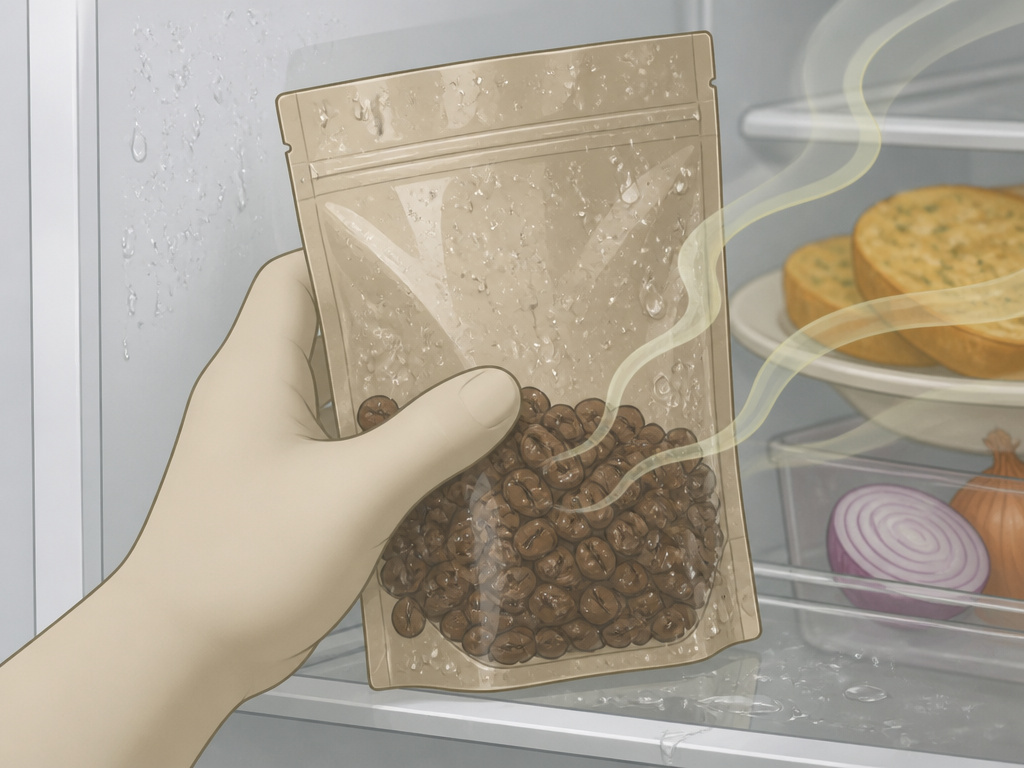
Some methods are actively harmful. They create the conditions for faster staling or introduce new off-flavors.
The Refrigerator
This is the worst common storage mistake. The fridge is humid. Coffee beans are hygroscopic, they absorb moisture from the air. Moist beans lose their crisp snap, brew poorly, and can develop mold. The fridge is also full of odors that coffee will absorb. Your Ethiopian Yirgacheffe will soon taste like last night’s garlic bread.
Clear Canisters on the Counter
Light and heat are the killers here. A stylish glass jar exposes your beans to both constantly. The visual appeal costs you flavor. If you use a clear container, it must live inside a closed cabinet.
Leaving the Bag Unsealed
After you scoop out your beans, press out the air and reseal the bag tightly. An open bag is an invitation for oxygen and moisture. If your bag doesn’t have a resealable zipper, that’s your signal to transfer the beans to an airtight container immediately.
Using a Blade Grinder for Large Batches
Grinding a month’s worth of coffee with a Ninja blender grinding attachment or a basic blade grinder seems efficient. You’ve just guaranteed that the last cup from that batch will taste of nothing but paper and faint bitterness. Only grind what you need for the next few days at most, and even that is a compromise.
Common mistake: Storing coffee in the refrigerator to ‘keep it fresh’, the constant 40°F humidity cycle introduces moisture that the beans absorb within days, leading to a dull, musty flavor and potential clumping in the grinder.
Your brewing equipment matters, too. Using stale beans or poorly stored grounds will undermine even the best Breville coffee filter or most precise Bunn coffee filters. Garbage in, garbage out.
Frequently Asked Questions
Do coffee beans go bad?
Coffee beans don’t ‘spoil’ in the way bread molds or meat rots. They become stale. The oils oxidize, the aromatics evaporate, and the flavor becomes flat, papery, or woody. They are still safe to consume for years if kept dry, but they will not taste like coffee.
Can you use coffee beans after the expiration date?
You can use them long after a ‘best by’ date if the bag remains sealed. The flavor will be severely diminished. If the beans show any signs of mold, oil slicks, or an off (rancid) smell, discard them.
How can you tell if coffee beans are stale?
Fresh beans have a noticeable, pleasant aroma when you open the bag. They are hard and dry. Stale beans have a faint, flat smell or none at all. They may feel slightly oily or leathery. When ground, fresh coffee will produce a bloom of gas and foam during a pour-over; stale coffee produces little to no bloom.
Does freezing coffee beans extend their life?
Yes, if done correctly. Freezing in a single-use, airtight, moisture-proof package can extend the drinkable life of whole beans for several months. It pauses the staling reactions. Incorrect freezing (using a permeable bag, repeated thawing) will shorten their life and damage flavor.
Is it better to buy whole bean or ground coffee?
Always buy whole bean. Grinding is the single largest factor in rapid flavor loss. Pre-ground coffee is stale by design, as it begins degrading the moment it’s processed. A decent burr coffee grinder is the most impactful upgrade you can make to your home coffee quality.
Before You Go
Your coffee’s lifespan hinges on a few concrete decisions. Ignore the distant ‘best by’ date and hunt for the roast date. Treat whole beans with respect, storing them in darkness and airtight safety. Never let ground coffee sit, grind it fresh, every time. Understand that the freezer is a specialist’s tool, not a daily convenience.
The goal isn’t just to make coffee last longer. It’s to make every cup you brew taste like the roaster intended. That means compressing the time between the roaster’s drum and your grinder, and stretching the time between your grinder and your cup. Do that, and even a simple brown sugar sweetener in your mug will accent real coffee flavor, not mask its absence.
{
“@context”: “https://schema.org”,
“@type”: “HowTo”,
“name”: “How to Store Coffee Beans for Maximum Freshness”,
“totalTime”: “PT5M”,
“tool”: [
{
“@type”: “HowToTool”,
“name”: “Opaque, airtight container or original one-way valve bag”
},
{
“@type”: “HowToTool”,
“name”: “Burr coffee grinder”
},
{
“@type”: “HowToTool”,
“name”: “Vacuum canister (optional for long-term storage)”
}
],
“step”: [
{
“@type”: “HowToStep”,
“name”: “Check the roast date”,
“text”: “Purchase beans roasted within the last two weeks. Ignore ‘best by’ dates in favor of the actual roast date printed on the bag.”
},
{
“@type”: “HowToStep”,
“name”: “Store whole beans in original bag or transfer”,
“text”: “Keep beans in their sealed, opaque bag with a one-way valve. If the bag is not resealable, transfer beans to a clean, opaque, airtight container.”
},
{
“@type”: “HowToStep”,
“name”: “Choose a cool, dark storage spot”,
“text”: “Place the container in a pantry or cupboard away from the stove, oven, or direct sunlight. Room temperature is ideal.”
},
{
“@type”: “HowToStep”,
“name”: “Grind immediately before brewing”,
“text”: “Measure whole beans and grind them with a burr grinder just before you brew. Do not grind more than you need for a single session.”
},
{
“@type”: “HowToStep”,
“name”: “Freeze for long-term storage only once”,
“text”: “For storage beyond one month, divide beans into single-use portions, vacuum seal or use airtight bags, and freeze. Thaw at room temperature before opening to prevent condensation.”
}
]
}
{
“@context”: “https://schema.org”,
“@type”: “FAQPage”,
“mainEntity”: [
{
“@type”: “Question”,
“name”: “Do coffee beans go bad?”,
“acceptedAnswer”: {
“@type”: “Answer”,
“text”: “Coffee beans don’t ‘spoil’ in the way bread molds or meat rots. They become stale. The oils oxidize, the aromatics evaporate, and the flavor becomes flat, papery, or woody. They are still safe to consume for years if kept dry, but they will not taste like coffee.”
}
},
{
“@type”: “Question”,
“name”: “Can you use coffee beans after the expiration date?”,
“acceptedAnswer”: {
“@type”: “Answer”,
“text”: “You can use them long after a ‘best by’ date if the bag remains sealed. The flavor will be severely diminished. If the beans show any signs of mold, oil slicks, or an off (rancid) smell, discard them.”
}
},
{
“@type”: “Question”,
“name”: “How can you tell if coffee beans are stale?”,
“acceptedAnswer”: {
“@type”: “Answer”,
“text”: “Fresh beans have a noticeable, pleasant aroma when you open the bag. They are hard and dry. Stale beans have a faint, flat smell or none at all. They may feel slightly oily or leathery. When ground, fresh coffee will produce a bloom of gas and foam during a pour-over; stale coffee produces little to no bloom.”
}
},
{
“@type”: “Question”,
“name”: “Does freezing coffee beans extend their life?”,
“acceptedAnswer”: {
“@type”: “Answer”,
“text”: “Yes, if done correctly. Freezing in a single-use, airtight, moisture-proof package can extend the drinkable life of whole beans for several months. It pauses the staling reactions. Incorrect freezing (using a permeable bag, repeated thawing) will shorten their life and damage flavor.”
}
},
{
“@type”: “Question”,
“name”: “Is it better to buy whole bean or ground coffee?”,
“acceptedAnswer”: {
“@type”: “Answer”,
“text”: “Always buy whole bean. Grinding is the single largest factor in rapid flavor loss. Pre-ground coffee is stale by design, as it begins degrading the moment it’s processed. A decent burr coffee grinder is the most impactful upgrade you can make to your home coffee quality.”
}
}
]
}
