
How Do I Make Coffee in a Keurig for the Best Taste Possible
To make coffee in a Keurig, you power it on, fill the reservoir with cold water, insert a K-Cup pod, select a brew size, and press the brew button. The machine heats the water, pierces the pod, and brews a single cup in under a minute.
Most people stop there. They get a serviceable cup, but they miss the two buttons on their own machine that turn a thin, hot drink into actual coffee. They also skip the one weekly task that keeps the machine from tasting like a wet basement.
This guide walks through the basic button-pushing, then shows you how to use your specific model’s features. We’ll cover the Strong Brew and Over Ice settings, what happens when you use the wrong grind in a reusable pod, and why the descaling light is not a suggestion.
Key Takeaways
- Always use cold, fresh water in the reservoir. Stale or warm water picks up plastic tastes from the tank and brews flat.
- The Strong Brew button on models like the K-Elite increases contact time, not temperature. It makes a noticeable difference with lighter roasts.
- For iced coffee, use the dedicated Over Ice setting. It brews a more concentrated shot over your ice so it doesn’t taste watered down.
- Reusable K-Cups fail with fine grinds. Use a medium-coarse grind, or you’ll clog the filter and get grounds in your cup.
- Descaling every 3-6 months is the official line. In hard water areas, do it monthly or the mineral scale will cut heating efficiency by half within a year.
The Absolute Basics: Power, Water, Pod, Brew
This is the four-step sequence every Keurig manual prints. Get it wrong here, and the advanced features won’t save you.
First, plug the machine into an outlet and press the power button. You’ll hear a pump prime and the heating element click on. The display or ready light will glow after about 60 seconds.
The Keurig K-Elite coffee maker has a 75-ounce (2.2 L) water reservoir and offers five brew sizes: 4, 6, 8, 10, and 12 ounces. It includes a Strong Brew setting for increased extraction and an Over Ice setting for concentrated iced coffee.
Now, lift the lid on the water reservoir at the back or side of the machine. Pour in cold tap water or filtered water up to the marked “max” line. Never use distilled or softened water. Distilled water is too pure and can make the coffee taste metallic, while softened water adds sodium that accelerates scale buildup.
Lift the handle on top of the machine all the way up. Drop a K-Cup pod into the round pod holder. The foil lid should face up. Close the handle firmly. You should feel a solid click as the internal needles puncture the pod.
Place your mug on the drip tray. Select your brew size with the corresponding button. Finally, press the large Brew button. The machine will hum for 45 to 60 seconds as hot water flows through the pod into your mug.
TL;DR: Cold water, pod foil-up, handle clicked shut, brew size selected. The machine does the rest in under a minute.
Beyond the Button: Using Your Machine’s Hidden Features
If your Keurig has more than three buttons, you own a better machine than you’re using. The extra buttons are not marketing fluff.
The Strong Brew button, found on the K-Elite, K-Supreme, and other premium models, is the most misunderstood. It does not increase the water temperature. Instead, it slows the pump. Water flows through the coffee grounds more slowly, which increases extraction time. This pulls more flavor compounds from the grounds, particularly from lighter blonde roast coffee or single-origin options that have more delicate acids.
The Over Ice button, on models like the K-Iced and K-Elite, is for iced coffee. It brews a smaller, more concentrated volume (usually 4 or 6 ounces) directly over a full cup of ice. A standard 8-ounce brew over ice melts too much and tastes weak. The Over Ice setting accounts for the melt. It’s the difference between iced coffee and hot coffee that got cold.
| Feature Button | What It Actually Does | Best Used For |
|---|---|---|
| Strong Brew | Slows water flow, increasing brew/contact time by ~30%. | Light roasts, blonde roast coffee, or any pod that tastes weak on a standard cycle. |
| Over Ice | Brews a concentrated 4-6 oz shot instead of a full cup. | Making iced coffee that isn’t watered down. |
| Hot Water on Demand | Dispenses hot water without a pod in the chamber. | Tea, instant soups, or preheating a mug for Americano preparation. |
Some high-end models also have a High Altitude Setting. If you live above 5,000 feet, you must enable it. Water boils at a lower temperature at altitude. Without this setting, your Keurig will shut off the heater too soon, resulting in lukewarm, under-extracted coffee that sputters during the brew. The setting is buried in the menu—find it.
The Reusable K-Cup: How to Not Make a Mess
A reusable K-Cup pod saves money and lets you use your own Arabica coffee beans. It also introduces the single most common point of failure in the entire system: grind size.
The reusable pod’s mesh filter is wider than the paper filter in a factory K-Cup. If you use a fine espresso grind, the tiny particles slip through the mesh. They either clog the exit needle, causing a slow drip and overflow, or they end up as silt at the bottom of your mug. You need a medium-coarse grind, similar to what you’d use for a drip coffee method.
Common mistake: Filling a reusable K-Cup with fine-ground coffee — the silt clogs the exit needle within three brews, and the next cup sprays hot water and grounds across your counter.
Here is the process that works:
1. Remove the reusable pod’s lid and filter basket.
2. Fill the basket with your ground coffee. Do not pack it down. Level it off.
3. Snap the lid back on. Ensure the silicone seal is clean and seated.
4. Insert it into the Keurig exactly like a regular pod.
After brewing, discard the wet grounds immediately. Rinse the pod while it’s still warm. Letting it sit for hours makes the grounds cement onto the filter. A stiff-bristled brush helps.
Maintenance That Actually Matters: Water and Descaling
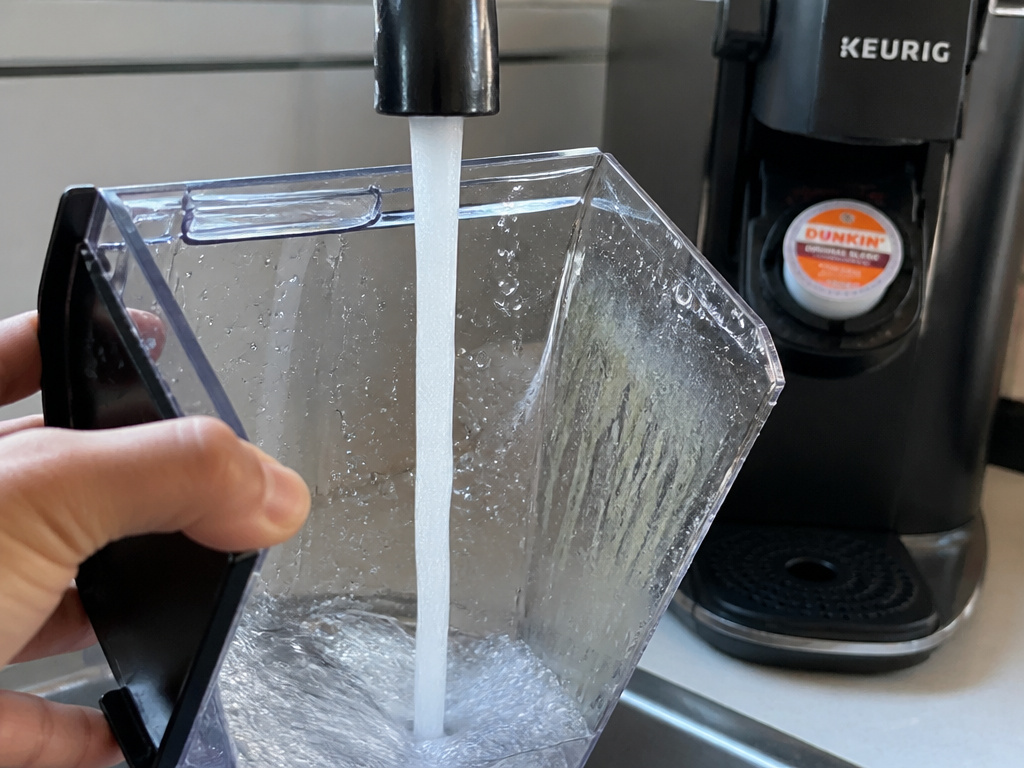
Your Keurig is a simple pump, a heater, and a network of narrow plastic tubes. What flows through those tubes decides whether the machine lasts three years or ten.
The water reservoir needs attention. Empty and rinse it with warm water once a week. Stagnant water grows biofilm—a slimy layer of bacteria and mold that tastes musty and can clog the intake. If you smell dampness when you lift the lid, you’ve waited too long.
Descaling is non-negotiable. The official manual says every 3 to 6 months. That’s a baseline for soft water. If you have hard water, scale forms faster.
| Water Hardness Level | Recommended Descaling Frequency | Consequence of Skipping |
|---|---|---|
| Soft (0-3 gpg) | Every 6 months | Minimal scale, but old coffee oils still build up in the lines. |
| Moderate (3-7 gpg) | Every 3-4 months | Heater efficiency drops; brew time lengthens by 15-20 seconds. |
| Hard (7+ gpg) | Every 4-6 weeks | Scale can fully block the thermoblock or pump within 12-18 months, requiring replacement. |
To descale, use a descaling your machine solution made for Keurigs (white vinegar works in a pinch but leaves a persistent smell). Run the solution through a brew cycle without a pod, then run multiple cycles with fresh water to flush. The machine’s descaling reminder light is helpful, but it’s just a timer. If your coffee is suddenly lukewarm or the brew sounds like it’s struggling, it’s already past time.
Troubleshooting: When the Simple Cup Goes Wrong

Sometimes the machine doesn’t cooperate. Here are the fixes for the most frequent issues.
The machine powers on but won’t brew.
Check the water reservoir. Is it seated all the way down? Is the float inside stuck? Remove the reservoir, jiggle the float, and reseat it firmly. This solves about half of all “no brew” problems.
Coffee tastes weak or watery.
First, try the Strong Brew button. If you don’t have one, choose a smaller brew size (6oz instead of 10oz) for the same pod. This creates a more concentrated coffee. If it’s still weak, your pod might be stale or your machine might need descaling. Scale insulates the heater.
Water sprays or leaks from the pod holder during brewing.
The pod was not pierced correctly. You either didn’t close the handle firmly, or you’re using a damaged or off-brand pod. Also, check the exit needle (the small tube in the center of the pod holder) for clogs. Unplug the machine and use a paperclip to gently clear any debris.
There are coffee grounds in my cup.
This is almost exclusively a reusable K-Cup issue. Your grind is too fine. Switch to a coarser grind setting on your burr coffee grinders. If you’re using a factory K-Cup and this happens, the pod’s filter was defective. Contact Keurig customer support; they often send replacement packs.
Frequently Asked Questions
Can I use my own ground coffee in a Keurig?
Yes, but you need a reusable K-Cup pod. Fill it with a medium-coarse grind, level it off (don’t pack it), and run it through a standard cycle. Expect a slightly different strength compared to a sealed pod, as the extraction dynamics change.
What do the different brew sizes mean?
The brew size (6oz, 8oz, 10oz, 12oz) controls how much hot water passes through the same pod. A smaller size makes a stronger, more concentrated cup. A larger size makes a milder, larger cup. The pod’s coffee amount is fixed.
Why does my Keurig take so long to heat up?
If the “Ready” light takes more than 90 seconds to illuminate on a warm start, you likely have significant limescale buildup on the internal heater. Descaling is the first step. If that doesn’t restore speed, the heating element may be failing.
How do I make iced coffee without an ‘Over Ice’ button?
Brew a strong cup using the smallest brew size (like 4oz or 6oz) directly over a full cup of ice. You can also use the Strong Brew setting if your model has it. The goal is to use less water so the melting ice doesn’t over-dilute the drink.
Is it okay to leave water in the Keurig?
For a day or two, yes. For longer, no. Stagnant water in the reservoir can develop off-flavors and promote microbial growth. If you won’t use the machine for several days, empty the reservoir and leave the lid open to air dry.
The Bottom Line
Making coffee in a Keurig is simple by design. The real skill lies in not treating it like a vending machine. Use fresh water. Press the Strong Brew button when the cup tastes thin. Clean the reservoir weekly. Descale before the machine tells you to.
Those habits turn the fastest cup of coffee into a good one. They also keep the machine from dying an early death from neglect. The difference between a three-year appliance and a ten-year workhorse is about ten minutes of maintenance a month. Start the clock today.
