
Do Coffee Pods Go Bad? The 12-Month Flavor Cliff
Coffee pods do not expire in a way that makes them unsafe to drink, but the coffee inside goes stale, losing flavor and aroma. Manufacturers like Nespresso and Keurig design pods with oxygen barriers and nitrogen flushing to preserve freshness for 8–12 months, marked by a “Best By” date. After that date, the coffee is often drinkable but tastes flat.
Most people think a pod is fine if it’s before the date on the box. They miss the real problem. Staling is a chemical process that starts the day the pod is sealed, and storage conditions can speed it up dramatically.
This guide breaks down the science behind pod degradation, how to read manufacturer dates correctly, and the physical signs that a pod has truly gone bad.
Key Takeaways
- The “Best By” date is a peak-quality marker, not a safety expiration. Coffee is often drinkable long after but won’t taste good.
- A punctured foil lid or cracked pod body ruins the protective seal. Staling accelerates from months to weeks.
- Store pods in a cool, dry, dark place. Heat and humidity are the enemies of long-term freshness.
- Visually inspect pods before use. Discoloration, oil stains, or a musty smell mean the coffee has degraded.
- For the best flavor, use pods within 6 months of purchase, regardless of the printed date.
The “Best By” Date Decoder
That small print on your K-Cup lid or Nespresso sleeve is not an expiration date. It’s a manufacturer’s estimate for peak flavor.
Nespresso states their hermetically sealed aluminum capsules maintain optimal freshness for up to 12 months from production. Keurig K-Cup pods typically carry an 8–12 month “Best By” date from manufacturing. These timelines rely on the pod’s integrity—the aluminum or plastic body and the foil seal acting as an oxygen barrier. The date assumes you’ve stored the pod in a cool, dry cupboard, not on a sunny windowsill or above the steaming kettle.
Common mistake: Treating the “Best By” date as a hard expiration — you throw away perfectly drinkable coffee, or you drink terrible coffee because the date hasn’t passed yet. The date is a guideline, not a switch.
TL;DR: The printed date tells you when the coffee was at its best, not when it becomes unsafe. Your storage conditions decide how fast it declines after that point.
The Science of Staling (It’s Not Just “Old”)

Coffee staling is a two-part chemical process. Understanding it explains why a sealed pod has a shelf life at all.
First, oxidation. Even with nitrogen flushing, tiny amounts of oxygen remain inside the pod. Over months, this oxygen reacts with the coffee’s oils, creating stale, cardboard-like flavors. Second, the loss of volatile aromatic compounds. These are the delicate chemicals that give coffee its fruity, floral, or nutty notes. They gradually break down or get absorbed by the coffee grounds themselves, leading to a flat, one-dimensional taste.
The packaging is the only thing slowing this down. A study published in the PMC on the lipid and volatile components of coffee pods tracked how these compounds change inside multilayer film packaging over time, confirming the steady decline of key flavor agents.
The mechanism is slow but relentless. That’s why a two-year-old pod brews a cup that smells like coffee but tastes like nothing.
How to Spot a Bad Pod
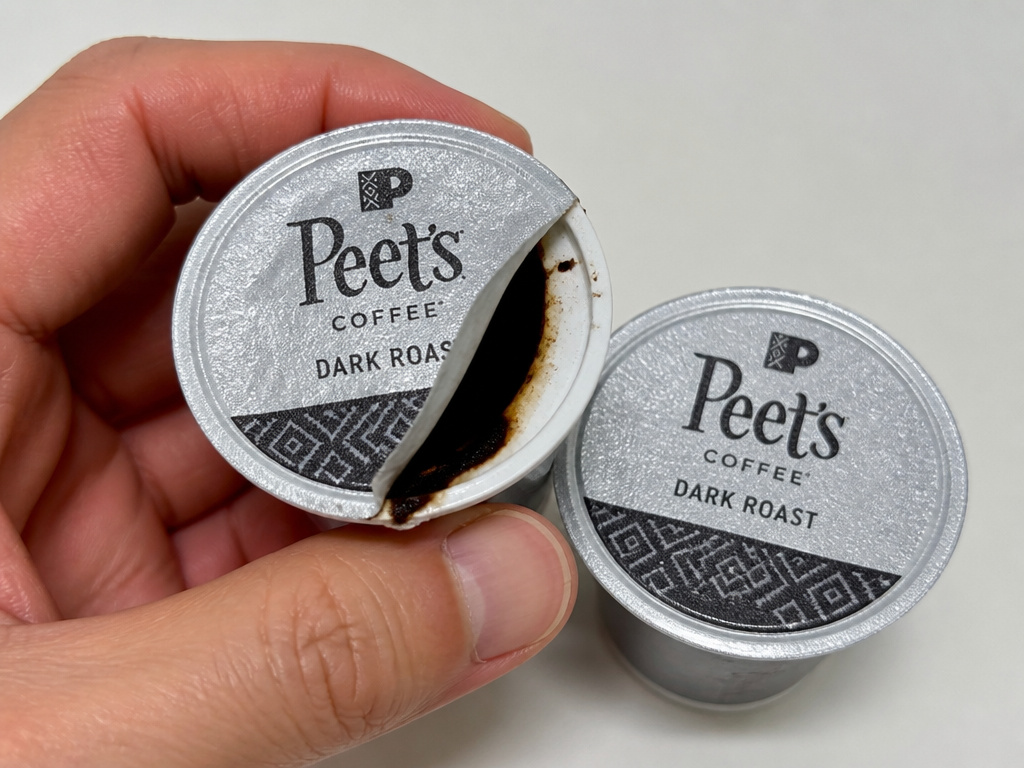
Your senses are the best tool. The pod itself will give you clues long before you take a bitter sip.
| Sign | What It Means | Should You Brew It? |
|---|---|---|
| Punctured or torn foil | The hermetic seal is broken. Oxygen has free access, staling the coffee rapidly. | No. Discard. |
| Cracked plastic body | Compromises the pod’s structure, often damaging the internal filter. | No. It could jam your machine. |
| Discoloration or oil stains | Coffee oils have seeped out and oxidized. This coffee will taste rancid. | No. |
| Musty or papery smell | Indicates moisture intrusion or advanced staling of the grounds. | No. The flavor is gone. |
| “Best By” date passed by 6+ months | The coffee is stale but likely safe. Expect a flat, weak cup. | Maybe, if you’re not picky. |
The most common failure point is the foil lid. I once had a sleeve of pods where the corner of one was slightly peeled back, probably from shipping. It wasn’t obvious. I brewed it two weeks later and the cup had a distinct sour, papery edge the others didn’t. The damage was minor, but it was enough.
TL;DR: Look, then smell. If the pod looks damaged or smells off, it will taste worse. Don’t risk a bad cup or a machine jam.
What “Safe to Drink” Really Means

The FDA Food Code’s principle that food must be “safe and unadulterated” applies here. A physically intact, commercially packaged coffee pod is extremely unlikely to grow mold or bacteria that would make you sick. The environment inside is too dry, and the coffee grounds are not a hospitable medium for pathogens.
The health concerns around pods are different. They relate to materials, not microbial spoilage. Some plastic pods may leach compounds like BPA when heated, and aluminum capsules have sparked debates about heavy metal exposure. These are long-term usage concerns, not acute spoilage issues from an old pod.
Your primary risk from an “old” pod is a terrible-tasting beverage. The secondary risk is damaging your machine with a swollen or disintegrating pod that got wet.
A pod that smells like dust or chemicals has degraded, not spoiled. You won’t get food poisoning, but you will get a reminder to check your storage.
The Storage Rules That Actually Matter
Where you keep your pods has a bigger impact on their lifespan than the date printed on them. Follow these three rules.
- Keep them cool and dry. Heat accelerates chemical reactions. Storing pods above the stove or next to the coffee maker exposes them to warmth and steam. A pantry or a closed cupboard away from appliances is ideal.
- Keep them in the dark. Light, especially sunlight, degrades the packaging materials and can heat the pods. Don’t use a clear glass jar on the counter.
- Keep them sealed. Once you open a retail box or sleeve, the pods are exposed to ambient humidity. For long-term storage, transfer them to an airtight container. This is less critical for weekly use but matters if you buy in bulk.
High humidity is the stealth enemy. It won’t instantly ruin a sealed pod, but over many months it can weaken the seal’s adhesive or, in extreme cases, promote external mold growth. If your kitchen is prone to steam, store your pods elsewhere.
| Storage Location | Risk Level | Expected Freshness Loss vs. Date |
|---|---|---|
| Pantry / closed cupboard | Low | Matches manufacturer “Best By” timeline. |
| Clear countertop container | Medium | Lose peak flavor 1-2 months sooner. |
| Above refrigerator or stove | High | Lose peak flavor 2-3 months sooner; risk of seal compromise. |
| Garage or shed (temp swings) | Very High | Unpredictable; severe flavor loss and potential physical damage. |
When to Absolutely Toss a Pod
Some conditions are non-negotiable. If you see these, throw the pod away.
- Visible mold on the pod. This is rare but means moisture has infiltrated. Do not brew.
- The pod is swollen or misshapen. This indicates gas production inside, likely from severe degradation or contamination.
- There is any residue or powder outside the pod. It could be mold or simply degraded coffee, but it’s not worth finding out.
- It smells strongly of chemicals or damp cardboard. Your nose is detecting advanced staling compounds. The cup will be awful.
A swollen pod is a hard stop. I found one at the back of a cupboard once, a forgotten pod from a different machine system. The plastic had warped and felt slightly soft. I opened it out of curiosity—the grounds smelled sour and fermented. That pod never went near a brewer.
Your machine is an investment. A damaged pod can clog the needle, leave grounds in the brew chamber, or simply make a mess. Tossing a 50-cent pod is cheaper than a service call.
Frequently Asked Questions
Can you use expired coffee pods?
Yes, you can use them. “Expired” is the wrong word. The coffee will be stale, meaning it has lost most of its brighter, more complex flavors. The resulting cup will be flat, possibly papery or sour, but it is not unsafe to drink.
How long do coffee pods last after the “Best By” date?
They are often drinkable for 6-12 months after the date if stored perfectly. The flavor declines steadily, so a pod 3 months past its date will taste better than one 12 months past. After 18 months, you’re mostly brewing brown water.
Do Nespresso pods expire faster than Keurig?
Not necessarily. Nespresso’s aluminum capsules and nitrogen flushing are excellent oxygen barriers. Keurig’s plastic K-Cups also use quality barriers. The stated shelf lives (up to 12 months for both) are similar. The bigger factor is storage and whether the seal remains intact.
Can old coffee pods make you sick?
It is highly unlikely. The dry, packaged environment of a commercially produced pod does not support the growth of harmful bacteria or mold that cause foodborne illness. The risks are poor taste and potential machine issues, not food poisoning.
Why does my coffee taste bad even before the date?
Your storage conditions are likely to blame. Exposure to heat, light, or humidity speeds up staling. Also, inspect the pod for micro-punctures in the foil. Even a tiny hole lets in oxygen and ruins freshness weeks ahead of schedule.
The Bottom Line
Coffee pods are engineered for a shelf life, not immortality. They go bad by becoming stale, not by spoiling. That “Best By” date is your best guess for peak flavor, not a countdown to doom.
For a great cup, use pods within a year of purchase and store them like you would whole bean coffee—cool, dark, and dry. Your nose and eyes will tell you more than any printed date. A damaged pod is a dead pod. A stale pod is just a disappointment.
The convenience of pods comes with a trade-off in ultimate freshness. For the best possible flavor, fresh grounds from a quality burr grinder win every time. But for a reliable, quick morning cup, a well-stocked pod is hard to beat. Just know its limits.
{
“@context”: “https://schema.org”,
“@type”: “HowTo”,
“name”: “How to Check if Your Coffee Pods Have Gone Bad”,
“totalTime”: “PT5M”,
“tool”: [
{
“@type”: “HowToTool”,
“name”: “Your coffee pod”
},
{
“@type”: “HowToTool”,
“name”: “Good lighting”
}
],
“step”: [
{
“@type”: “HowToStep”,
“name”: “Check the date”,
“text”: “Locate the ‘Best By’ date printed on the pod’s lid or side. This is your baseline for expected freshness.”
},
{
“@type”: “HowToStep”,
“name”: “Inspect the seal”,
“text”: “Examine the foil lid and plastic body for any punctures, cracks, or signs of moisture. A broken seal means accelerated staling.”
},
{
“@type”: “HowToStep”,
“name”: “Smell the grounds”,
“text”: “If possible, break open a pod and smell the coffee. It should smell like coffee, not cardboard, dust, or chemicals.”
},
{
“@type”: “HowToStep”,
“name”: “Brew and taste”,
“text”: “Brew the pod. A flat, sour, or papery taste confirms the coffee has degraded past its peak.”
}
]
}
{
“@context”: “https://schema.org”,
“@type”: “FAQPage”,
“mainEntity”: [
{
“@type”: “Question”,
“name”: “Can you use expired coffee pods?”,
“acceptedAnswer”: {
“@type”: “Answer”,
“text”: “Yes, you can use them. \”Expired\” is the wrong word. The coffee will be stale, meaning it has lost most of its brighter, more complex flavors. The resulting cup will be flat, possibly papery or sour, but it is not unsafe to drink.”
}
},
{
“@type”: “Question”,
“name”: “How long do coffee pods last after the \”Best By\” date?”,
“acceptedAnswer”: {
“@type”: “Answer”,
“text”: “They are often drinkable for 6-12 months after the date if stored perfectly. The flavor declines steadily, so a pod 3 months past its date will taste better than one 12 months past. After 18 months, you’re mostly brewing brown water.”
}
},
{
“@type”: “Question”,
“name”: “Do Nespresso pods expire faster than Keurig?”,
“acceptedAnswer”: {
“@type”: “Answer”,
“text”: “Not necessarily. Nespresso’s aluminum capsules and nitrogen flushing are excellent oxygen barriers. Keurig’s plastic K-Cups also use quality barriers. The stated shelf lives (up to 12 months for both) are similar. The bigger factor is storage and whether the seal remains intact.”
}
},
{
“@type”: “Question”,
“name”: “Can old coffee pods make you sick?”,
“acceptedAnswer”: {
“@type”: “Answer”,
“text”: “It is highly unlikely. The dry, packaged environment of a commercially produced pod does not support the growth of harmful bacteria or mold that cause foodborne illness. The risks are poor taste and potential machine issues, not food poisoning.”
}
},
{
“@type”: “Question”,
“name”: “Why does my coffee taste bad even before the date?”,
“acceptedAnswer”: {
“@type”: “Answer”,
“text”: “Your storage conditions are likely to blame. Exposure to heat, light, or humidity speeds up staling. Also, inspect the pod for micro-punctures in the foil. Even a tiny hole lets in oxygen and ruins freshness weeks ahead of schedule.”
}
}
]
}
