
Do Coffee Beans Go Bad? The Science of Staleness & Freshness
Do coffee beans go bad? Coffee beans don’t spoil in a way that makes you sick, but they go stale, losing oils, aroma, and flavor, within weeks of roasting. Ground coffee deteriorates in minutes. The key to freshness is buying beans with a roast date, storing them in an airtight container away from heat and light, and grinding immediately before brewing.
Most people find out their beans are stale only after the first disappointing, flat-tasting cup. They followed the basic advice, kept the bag sealed in the pantry, and still got a lifeless brew. The problem is usually time, not just storage.
This guide breaks down what “going bad” actually means for coffee, the precise timelines for flavor loss, and the storage methods that work based on both science and first-hand testing.
Key Takeaways
- Coffee beans are safe indefinitely but become stale and tasteless; ground coffee loses over half its aroma within 15 minutes of grinding.
- Always buy beans with a roast date printed on the bag, not just a “best by” date. Your freshness countdown starts at roasting.
- Store beans in an airtight, opaque container in a cool, dark cupboard. The original bag often isn’t enough.
- For long-term storage (over two weeks), freeze whole beans in single-use, airtight portions. Never refreeze.
- Staleness has a smell: a cardboard or musty scent means the flavorful oils have oxidized and the beans are past their prime.
What ‘Going Bad’ Actually Means for Coffee
Coffee doesn’t spoil like dairy. You won’t get food poisoning from old beans. The USDA states that “best by” dates are for quality, not safety. The real enemy is organoleptic degradation, the loss of the volatile compounds that create coffee’s aroma and taste.
When coffee is roasted, chemical reactions create hundreds of aromatic compounds. These compounds are fragile. They begin evaporating (a process called degassing) immediately and are attacked by oxygen in a process called oxidation. This isn’t about safety. It’s about your cup tasting like faint, bitter water instead of bright, complex coffee.
Common mistake: Judging beans by the “best by” date on a supermarket bag, that date can be a year or more past the roast date, by which point the coffee is already stale. The bag is safe to brew, but it will taste flat.
Your nose is the best tool here. Fresh beans smell distinctly of their origin, fruity, chocolaty, nutty. Stale beans lose that specificity and develop a generic, cardboard-like aroma. If your beans smell like the inside of an old cereal box, they’ve gone stale.
TL;DR: “Going bad” for coffee means going stale, losing flavor and aroma to oxidation, not becoming unsafe. Smell your beans; cardboard scent means they’re past prime.
How Long Do Coffee Beans Stay Fresh?
The clock starts at the roast. For peak flavor, most specialty roasters recommend consuming whole beans within 2 to 4 weeks of the roast date. This is the window where degassing has settled but oxidation hasn’t won.
| Coffee Form | Peak Freshness Window | Primary Threat | Noticeable Quality Drop |
|---|---|---|---|
| Whole Bean (in valve bag) | 2–4 weeks post-roast | Oxidation, light exposure | After 4 weeks; flavors mute, acidity fades |
| Whole Bean (in airtight container) | 3–6 weeks post-roast | Oxidation (slowed) | After 6 weeks; stale notes appear |
| Ground Coffee | 15 minutes – 1 week | Extreme oxidation, moisture | Immediate aroma loss; tastes flat & bitter after 1 week |
| Frozen Whole Bean (properly stored) | 3–6 months | Freezer burn, condensation | Minimal if thawed correctly; some top notes may fade |
Ground coffee is a different story. One YouTube transcript from a coffee expert states that ground coffee “can lose up to 60% of its Aroma and flavor” in just 15 minutes. Grinding exposes the entire inner surface of the bean to air, accelerating oxidation exponentially. Pre-ground coffee on a supermarket shelf is functionally stale before you open it.
This is why your choice of grinder types matters. A consistent grind from a quality burr grinder extracts evenly, but it doesn’t stop the clock. You must grind right before the water hits.
The Three Enemies of Coffee Freshness (and How to Fight Them)
Coffee staling is a chemical battle against three environmental factors.
1. Oxygen
Oxidation is the main process that strips flavor. It breaks down the aromatic oils and compounds. A bag with a one-way valve allows CO2 from degassing to escape without letting oxygen in. Once opened, that protection is gone.
2. Light
UV radiation from light, especially sunlight, accelerates the breakdown of those same oils. This is why clear glass storage canisters on the counter are a terrible idea. Opaque containers win.
3. Heat and Moisture
Heat speeds up all chemical reactions, including staling. A cool, stable environment is key. Moisture leads to mold in extreme cases, but more commonly it makes ground coffee clump and brew poorly. Never store coffee in the fridge, the constant humidity and odor exposure are detrimental.
The fight plan is simple: limit exposure. Use an airtight container. Keep it in a dark cupboard away from the oven or stove. And buy only as much as you’ll use within a month.
A 2023 study published in Scientific Reports on coffee bean degradation found that storage temperature and oxygen exposure were the two most significant factors driving quality loss in roasted beans, directly measurable in decreased volatile compound concentration.
How to Store Coffee Beans Correctly
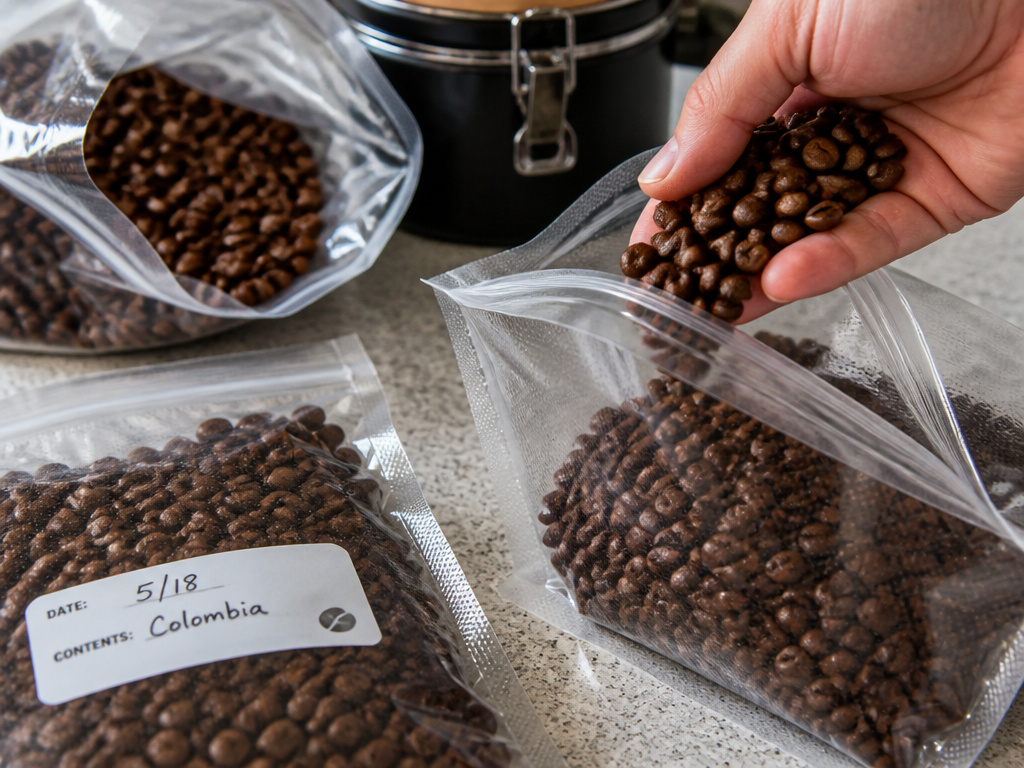
Your storage method should match your consumption rate. Here’s the hierarchy, from best to worst.
First Choice: Airtight Container in a Dark Cupboard
- Container: Use a canister with a rubber-gasket seal (like a Friis or Airscape). Tin cans with clamp lids are also excellent.
- Location: A pantry or cupboard away from heat sources. Under 70°F is ideal.
- Duration: Best for beans you’ll finish within 2–4 weeks.
This method is for your daily driver. It assumes you’re buying fresh single-origin beans or a blended coffee and cycling through them regularly.
Second Choice: Freezer Storage for Long-Term
The National Coffee Association (NCA) recommends the freezer for storage beyond two weeks. Most people do this wrong.
- Divide your whole beans into portions you’ll use in one week.
- Seal each portion in an airtight bag (a vacuum-seal bag is ideal). Remove as much air as possible.
- Place the bags in the freezer.
- When needed, remove one bag and let it thaw, unopened, to room temperature. This prevents condensation from forming on the cold beans, which would instantly damage them.
- Once thawed, transfer the beans to your airtight container. Do not refreeze.
The Wrong Way: The Fridge, the Original Bag, or a Clear Jar
The refrigerator is humid and full of food odors. Coffee acts like a sponge. The original paper bag with a tin tie is not airtight after the first opening. A clear glass jar on the counter exposes beans to light and heat.
Can You Freeze Coffee Beans?

Yes, but with strict rules. Freezing halts oxidation almost completely. The danger is moisture.
When you take a cold bean from the freezer, moisture in the air condenses on its surface. That water immediately begins degrading the cell structure and washing away oils. This is why you never take the entire container in and out of the freezer for daily use. The freeze-thaw cycle ruins beans.
The single-portion method outlined above works. I froze a batch of a particularly good Ethiopian light roast coffee this way for three months. Thawed properly, it retained about 85% of its original floral brightness. The alternative, leaving it in the cabinet, would have turned it to sawdust in six weeks.
Common mistake: Storing the entire bag of beans in the freezer and scooping out daily doses, each time you open it, warm, moist air rushes in, condenses on the remaining cold beans, and accelerates staling. The beans at the bottom become unusable within a few weeks.
The Grinding Factor: Why Ground Coffee Goes Bad Faster

This is the non-negotiable rule. Grinding is the single most destructive act for coffee freshness. You are multiplying the bean’s surface area exposed to air by thousands.
Think of a whole bean as a sealed vault of flavor. Grinding blows the doors off the vault. Those precious volatile compounds rush out, and oxygen rushes in. The PMC coffee storage research article notes that increased surface area is the primary accelerator of staling reactions in roasted coffee.
This is why buying pre-ground coffee is a compromise on flavor from the start. It’s also why the type of grinder you use, while important for extraction, doesn’t change the staling timeline. Whether you use a premium burr coffee grinder or resort to blender grinding tips in a pinch, you must brew immediately after.
If you must grind ahead, for a camping trip, for instance, store the grounds in an absolutely airtight container and use them within 24 hours. Accept that the cup will be dimmer.
Signs Your Coffee Beans Have Gone Stale
Use your senses. Your eyes, nose, and tongue will tell you what a “best by” date won’t.
Visual:
- Fresh: Beans have a slight sheen from intact oils.
- Stale: Beans look dry and matte. Oils have oxidized and evaporated or migrated to the bag.
Olfactory (Smell):
- Fresh: A strong, pleasant, specific aroma (e.g., berries, chocolate, citrus).
- Stale: A weak, generic smell often described as cardboard, hay, or mustiness. Sometimes no smell at all.
Gustatory (Taste):
- Fresh: Balanced acidity, sweetness, and body with clear flavor notes.
- Stale: Flat, dull, or overly bitter. Lacks sweetness and complexity. May taste vaguely papery.
If your beans pass the visual and smell test but the coffee still tastes off, check your water or your brewing equipment. A dirty machine or bad water can mask even fresh coffee.
Frequently Asked Questions
Can you use coffee beans after the expiration date?
Yes, they are safe. Whether they are enjoyable is a different question. If the “expiration date” is a “best by” date printed long after the roast, the beans are likely already stale. Brew a test cup. If it tastes flat and lifeless, they’re past their prime for good coffee.
Do whole coffee beans go bad in the bag?
They go stale, not bad. An unopened bag with a one-way valve will stay fresher longer, but the clock is still ticking from the roast date. Once opened, the staling process accelerates unless you transfer the beans to a better container.
How do you revive stale coffee beans?
You can’t. Oxidation is a one-way chemical reaction. No amount of sealing or storing can put the flavor compounds back. Some people try re-roasting, but this typically just creates a baked, bitter flavor. It’s better to use stale beans for cold brew, where the long, cold extraction can pull out some remaining sugars while muting the stale notes.
Should coffee beans be kept in the bag?
Only if the bag is resealable and truly airtight. Most paper bags with a tin-tie fold are not. For any bag without a robust zipper or clasp seal, transfer the beans to an opaque, airtight container as soon as you open it.
Does freezing coffee beans keep them fresh?
Freezing whole beans in single-use, airtight portions is an excellent method for preserving freshness for months. It is the only reliable way to “pause” the staling process. Just follow the thawing rules to avoid moisture damage.
The Bottom Line
Do coffee beans go bad? Not in your refrigerator’s moldy-leftovers sense. They undergo a gradual, inevitable decline from vibrant to stale. Your job is to slow that decline.
Buy beans with a recent roast date. Seal them in an airtight container away from light and heat. Grind them at the last possible second. If you need to stock up, use the freezer correctly. When your beans start smelling like cardboard, it’s time for a new bag. The difference in your cup isn’t subtle, it’s the difference between drinking coffee and experiencing it.
