
Care of Coffee Plant: 3 Essential Tips to Keep It Thriving
To care for a coffee plant, provide very bright indirect light, water when the top 25% of soil dries, and use acidic soil with a pH of 6.0–6.5. Fertilize in spring and summer. These three conditions mimic its native understory habitat and prevent the most common failures: leaf drop, root rot, and nutrient lockout.
Most people kill their coffee plant with kindness. They give it a dark corner, water it on a strict schedule, and feed it standard plant food. The plant responds by dropping leaves, developing brown tips, and sitting there for a year without growing an inch. It’s not being dramatic. It’s dying from a mismatch between its genetics and your living room.
This guide walks through the specifics of light, water, soil, and long-term care for Coffea arabica. We’ll pull numbers from university extension guides and show you the pruning cut that actually works.
Key Takeaways
- Light is non-negotiable: a south, east, or west-facing window with a direct sky view is mandatory. North windows need a grow light.
- Water only when the top 25% of the soil volume is dry. Use your finger, not the calendar.
- Soil must be acidic. Aim for a pH between 6.0 and 6.5. Standard potting mix is often too alkaline.
- Prune with a 15 cm cut into the woody part of the stem to stop vertical growth and force side branches.
- Coffee berry borer is a real pest. Monitor for tiny holes in berries; intervention thresholds start at 3–5% infestation.
The Non-Negotiable Light Rule
Your coffee plant needs more light than you think. It evolved under the dappled canopy of Ethiopian forests, which translates to very bright, indirect light in your home. A north-facing window rarely provides enough photons year-round.
Place it within three feet of a south, east, or west-facing window. The key is an unobstructed view of the sky. If you have blinds, keep them open during the day. A sheer curtain is fine. Without this, growth stops. The plant survives but doesn’t push new leaves.
Bright, indirect light for a coffee plant means a minimum of 1,000–2,000 foot-candles for 6–8 hours daily. This intensity supports photosynthesis for foliage growth and, eventually, flower and cherry development. South-facing windows in the northern hemisphere typically provide this range through a sheer diffusion layer.
I kept my first coffee plant five feet back from a large east window. It looked fine for six months. Then every new leaf was smaller than the last. By month nine, it had dropped all its lower leaves and the stem was leggy. Moving it directly to the window sill triggered new growth within three weeks. The difference was immediate.
TL;DR: South, east, or west window, close up. North window equals a grow light. No debate.
Watering: The 25% Dry Rule
Coffee plants like consistent moisture but hate wet feet. The goal is to let the soil dry slightly between waterings. The YouTube transcript specifies letting the soil dry out about 25 percent.
Stick your finger into the soil up to the second knuckle. If the top quarter of the pot’s depth feels dry, water thoroughly. Pour slowly until water runs freely from the drainage holes. Then let it drain completely. Never let the pot sit in a saucer of water.
Common mistake: Watering on a weekly schedule — root rot sets in during winter when evaporation slows, and you’ll see yellow leaves falling from the bottom up within two weeks.
The plant’s water needs change with light and season. In a bright summer window, you might water twice a week. In a cooler, dimmer winter, once every ten days. The finger test doesn’t lie. A moisture meter is more precise. The cheap ones work.
Soil, Potting, and Acidic Nutrition
This is where most generic advice fails. Coffee plants are acid-loving. The USDA production guide notes an optimal soil pH range of 6.0 to 6.5 for Coffea arabica. Outside this range, key nutrients like iron become locked up.
Use a potting mix labeled for acid-loving plants, like azalea or camellia mix. You can amend a standard houseplant mix with peat moss or coconut coir to lower the pH. Some growers add a handful of cactus mix for extra drainage and acidity.
| Soil Component | Purpose | What Happens If You Skip It |
|---|---|---|
| Peat or Coir | Lowers pH, retains moisture | pH drifts above 7.0, causing iron chlorosis (yellow leaves with green veins) within 2–3 months. |
| Perlite or Pumice | Improves drainage | Soil stays soggy after watering, leading to root rot and a foul smell from the drainage holes. |
| Pine Bark Fines | Adds acidity and air pockets | Compaction increases, roots suffocate, and growth stalls completely. |
Fertilize during the active growing season (spring and summer). Use a fertilizer formulated for acid-loving plants. A 30-10-10 ratio is often recommended. Follow the label’s dilution instructions. Over-fertilizing in winter when growth is slow burns the root tips.
Repot every one to two years, or when roots circle the bottom of the pot. Choose a pot only one or two inches larger in diameter. A pot that’s too big holds excess wet soil.
Temperature, Humidity, and Seasonal Shifts
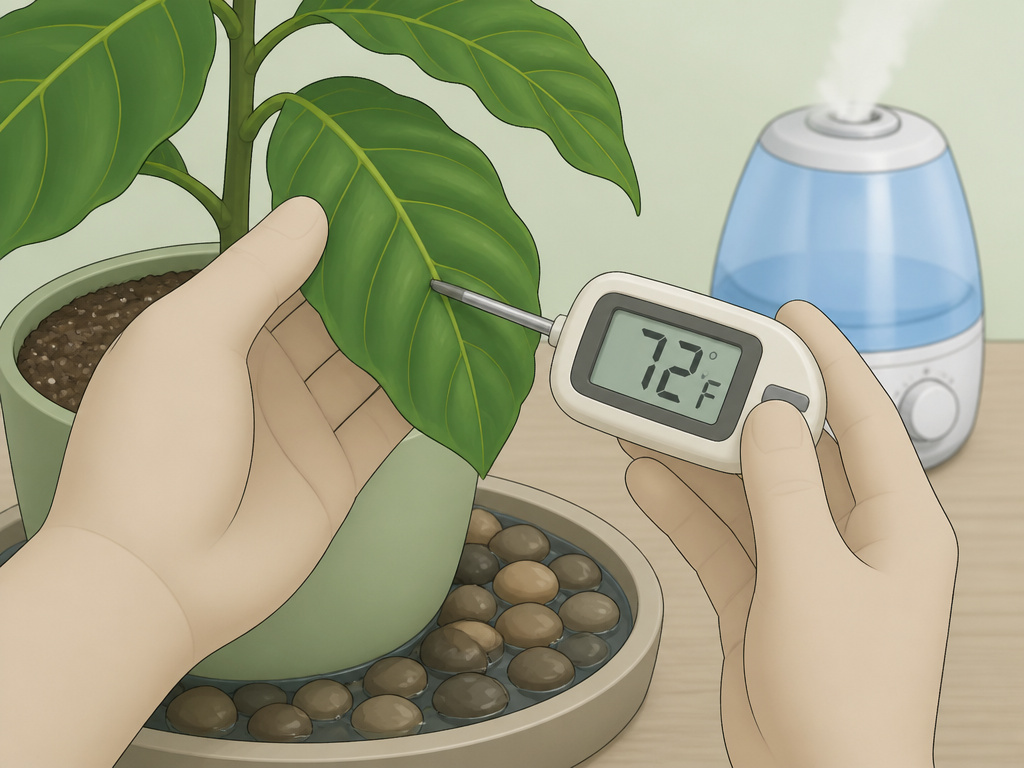
Coffee plants prefer the same temperatures you do. Aim for 65–80°F (18–27°C). They can tolerate a brief dip to 55°F (13°C), but sustained cold causes leaf drop. Keep them away from drafty windows in winter and away from hot air vents.
Humidity matters. They thrive at 50% relative humidity or higher. In dry homes, especially with forced-air heat, leaves develop crispy brown edges. Use a humidifier, or place the pot on a pebble tray filled with water. Grouping plants together also helps.
Seasonal care changes are subtle. In winter, reduce watering frequency as mentioned. Hold off on fertilizer. If light drops significantly, consider a supplemental grow light to prevent legginess. The plant may rest. That’s normal.
Pruning and Shaping Your Coffee Tree
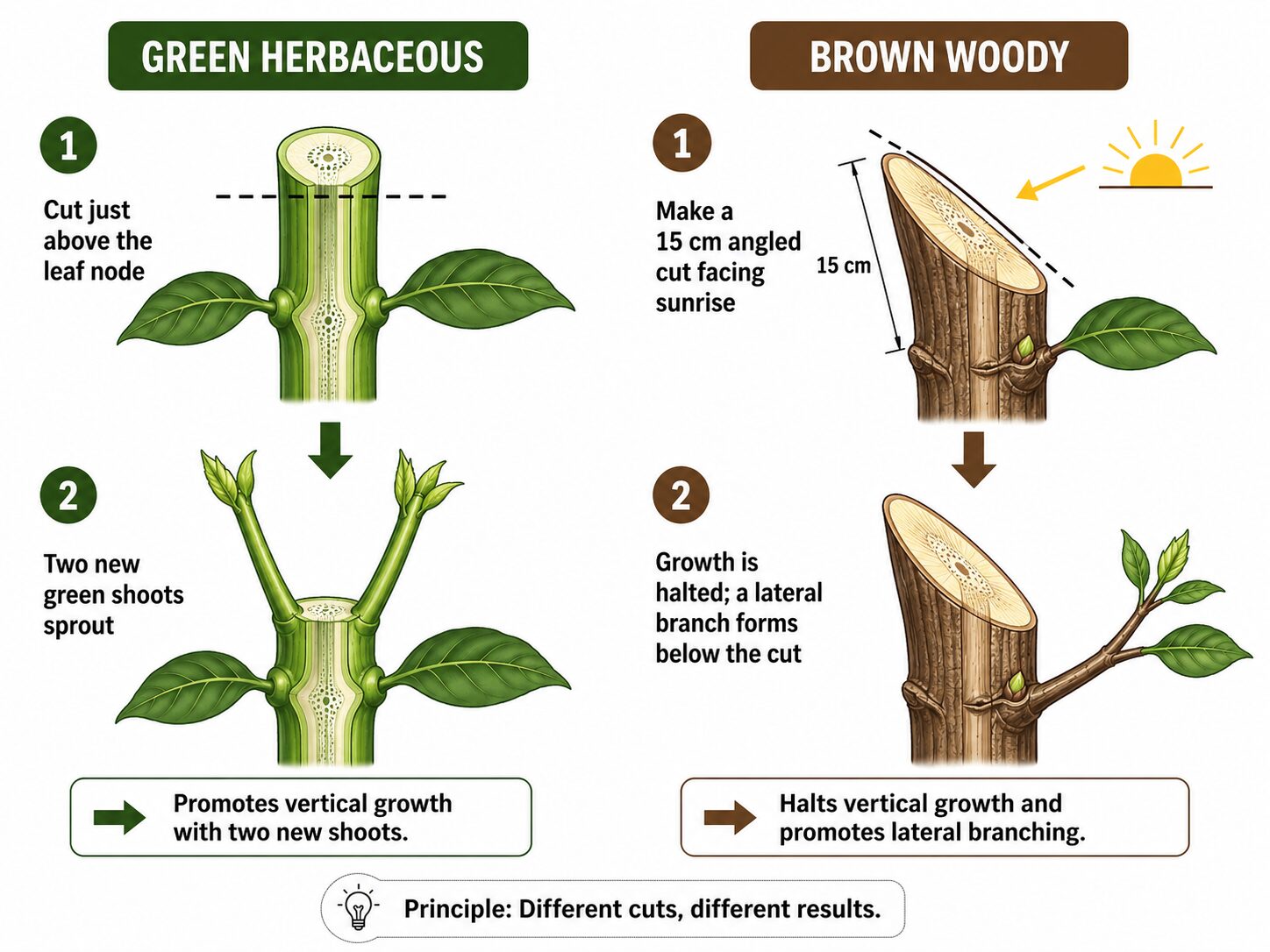
Pruning serves two goals: controlling size and encouraging a bushier shape. The YouTube transcript from a grower demonstrates a specific technique. For a tall branch, you make a 15 cm cut facing the sunrise into the woody material.
Cutting into the green, herbaceous growth tells the plant to keep growing upward. Cutting into the brown, woody part stops the vertical growth at that point. The tree then redirects energy to side branches. This creates a more accessible, spreading shape.
| Pruning Goal | Where to Cut | Result |
|---|---|---|
| Stop vertical growth | 15 cm into woody stem, angled cut | Growth halts at cut; new lateral branches form below it. |
| Encourage bushiness | Just above a leaf node on a young stem | Two new stems sprout from that node, doubling the foliage. |
| Remove dead/damaged | At base of affected branch | Prevents disease spread and improves air circulation. |
You only want three or four main stems growing from the base. Remove any suckers beyond that. For young trees, prune them at the desired height when the stem is still somewhat green but firm. That sets the shape early.
TL;DR: Cut into the brown wood to stop height; cut above a green node to create branches.
Pest Patrol: The Coffee Berry Borer and Others
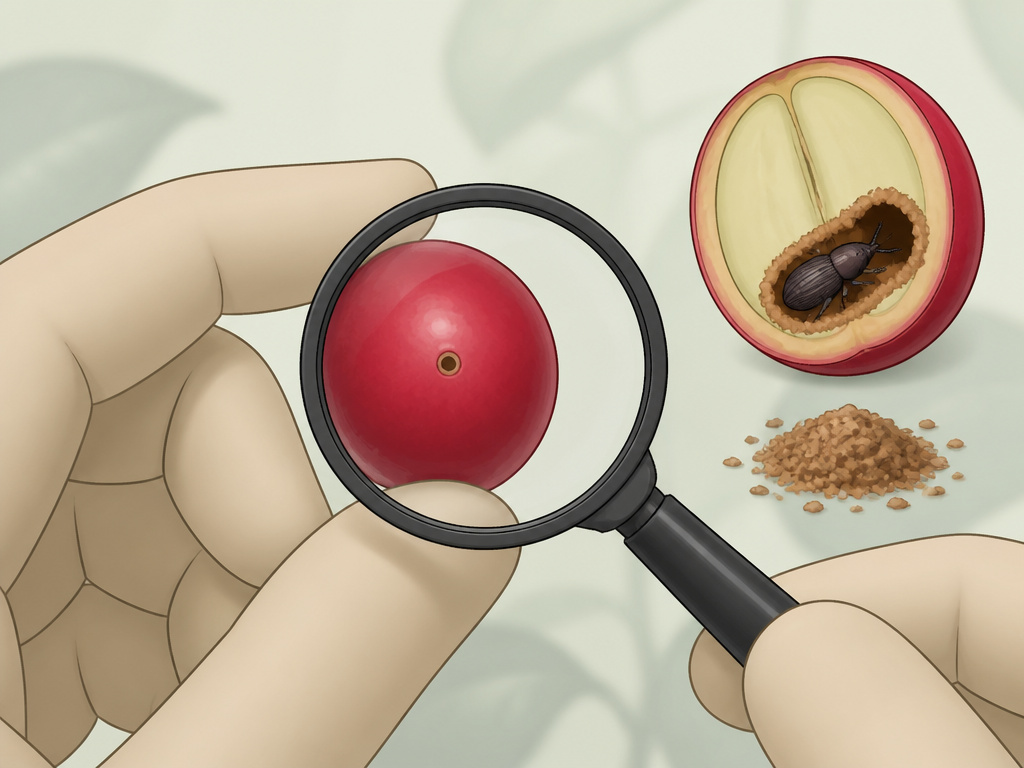
The most significant pest for coffee plants, if you’re lucky enough to get berries, is the coffee berry borer (Hypothenemus hampei or CBB). This tiny beetle bores into the coffee cherry to lay eggs. According to the University of Hawai’i CTAHR guide, it was first detected in Hawaii in 2010 and can cause severe crop loss.
For a home grower, vigilance is key. Inspect developing berries for tiny, pin-sized holes. The CTAHR guide notes intervention thresholds begin at 3–5% infestation. At a commercial scale, they recommend 10 traps per acre for monitoring.
Common mistake: Ignoring small holes in cherries — a single CBB female can infest multiple berries, and larvae feeding inside ruin the bean. By the time you see frass (sawdust-like waste), the bean is unusable.
Other common houseplant pests include spider mites (in dry air), scale, and mealybugs. Treat spider mites with a strong water spray or insecticidal soap. For scale and mealybugs, dab each insect with a cotton swab dipped in rubbing alcohol. Isolate an infested plant immediately.
Biological control for CBB includes the fungus Beauveria bassiana. This is a commercial option mentioned in the IPM guide. For a single houseplant, physical removal of infested berries is the first line of defense.
Propagation and Long-Term Storage of Seeds
You can propagate coffee plants from seeds or cuttings. Seeds are fun but slow. Use fresh, red coffee cherries. Remove the pulp and soak the bean (which is the seed) for 24 hours. Plant it in moist, sterile seed-starting mix, about 1/2 inch deep. Keep warm (75–80°F) and humid. Germination takes 2–3 months.
The USDA guide mentions an edge case for seed storage: coffee seeds can be kept for up to 12 months at 10–15°C (50–59°F) with a moisture content of 10-12%. This is for commercial propagation, but it shows the seeds are not ephemeral. For home use, planting fresh is best.
Cuttings are faster. Take a 6–8 inch tip cutting from a healthy stem. Remove the lower leaves, dip the cut end in rooting hormone, and plant it in a perlite and peat mix. Enclose in a plastic bag for humidity. Roots develop in 4–8 weeks. Not all cuttings take. Try a few.
Whether you start from seed or cutting, the initial care is the same: bright light, consistent moisture, and patience. A plant from seed may take 3–4 years to flower. A cutting from a mature branch can flower sooner.
Troubleshooting: Why Your Coffee Plant Looks Sad
Diagnose problems by looking at the leaves and growth pattern. Here’s a quick reference.
| Symptom | Likely Cause | Immediate Fix |
|---|---|---|
| Yellow leaves, dropping from bottom | Overwatering / root rot | Stop watering. Let soil dry deeply. Check roots for mushiness. Repot if rotten. |
| Brown, crispy leaf edges | Low humidity or dry soil | Increase humidity with pebble tray. Check soil moisture more frequently. |
| Small, pale new leaves | Insufficient light | Move to a brighter window immediately. Consider a grow light. |
| Leaves curling inward | Underwatering or heat stress | Soak the pot thoroughly. Move away from direct hot sun or heat vents. |
| No new growth for months | Wrong season, low light, or nutrient lockout | Check light levels first. Test soil pH. Fertilize only if in growing season. |
Most issues trace back to light, water, or soil pH. Fix the environment before treating for pests or disease. The plant is resilient if you correct the core problem.
Frequently Asked Questions
How often should I water my coffee plant?
Water when the top 25% of the soil in the pot dries out. This is not a time-based schedule. In a bright, warm room, that could be twice a week. In a cooler, low-light spot, it might be every ten days. Use your finger to test.
Can I use coffee grounds on my coffee plant?
Used coffee grounds are very mild and can be sprinkled on the soil surface. They won’t significantly acidify the soil. It’s better to use a proper acidic potting mix and fertilizer. Avoid making a thick layer of grounds, as they can mold and repel water.
Why are the leaves on my coffee plant turning brown?
Brown leaf tips or edges are almost always a humidity issue. Indoor air, especially with air conditioning or heating, is too dry. Brown spots in the middle of a leaf can be sunburn from direct, unfiltered afternoon sun. Move it away from the hot glass or diffuse the light.
How do I get my coffee plant to produce beans?
The plant needs to reach maturity (3–5 years), experience a slight temperature drop at night, and have very bright, consistent light. Even then, indoor pollination is tricky. Small, white, jasmine-scented flowers appear first. You can try pollinating them with a small paintbrush. Don’t count on a harvest.
What’s the best fertilizer for a coffee plant?
Use a fertilizer for acid-loving plants, like one formulated for azaleas or rhododendrons. A 30-10-10 NPK ratio is commonly cited. Dilute it to half-strength and apply every 4–6 weeks during the spring and summer growing season. Do not fertilize in fall and winter.
Before You Go
Coffee plant care hinges on three pillars: intense indirect light, watering on the dry-down cue, and unwaveringly acidic soil. Get these right, and the plant is surprisingly tough. It will grow several feet tall indoors, with glossy, beautiful leaves.
Prune it to keep it manageable. Watch for pests if it flowers. Understand that growing your own Arabica coffee beans is a long-term project, not a quick win. The real reward is the lush, tropical presence it adds to your space. For more on the beans it produces, explore our piece on blonde roast characteristics. Start with the light. Everything else follows.
